

























































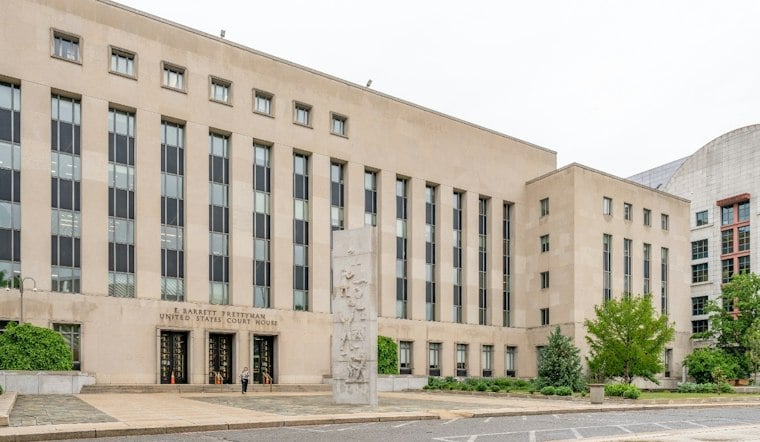
One day before the November 3 midterms, a federal judge in Washington, D.C. temporarily barred the Justice Department and Department of Homeland Security from sending states lists of voters the administration claimed might not be citizens, and from pushing election officials to set aside or withhold those ballots until citizenship could be proven. The order lands in the middle of a fight that has already bounced through multiple courtrooms over the past week, with Republicans battling to hold onto majorities in both chambers of Congress.
Judge Cites Unreliable Data in Nationwide Order
U.S. District Judge Tanya Chutkan issued the order Monday, concluding that the administration’s data may not be reliable and could lead to lawfully registered voters being disenfranchised, according to theprint.in. Chutkan, a Washington, D.C.-based appointee of former President Barack Obama, sided with voting-rights and privacy advocates who had asked her to temporarily stop the administration from circulating the lists or making related demands of state officials. The plaintiffs alleged the effort violated the Privacy Act of 1974, a law restricting how the federal government can disclose sensitive personal information.
The administration has said its plan was meant to prevent noncitizen voting, which is illegal, while critics countered that it risked disenfranchising eligible voters and infringing on states’ authority over their own elections, since states are the ones responsible for administering them. The Trump administration had sent letters to officials in California and Washington state demanding they not count ballots from people appearing on its lists of suspected noncitizens. In a court filing, the Justice Department argued the letters were simply enforcing a federal law banning noncitizen voting and did not amount to a distinct policy subject to judicial review.
Nevada and Los Angeles Reviews Undercut the Lists
The reliability concerns Chutkan cited were already playing out on the ground. Nevada officials found that the 185 people they manually reviewed were citizens. In Los Angeles County, officials who reviewed a sample of 200 records from the administration’s list found that 112 of them corresponded to voter registrations that had already been canceled or were inactive, as reported by CBS News.
Those findings echo broader research on how rare noncitizen voting actually is. A Heritage Foundation database identified just 23 instances of noncitizen voting between 2003 and 2022, and a Brennan Center study of the 2016 election found suspected noncitizen voting accounted for roughly 0.0001% of 23.5 million votes surveyed across 42 jurisdictions, per the nonpartisan Migration Policy Institute's research hub, migrationpolicy.org. A separate NBC News review found more than 200 voting-related federal prosecutions among the 174 million registered voters nationwide, and reported that most noncitizen voters charged by the Justice Department are actually in the country lawfully.
A String of Court Losses for the Administration
Chutkan’s order is the latest in a run of setbacks for the administration’s voter-list campaign. A federal judge in Los Angeles already rejected the Justice Department’s request to force California to set aside mailed ballots from more than 20,000 registered voters it claimed were likely noncitizens, and an appeals court rejected the department’s request for an emergency order pending appeal. A federal judge in San Francisco separately ordered the department to stop threatening to prosecute state and local election officials who declined to comply with its demands.
The 9th U.S. Circuit Court of Appeals also dismissed the department’s bid to force California to set aside ballots, ruling it lacked jurisdiction over the appeal, per CBS News. Then on Monday, the Supreme Court rejected the administration’s emergency request to set aside potentially thousands of California ballots allegedly cast by noncitizens, turning it away hours after it was filed, CNN reported.
Migration Policy Institute’s research also notes that at least 16 U.S. jurisdictions permit noncitizens to vote in certain local elections, a legal carve-out separate from the federal races at the center of this dispute. The clash arrives against a backdrop of long-running claims from the administration: President Trump has accused states of facilitating noncitizen voting and has falsely asserted that his 2020 election loss was the result of fraud, a claim Reuters has reported was unfounded.




