

























































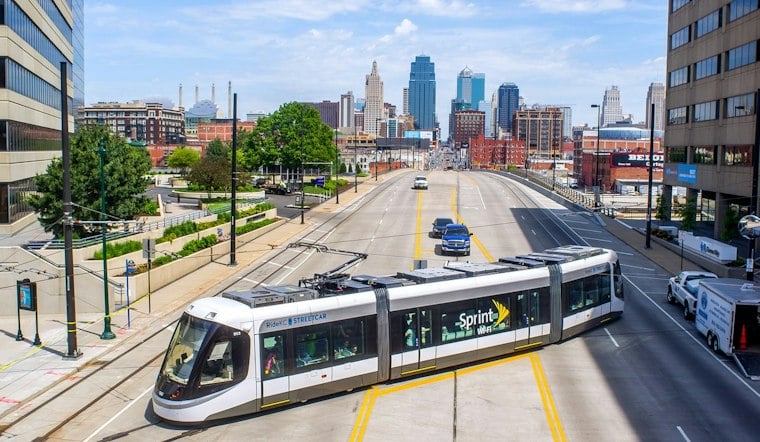
The housing plan at Linwood Boulevard and Main Street was drawn as 60 two-bedroom apartments for medical-industry workers, set in colonnade-style buildings along Kansas City's southern streetcar extension.
Port KC has described a collaboration with Driven Development, a nonprofit launched by VanTrust Real Estate, on what the agency called a $20 million development. In its account of the Linwood and Main project, Port KC said the apartments were meant to serve workers from nearby health facilities. The agency projected a construction start in 2025 and completion in 2026, and it tied the effort to housing prices and rental rates that were still rising across the metro.
Ten Small Buildings, Not One Tower
A May 2025 proposal placed the apartments at 20 West Linwood Boulevard: 10 three-story buildings, six units each. The Kansas City Star described the design as colonnade-inspired, a low-rise cluster rather than a single mid-rise slab on the corner. Ten times six is the same 60 Port KC has used.
By February 2026, the Star was describing Driven Development's construction of 60 housing units in colonnade-style buildings off Linwood and Main, with affordability as a goal. The count and the architectural idea lined up with the earlier proposal. That later account did not restate a unit-by-unit income chart.
Nine Deeper Discounts, Then a Workforce Band
The May 2025 proposal did not treat every apartment as the same product. Nine units would be available to households earning up to 60% of area median income. The remaining units were designated workforce housing for households earning 60% to 100% of area median income.
Port KC's framing and that income split can sit together without being the same claim. The agency described workforce housing for medical-industry workers from nearby facilities. The Star's 2025 account is the one that put numbers on how many apartments were aimed below 60% of area median income and how many sat in the broader workforce band. Nothing in the later construction description confirms that the nine-unit share was revised, or that it was locked in lease by lease.
A Corner Inside a Much Larger Gap
Sixty apartments are a precise local assignment. They are not a regional fix. The Mid-America Regional Council has put the shortage of affordable rental units for renters in the MARC region at about 64,000.
That MARC figure counts a multi-county gap, not a waiting list for 20 West Linwood. Even if every Linwood apartment landed in an affordable or workforce band, the project would cover a thin slice of a shortage measured in the tens of thousands. Port KC's point about rising prices and rents is the local pressure; MARC's tally is the scale.
The Streetcar Corner Was Already Filling In
In February 2026, months after the Main Street streetcar extension opened, the Star reported more than 100 new homes in development near the Linwood and Main intersection. Driven Development's 60 units were part of that picture, not the whole of it.
The same report described a planned conversion of the ABC Storage building and the adjacent Anderson Electric Car Company building into 52 lofts near the Union Hill streetcar stop. Those lofts were aimed at households earning below 80% of area median income. Different building, different tool: a reuse of older structures, and an income ceiling set higher than the nine-unit band in the Linwood proposal.
Farther east on the same boulevard, a separate plan at Linwood and Troost calls for two four-story buildings and 194 apartments for families earning no more than 60% of area median income, FOX4 Kansas City reported. There, the entire count was described as affordable at that 60% line. At Linwood and Main, the 2025 proposal reserved that deeper band for nine apartments and labeled the balance workforce housing, up to 100% of area median income.
A Floor-Area Request, Not a Decision
A city record lists a request for a variance to the Transit Node floor-area ratio within the Main Street Overlay District, on about 1.9 acres generally located at 20 West Linwood Boulevard. The Board of Zoning Adjustment filing shows that the request was listed. It does not show whether the variance was granted.
Floor area is the control that decides how much building a transit-node parcel can carry. On a streetcar corner, that is the practical difference between the ten low colonnade buildings in the proposal and something denser. The filing, on its own, does not say which version the city allowed.
What the plans do fix is the intended use of those 60 two-bedroom apartments: workforce housing pointed at medical-industry workers, with a 2025 proposal that set nine of them aside for households at or below 60% of area median income. Against a regional rental shortage of about 64,000 units, that remains a corner assignment with a specific kind of worker in mind.



