

























































Lines are forming before dawn outside Kansas food pantries as households statewide lean harder on hunger relief than they have in years. In Frontenac on November 13, people waited for a food semitruck, with one woman, Tina Knight, arriving at 5 a.m. and telling organizers she has noticed a steady increase in people needing help over the three years she has used the truck's services.
Kansas Food Bank data shows that households served by hunger relief programs increased 88% compared with the previous year, according to KCUR. The Kansas Food Bank provides food and supplies to pantries, soup kitchens and other hunger relief programs across 85 Kansas counties, and its pantries serve more than 945,000 people annually, according to the Kansas Food Bank. In the food bank's 85-county service area, food insecurity climbed from 10.3% in 2021 to 13.5% in 2022, per data the organization published in May 2024 drawn from Feeding America's Map the Meal Gap study.
Kansas Food Bank CEO Brian Walker has attributed the rising need to higher grocery and gasoline costs, saying that when families cannot afford food, they cut back on it. Walker said older adults are often hit hardest because they're more likely to live on fixed incomes, and that rural residents face added strain because they must travel farther to reach food or assistance. The food bank has responded by traveling to remote parts of the state where pantries or kitchens aren't easily accessible, offering pre-made snacks and fresh produce once it arrives.
A Food Truck Rolls Into Frontenac
That rural outreach is visible in Frontenac, where Feeding America and the Kansas Food Bank provide a food truck to Sacred Heart Church's food pantry on the second Friday of every month. Jerome Cook, one of those who showed up for the November 13 distribution, said he was grateful for the pantry's support. Walker said the organization is continually working to find the best way to serve rural areas, where the gap between need and access can be widest.
Among households the Kansas Food Bank has surveyed, 48% reported having to choose between paying for food and paying utility bills. The same data found that 82% of households served had incomes low enough to qualify for SNAP, but only 41% actually participated in the program — a gap that leaves many families relying on pantries to fill in the rest.
Pittsburg's Wesley House Hits Record Numbers
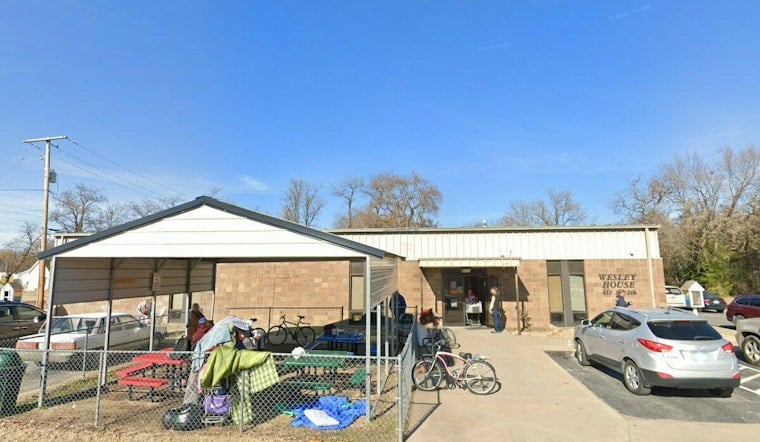
In Pittsburg, the strain has shown up in daily tallies at Wesley House, a pantry run by three full-time staff members and volunteers that serves meals, fresh fruit and vegetables on a first-come, first-served basis. Cindy Hisquierdo, who works at the pantry on Tuesdays, assembles a daily list of visitors along with their family sizes and needs, and said most who come through are friendly and grateful for what they receive.
Wesley House served 519 households in July, its highest monthly total since opening, and the pantry has reached record daily service numbers over the past year. Executive Director Matt O'Malley said the Pittsburg pantry had been busier over the previous five months than at any other point in its 44-year history, according to FourStatesHomepage.com. The pantry served an average of 445 households a month that year, the outlet reported, and O'Malley pointed to the high cost of goods as what's making things difficult for lower-income families. Separately, United Methodist Insight reported that Wesley House's food distribution was up 30% over 2022, and up an additional 17% by the end of February the following year.
The rising caseload has forced Wesley House to increase its monthly budget by $1,000 to keep pace with need and grocery costs, and the pantry has already surpassed next year's budget. O'Malley identified changes to SNAP, commonly known as food stamps, as one reason people lose benefits and become more food insecure. He said he's grateful for the charitable work Wesley House does but hopes for systemic change rather than relying on pantries alone to fill the gap.
Federal Policy Shifts Add Pressure
SNAP funding was reduced last year through passage of the One Big Beautiful Bill, which Congress approved and President Donald Trump signed into law. The legislation created additional workforce requirements for SNAP eligibility, and the Trump administration has proposed further eligibility changes to TANF and SNAP. Critics have said as many as 6.3 million people across the United States could lose food assistance as a result.
Kansas Department for Children and Families testimony says a related measure, H.R. 1, raises the federal share of SNAP administrative costs for all states from 50% to 75% starting October 1, 2026, and the agency projects Kansas' federal fiscal year 2027 SNAP administrative costs will top $66 million. The Congressional Research Service notes that under current law, until related changes take effect, the federal government covers 100% of the cost of SNAP benefits to households and matches states' administrative costs.
Separately, a 2025 report said the U.S. Department of Agriculture would not issue SNAP benefits for November amid a government shutdown, leaving roughly 188,000 Kansans without that grocery assistance, according to KAKE. That report also quoted Walker saying one in seven Kansans are currently food insecure, while a separate report from FourStatesHomepage.com put the figure at one in six Kansas residents facing hunger, including one in five children — the two estimates have not been reconciled. The same KAKE report quoted a Dear Neighbor Ministries representative saying the organization served 781 families in the prior 30 days, a 39% increase over the same period the year before.
The Kansas Food Bank's rural delivery system, in place since 1995, brings food directly to 20 communities including Dodge City, Garden City and Independence, where partnering agencies distribute it to surrounding areas. More than half a million pounds of food move through the Independence facility alone each year, the food bank reports. As grocery bills climb and federal support shifts, pantries from Frontenac to Pittsburg say they're being asked to stretch further than ever.





