

























































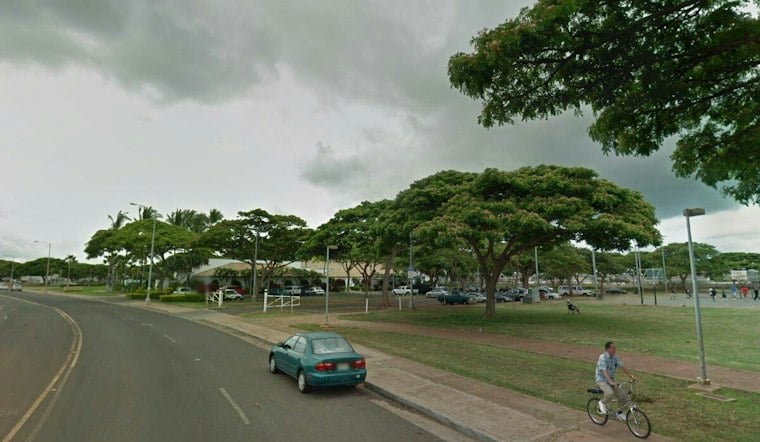
A long-planned affordable housing community in Kapolei is poised to break ground, with The Michaels Organization and ʻIkenākea Development set to deliver 344 rental apartments across two five-story buildings. The project, called Leiwili Kapolei, will reserve every unit for households earning at or below 60 percent of area median income, including 105 apartments set aside for households at or below 30 percent of AMI.
According to Newswire, the first phase will also set aside one unit for a family experiencing homelessness, in partnership with Family Promise of Hawaiʻi. The apartments will range from one to three bedrooms, and the buildings will center on a large green open space designed for community connections and outdoor gatherings. Leiwili Kapolei sits on state-owned land in the Villages of Kapolei and is described as one of the final developments planned for that master-planned community.
Financing for the project has drawn from multiple sources, though the numbers vary depending on when they were reported. The 2025 announcement from The Michaels Organization put total financing at $249 million, while Pacific Business News later reported the project secured $244 million in funding. The figures diverge further on the size of the state loan involved: the Hawaiʻi Housing Finance and Development Corporation's Rental Housing Revolving Fund loan was reported at $119.2 million in the 2025 announcement from The Michaels Organization, but the more recent Newswire release puts that same loan at $102.7 million. Either figure, according to the seed announcement, would rank among the largest commitments to a single project in HHFDC history. HHFDC also issued $130 million in tax-exempt Hula Mae Multi-family bonds for the development, and the financing package includes federal and state low-income housing tax credits.
Timeline and Construction Details
A construction site blessing is planned for January 2027, with construction expected to take approximately 22 months. Completion is anticipated for late 2028, according to the Newswire announcement, which aligns with the timeline Michaels laid out in its 2025 update projecting a late-2026 construction start and an end-of-2028 completion. HHFDC will serve as landowner, leasing the Phase 1 site to the developers under a 75-year ground lease, and the homes themselves will remain affordable for 75 years.
The development team includes Lowney Architecture and Albert C. Kobayashi, Inc. as general contractor. Michaels will also provide property and asset management services once construction wraps up, and Leiwili Kapolei residents will have access to supportive services from Better Tomorrows, which offers academic support, financial literacy, health and wellness, job readiness, and social engagement programs.
A Bigger Vision for Kapolei
Leiwili Kapolei represents just the first phase of a much larger vision. ʻIkenākea Development executive Christopher Flaherty called it the company's largest project, noting that the 344 homes are the opening phase of a community ultimately planned for up to 900 affordable and workforce homes. The full master-planned community is expected to include up to 95,000 square feet of commercial space, along with sustainable design, pedestrian-friendly complete streets, multimodal connections, and direct transit access.
Flaherty credited HHFDC, Bank of Hawaiʻi, The Richman Group, Monarch Private Capital, and The Michaels Organization for reaching the financing milestone. ʻIkenākea, based in Honolulu, holds a portfolio of more than 2,500 affordable and workforce housing units across Hawaiʻi and the mainland, while Michaels serves more than 200,000 residents across almost 600 communities in 39 states, the District of Columbia, and the U.S. Virgin Islands.
State Officials Weigh In
HHFDC's Dean Minakami said the project demonstrates how public-private partnerships can deliver affordable housing for Hawaiʻi families. James Tokioka said Governor Josh Green's housing initiatives are advancing through projects like Leiwili Kapolei, calling it a significant investment in housing and economic resilience. He added that housing built near jobs, services, and transit can help retain local talent, support working families, and contribute to a vibrant, sustainable economy.
Governor Green said the project reflects partnerships between government agencies and developers addressing Hawaiʻi's housing shortage, and his administration has said it remains committed to accelerating housing opportunities for residents and future generations. Daniel Simonich expressed gratitude to the state, HHFDC, and the Kapolei community as construction prepares to begin on what he described as sustainable housing for low- and moderate-income families. The project was approved by the City and County of Honolulu under Hawaiʻi's affordable housing statute, HRS Chapter 201H, and Green's emergency proclamation on affordable housing.
Part of a Broader Kapolei Building Wave
Leiwili Kapolei is one of several affordable housing efforts reshaping the West Oʻahu community. Kapolei was first envisioned in 1955 by the estate of James Campbell and was designated a secondary urban center in the Oʻahu General Plan in 1977; the state initiated development of the 888-acre Villages of Kapolei master-planned community in the late 1980s.
The Michaels Organization and ʻIkenākea are also behind Haku Kapolei, a separate project on a 19.4-acre property where they were awarded a long-term lease, as reported by Building Industry Hawaii. Haku Kapolei's planned first phase calls for 344 rental units priced for households earning 30%, 50%, and 60% of Oʻahu area median income or less, with those units required to remain affordable for 75 years, the life of the lease.
Elsewhere in Kapolei, James Campbell Co. has broken ground on Nāliko, a $170 million rental development that will bring 300 homes to the area, according to Aloha State Daily. That project will reserve 20 percent of its units for households earning at or below 80 percent of area median income, with the remainder at market rate. The outlet also cited a 2024 housing planning study estimating that Hawaiʻi will need roughly 64,490 additional housing units by 2027 to meet demand, underscoring the scale of the shortage these Kapolei projects are aimed at addressing.
Separately, WTL Development is pursuing a different financing approach for its Laulima project nearby, applying to have the development designated a Community Facilities District that would fund infrastructure through bonds repaid by property tax surcharges, according to Pacific Business News.



