

























































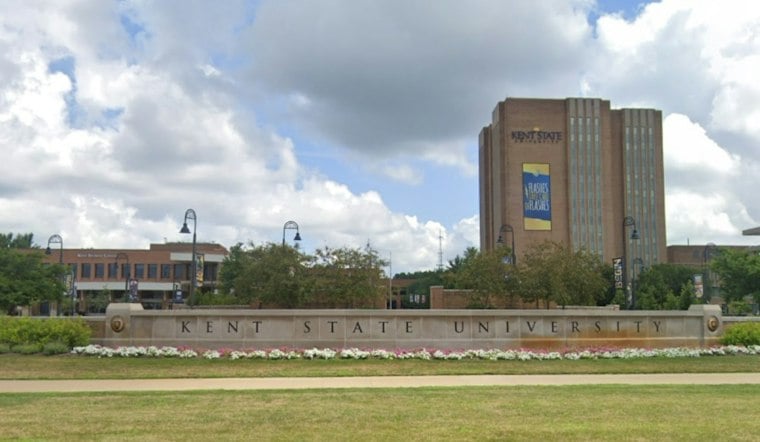
A hearing this week will determine whether Kent State University adjunct theatre instructor Bob Russell keeps his job. It follows a university panel’s finding that he violated the school’s Senate Bill 1 policy on classroom bias, a finding later overturned on appeal. Russell, who was removed from two fall courses and now teaches one online course, traces the dispute to a 2025 lesson on the ancient Greek tragedy Antigone.
Russell told Ideastream Public Media that he connected the play’s themes to current events and controversial topics in his Art of Theatre class. A student complained that Russell mocked Catholics and expressed views on abortion and Donald Trump; Russell denies making those statements. Sophomore Madison Haney said she did not hear him push his opinions on students. Another student said his opinions made her uncomfortable and unable to speak up.
In April, a Kent State panel concluded that Russell had violated the university’s Senate Bill 1 policy, saying he had given unbalanced treatment to ethical and philosophical issues in class. Russell appealed. In July, Mandy Munro-Stasiuk, dean of Kent State’s College of Sciences and Humanities, sustained the appeal in a memo that overturned the panel’s finding.
Dean Raises Due-Process Concerns
Munro-Stasiuk cited concerns that Russell had not received due process, including that he learned he could question witnesses and call his own only after the hearing had begun. Kent State had told him the investigation would follow its Title IX process, although his case did not involve sex-based discrimination claims. Russell said he could not verify his statements in the record and that the report altered them or removed them from context.
The overturned finding has not resolved Russell’s employment status: he faces a new hearing this week, according to Ideastream. He is not represented by the Kent State University Faculty Association, which represents full-time faculty rather than adjuncts. Russell said he plans to speak out so other faculty do not face similar treatment, and argued the university appeared to be making an example of him to demonstrate compliance with state law.
Kent State University declined to comment on Russell's case, as did university President Todd Diacon. Ohio state Senator Casey Weinstein, who opposes Senate Bill 1, sent a letter expressing concern about Russell's case to Kent State leaders in March. Weinstein said the law burdens faculty and universities while providing little clarity on how complaint investigations should actually proceed.
Complaint Volume and a Faculty Association's Warning
Kent State had received seven Senate Bill 1 complaints involving faculty, staff and university housing as of March 9, according to the Akron Beacon Journal. The university determined that two of those seven complaints did not meet the law's parameters for a violation.
Deborah Smith, president of the Kent State University Faculty Association, said the investigation into Russell appeared to hinge on whether students were made uncomfortable, and said Senate Bill 1 is causing a chilling effect on faculty speech.
That chilling effect shows up in survey data gathered this spring. Sixty-one percent of Kent State faculty members said they feel the bill has affected their academic freedom, according to a survey reported by Signal Akron. The same survey found that 81% of faculty felt the law will have long-term effects on higher education, while 24% said they had changed what they teach to comply with it and 37% said they had changed how they teach. A separate account from Tiffin Ohio described more than a third of faculty as having already changed how they teach, a figure in the same range as Signal Akron's 37%. Twenty-six percent of faculty members feared a student would file a Senate Bill 1 complaint against them, per the Signal Akron survey.
What Senate Bill 1 Actually Requires
Senate Bill 1 is an Ohio state law passed by Republicans in the Ohio legislature in 2025. The law bans diversity, equity and inclusion programs at Ohio public universities and requires colleges to track and investigate student complaints of professor bias. The law also protects the campus exchange of ideas.
Governor Mike DeWine defended the law during a visit to Cleveland State University in October, saying Senate Bill 1 does not prohibit or stop free speech.
Russell's case is not the only one drawing scrutiny statewide. The University of Akron had received no Senate Bill 1 complaints against faculty, staff or university departments as of May 18, per the Beacon Journal, while a complaint against a Kent State American history professor over a grade-related allegation remained in the investigation stage as of mid-December. At Ohio State University, professor Steven Brown was the only instructor reported to administrators under the law during the 2025-26 school year; an investigation conducted in March ultimately cleared him, according to The College Fix.
Comparable fights have played out elsewhere: in July, the Eleventh Circuit ruled that Florida's Stop W.O.K.E. Act — which bars faculty from promoting or endorsing specified disfavored ideas about race, color, sex and national origin — violates the First Amendment rights of faculty and students, according to FIRE. That ruling left in place a November 2022 injunction that had already halted enforcement of key parts of the Florida law.
What the survey shows
The Kent State faculty survey cited above is campus-specific, not statewide evidence: according to Signal Akron, it was a confidential survey conducted by a Spring 2026 class in the university’s School of Media and Journalism and received responses from 38 faculty members. Its results therefore cannot establish how Senate Bill 1 has affected faculty teaching or recruitment elsewhere in Ohio. The article also cites Ohio Conference of the AAUP representative Sara Kilpatrick’s account of candidates declining recruitment or withdrawing their names because of the law; that is a separate reported observation, not a statewide survey.
For now, Russell's employment at Kent State remains undecided as this week's hearing proceeds. Sara Kilpatrick of the Ohio Conference of the AAUP has said SB1's broader effects are already visible in faculty recruitment, noting that candidates have declined recruitment or withdrawn their names from consideration while citing the law as the reason.




