

























































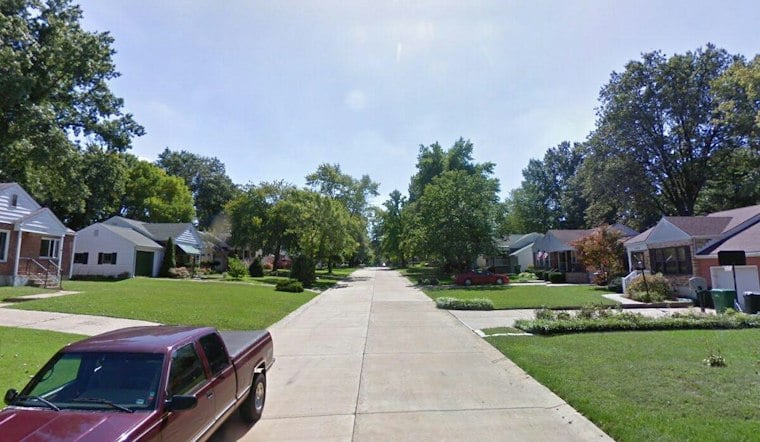
Kirkwood's median home price has climbed to $450,000 and keeps rising, and a growing group of residents says the city needs a new tool to keep teachers, daycare workers and city employees from being priced out entirely. Their answer is a proposed community land trust, a nonprofit that would buy homes and the land beneath them, renovate the properties, then sell just the house — at a price cut by as much as half — to lower- and moderate-income families while keeping the land in the trust's hands.
The idea is still in its early stages. As reported by St. Louis Post-Dispatch reporter Seth Nelson, the Kirkwood Community Land Trust is still awaiting paperwork to incorporate and would need to piece together funding from donations, federal grants and possible city support before it could buy its first property. Organizers describe it less as a cure-all and more as a conversation-starter. Karen Coulson, one of the people behind the effort, said the initiative is not intended as a long-term or highest-impact solution, but as a way to begin a citywide conversation about lowering housing prices and preserving socioeconomic diversity.
How the Trust Would Actually Work
The mechanics mirror a model that has existed since the late 1960s, when the first community land trust formed in Albany, Georgia, to help Black farmers secure land, per the Post-Dispatch's reporting. About 350 community land trusts are listed by Grounded Solutions Network, more than double the number that existed two decades ago, according to the same report. Nationally, the approach has been studied by groups including the Grounded Solutions Network, described in the Post-Dispatch's coverage as a national nonprofit that promotes affordable housing.
Farrell Carfield, also involved in the Kirkwood effort, explained that a home held by the trust would gain value more slowly than comparable homes elsewhere in the neighborhood, which is precisely what would let the nonprofit buy it back for less once a family decides to move. The buyer effectively trades away years of equity gains in exchange for a lower price at the start. Carfield also pointed to a broader pattern driving the push: the market is losing the smaller homes that once served Kirkwood's middle class, the Post-Dispatch reported.
A Neighboring City Already Has One Home Underway
Kirkwood wouldn't be the first in the area to try this. Webster Groves established its own community land trust in summer 2026, and that trust has already bought a home on the city's south side, with hopes of selling it within the next few months, per the Post-Dispatch. That property — on Pine Tree Lane — was bought and is being renovated by the Webster Groves Community Land Trust, according to stltoday.com.
The Webster Groves trust itself was founded in 2023 by residents Farrell Carfield and Karen Alexander along with Mayor Laura Arnold, the Webster-Kirkwood Times reported, and it got off the ground thanks to a $300,000 gift from an anonymous retired couple, a teacher and a social worker. The board set a goal of acquiring and selling two homes per year. On its own website, the trust explains the pitch to potential buyers plainly: “Then we sell the house to a buyer with real ties to Webster Groves, at a price below market. Keeping the land under a long-term ground lease is what makes that price possible.” The site adds that when owners eventually sell, “they keep a share of what the home gained. The next buyer gets the same fair shot.” A similar resale structure is used elsewhere — Build WyCo, a land trust in another state, says sellers receive only “a percentage of the home's increase in value,” predetermined by a resale formula given to buyers up front.
Both Kirkwood and Webster Groves have become targets for out-of-state developers who buy houses, tear them down and build pricier replacements, according to the Post-Dispatch's reporting. New homes going up in Webster Groves are roughly 2.5 times larger and four times more expensive than the city's original housing stock, the paper reported.
Why Affordability Became Urgent in Kirkwood
Kirkwood has wrestled with housing affordability for years, and the city commissioned a study in 2023 to measure the scope of the problem. That study found that 21% of Kirkwood's 12,077 households struggle to pay their housing costs, the Post-Dispatch reported. A separate summary of the underlying Attainable Housing Study, compiled by The Kirkwood Gadfly, notes the study was developed by PGAV and URBRNRX, presented to the City Council for comment, and published in June 2023. That summary found that as of November 2022, there was no rental or for-sale housing available anywhere in Kirkwood at or below the roughly $675 monthly cost considered affordable for a daycare worker earning $24,000 to $30,000 a year. An assistant director at Kirkwood Kindercare told the Gadfly that only 12% of the center's 42 employees actually lived in Kirkwood. The same study summary found a bit more room for teachers: as of November 2022, one home priced at or below $200,000 and 41 apartments were available on the market for a Kirkwood School District elementary teacher earning an average of $66,129 a year.
The squeeze isn't unique to Kirkwood. Nationally, 2023 brought a record 42.9 million cost-burdened households, those spending more than 30% of income on housing, according to the Joint Center for Housing Studies of Harvard University. Of those, 21.5 million households were severely burdened, devoting more than half their income to housing costs, and renters bore much of the strain, with 22.6 million cost-burdened renter households representing half of all U.S. renters that year. Among homeowners earning under $30,000 annually, 74% were cost burdened in 2023 — also a record high, per the same Harvard analysis.
New Construction Hasn't Closed the Gap
Part of the challenge, according to the Post-Dispatch, is what's actually getting built. Between 2018 and 2023, 94% of residential construction in Kirkwood consisted of single-family homes, and developers proposing denser projects have run into resistance. A proposal for 67 condominiums on the city's north side ground to a halt the month before publication, when council members demanded to see the plans before giving their blessing, and downtown Kirkwood has separately debated financing a 202-unit apartment complex at the site of the city's former public works building.
Not everyone frames the solution the same way. Sheila Burkett, a Kirkwood resident referenced in the Post-Dispatch's reporting, said allowing more new development could itself help address affordability, adding that she cares about living near teachers, firefighters, police officers and others who work in the community. Coulson, meanwhile, warned that without continued attention to housing options for lower- to moderate-income families, Kirkwood risks becoming an exclusive community — and, she said, an exclusive community would not tend to have a vibrant, lively downtown. The two framings aren't necessarily in conflict, but they reflect different starting points for the same debate now playing out in Kirkwood, and in neighboring Richmond Heights, Maplewood and Ferguson, all of which are working on community land trusts of their own, according to the Post-Dispatch.





