

























































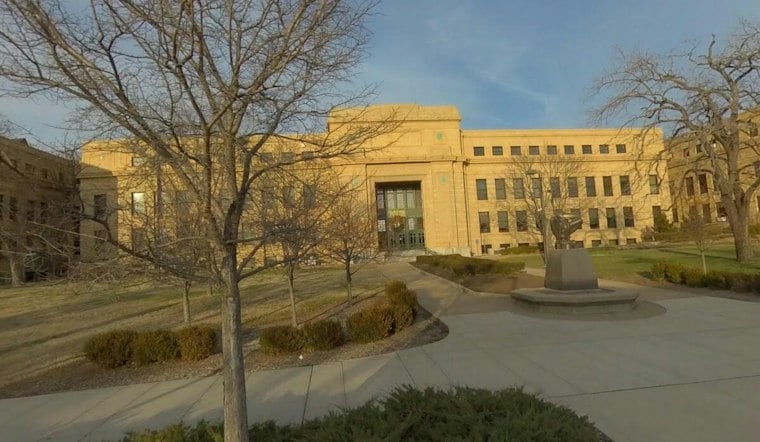
The University of Kansas is paying its student-athletes $20.5 million this year, but unlike every coach and administrator on campus, those athletes' individual contracts and paychecks remain entirely hidden from public view. The university makes other employees' salaries public record, yet it has fought for nearly a year to keep its athletes' compensation secret.
That $20.5 million figure comes from reporting by KCUR, which first filed a Kansas Open Records Act request for student-athlete contracts and payroll information on Nov. 26, 2025. KU Athletics denied that request three weeks later, and when KCUR filed a complaint with the Kansas attorney general's office on June 4, 2026, arguing the $20.5 million was public money lost to the university's general fund, the attorney general's office sided with KU anyway. According to KCUR, the attorney general's office wrote that the public interest in student-athlete contracts and payroll did not outweigh personal privacy rights.
KU Athletics built its denial on two legal pillars: the federal Family Educational Rights and Privacy Act, or FERPA, and the Kansas Uniform Trade Secrets Act. The athletics department argued, and the attorney general agreed, that disclosing what Jayhawk athletes make would put KU at a competitive disadvantage, with the attorney general further reasoning that the risk of rival schools poaching players makes payroll secrecy valuable. FERPA, passed in 1974, protects payroll records of students employed because of their student status — a provision now being stretched to cover multimillion-dollar athletic compensation nobody could have anticipated when the law was written decades ago.
A Records Law That Applies to Everyone Else
The University of Kansas Office of General Counsel's own public guidance states that the state's Open Records Act applies to the university and that its records must be disclosed upon request unless a specific record is exempt, according to the University of Kansas Office of General Counsel. That same guidance specifies that the personnel-records exemption does not apply to the names, positions, salaries and length of service of university employees, and that the Open Records Act does not supersede federal law including FERPA.
That transparency standard is why coach and administrator contracts remain open records even as athlete pay stays sealed. Head football coach Lance Leipold will make $5.8 million this season, the KCUR report notes, and also receives a $500,000 annual retention bonus for each year he remains at KU along with $20,000 a month for private-plane travel. Athletic director Travis Goff makes $1.3 million and receives two cars and a country club membership, while assistant basketball coach Jacque Vaughn makes $360,000 a year and is eligible for $175,000 in performance incentives — all figures publicly available because they belong to university employees rather than athletes.
Academics Subsidizing Athletics
For the second year in a row, KU is diverting $16 million from academics to subsidize athletics, the same KCUR reporting found, even as the university has been cutting academic programs to balance its budget. KU Athletics is also drawing down a $50 million line of credit that the athletic board approved in April. The KU Faculty Senate has sent a memo to the Kansas Board of Regents and the chancellor arguing that general or academic funds should not pay athletics costs, and that student-athletes should instead be paid from revenue generated by athletics itself.
The funding picture, however, is contested. KCUR separately reported in March that the new student-athlete payroll is coming out of the university's general fund, which includes tuition and state tax dollars. KU Chancellor Douglas Girod and Provost Arash Mafi have said, per the University of Kansas Office of the Chancellor, that the dollars now directed to student-athletes for revenue sharing and Name, Image and Likeness payments are coming from Kansas Athletics, not the university itself. KCUR's report does not reconcile those two accounts.
Open-Records Fights Spreading Nationally
KU is far from alone in stonewalling. CBS Sports filed open-records requests with a dozen Division I schools last year seeking revenue-sharing information, and all were denied, the KCUR report states. The New Mexico Foundation for Open Government sued the University of New Mexico and New Mexico State last year, saying those schools conceal spending plans and contractual terms for student-athletes. By contrast, the Kansas attorney general's office found in a separate case that Emporia State had violated the Kansas Open Records Act by failing to respond to a records request within three business days, according to the Kansas Reflector — a reminder that the state's open-records law has teeth when a school simply ignores a deadline, even if it has sided with KU on the substance of athlete pay.
The stakes keep climbing. The NCAA Division I direct-payment cap, which lets schools spend money directly paying athletes, is rising from $20.5 million to $21.58 million this year, per the KCUR report. Nationally, colleges paid athletes more than $1.77 billion in revenue-sharing payments during the 2025-26 school year, according to The Athletic, with the College Sports Commission reporting that 68 schools reached the $20.5 million cap or came within five percent of it. KU Sports has reported that Girod, as incoming chair of the Big 12 Conference board of directors, expects that cap to keep growing by about 4% per year.
From Amateurism to a Paycheck
The shift traces back to a 2021 federal court ruling that found NCAA restrictions on name, image and likeness violated antitrust laws, after which the NCAA agreed athletes should be compensated for their name, image or likeness. The House settlement resolved a separate federal antitrust lawsuit in 2025 and resulted in the revenue-sharing system now sending direct paychecks from colleges to student-athletes. It's a striking reversal for a governing body that, per the KCUR article, coined the term “student-athlete” in 1957 specifically to avoid paying death benefits for a football player who died during a game.
Public opinion in Kansas remains split on the underlying question of using tax dollars for athlete pay. The Kansas Speaks survey found that 30% of Kansans support using tax money to pay college athletes, while almost 39% support paying college athletes in some form. Meanwhile, NIL income for star players at other schools illustrates just how much money is moving through the system — Sports Illustrated estimates University of Texas quarterback Arch Manning will earn $6.8 million in NIL income this school year, while University of Miami quarterback Carson Beck is estimated to earn $4.3 million.
KU Athletics did not respond to three emails from KCUR asking why the student-athlete payroll was kept from the public, according to the same report. The silence has drawn sharp criticism from open-government advocates. Lyndon Vix called the attorney general's analysis weak and baffling, saying universities want to conceal multimillion-dollar student-athlete payrolls and that the circumstances around student-athlete salaries were never imagined when FERPA was written decades ago. Vix added that KU's secrecy amounts to an effort to avoid scrutiny and criticism.
Eric Thomas, who supports payment for student-athletes, pushed back on the secrecy itself rather than the payments. Thomas said he found his own salary in eight seconds using Google, and argued that public university employees face obligations including salary transparency and open-records access — obligations he suggests should not disappear simply because an employee happens to also be a student.





