

























































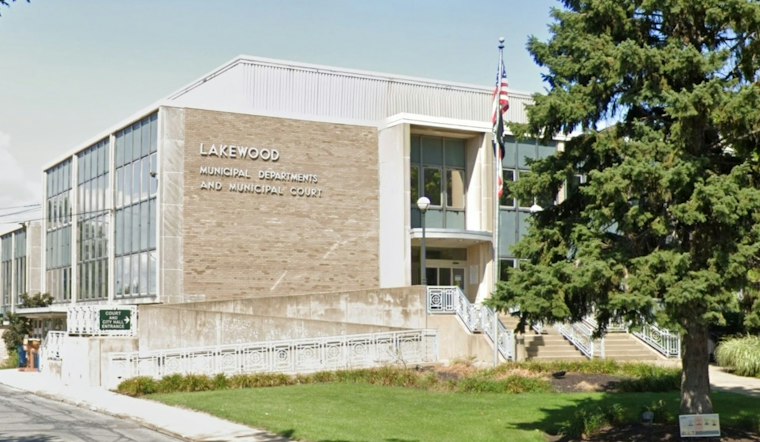
Lakewood City Council is weighing a pair of proposals that would put speed cameras in school zones and funnel any resulting fines into crossing guards, safety education and street improvements. The push follows city data showing excessive speeding near several schools along Clifton Boulevard, and it comes as the Lakewood City Schools district prepares for a consolidation that could put more kids on foot near those same streets.
Council President Sarah Kepple said two separate pieces of legislation are under consideration, according to News 5 Cleveland. One would authorize Lakewood's public safety director to install speed cameras exclusively in school zones. The other would establish a fund, financed by ticket citation revenue, dedicated to safety improvements meant to create safer routes to school. City council referred both related proposals to its committee of the whole on Monday, according to cleveland.com.
Per the same account, the fund would collect civil fines from school-zone camera enforcement rather than pulling from unrestricted city revenue, and council could also direct money from other sources into it. That structure traces back to a citizen petition: the Cuyahoga County Board of Elections verified 1,421 signatures for the Lakewood Safe Routes for Children initiative, well above the 944 needed to place the proposed ordinance before council. A petitioner cited in the report said roughly 830 children are expected to move to new school buildings once the district's boundary changes take effect.
What the Fund Could Pay For
Kepple said the proposed fund could support hiring more crossing guards, backing safety education efforts and paying for infrastructure improvements. She said the Lakewood Police Department has already increased enforcement in school zones since the city released its new speeding data, but added that officers cannot be everywhere at once. Cameras, in her view, are another tool to fill that gap and remind drivers to slow down when a patrol car isn't there to do it.
The timing is tied directly to changes inside the school system. With Lakewood City Schools undergoing consolidation, Kepple said more students may end up walking to school than do now, adding urgency to the safety discussion. Resident Larry Davalla told the station he thinks the proposal is a good idea, since many children already walk and more are likely to next year.
Speeding Numbers Behind the Push
The data driving the conversation is stark. A December 2022 study found that between 8 and 9 a.m., as many as 89% of drivers measured in the Lincoln school zone and 59% in the Emerson school zone were traveling above the posted school-zone speed limit, the cleveland.com report notes. In the afternoon window between 3 and 4 p.m., as many as 83% of drivers in the Lincoln zone and 71% in the Emerson zone were still exceeding the limit.
Those numbers line up with what Lakewood's own planning documents have flagged. The city's Safe Streets for Lakewood Safety Action Plan lists minor arterial streets — including Clifton Boulevard, Detroit Avenue and Hilliard Road — as accounting for the largest share of crashes in a citywide table of crash locations, according to the City of Lakewood. It isn't the city's first attempt at slowing traffic on residential streets: in 2022, officials said speed tables were planned for Clarence Avenue between Detroit Avenue and Franklin Boulevard, a response developed jointly with residents after block-level speeding complaints, per Cleveland 19 News. Officials at the time said they typically try driver education and added police presence before turning to physical traffic-calming measures.
Residents Split Over Surveillance
Not everyone is sold. Kepple said some residents welcome the cameras as a straightforward safety tool, while others have raised concerns about surveillance. Resident Hunter Louthan said he supports the underlying goal of school-zone safety but has reservations about the cameras themselves. “I would prefer not to have the surveillance in my city,” Louthan said, telling News 5 Cleveland he would rather be pulled over by an officer and told directly what he did wrong than receive a citation in the mail.
A Regional Debate Over Camera Revenue
Lakewood isn't the only Cuyahoga County suburb weighing this trade-off. Cleveland Heights transportation committee members have discussed school-zone speed cameras as both an enforcement tool and a possible funding source for traffic-calming projects, cleveland.com reported separately. Committee co-chair Chris Brace floated starting with eight to 12 cameras on the school-zone streets with the highest recorded speeds, estimating potential revenue of $100,000 to $200,000 annually per camera — figures the outlet noted were not based on any existing Cleveland Heights program. As of that report, Cleveland Heights had not adopted a camera program or a spending plan, and officials there were still debating whether the city would install and keep the cameras itself or license the work out to a company.
Any Lakewood camera program would also have to answer to state law. Ohio Revised Code Section 4511.094 bars a local authority from using a traffic-law photo-monitoring device to detect or enforce a violation until it has completed certain required steps, though the specific requirements were not detailed in the available excerpt. A separate provision, Section 4511.099, states that one division of the code does not apply to civil actions tied to a ticket based on evidence from a photo-monitoring device located in a school zone, according to the Ohio Revised Code.
For now, the proposals remain in Lakewood council's committee of the whole. Kepple said the council hopes to move the legislation forward in the coming weeks, though she acknowledged the discussion could carry into the new year depending on what else is on the agenda.



