

























































A tent community that had sheltered dozens of homeless people on a church-owned lot in Lawrence is gone, dismantled under city order just a day before residents packed a City Council meeting to object. The 26-tent encampment, organized by House of Mercy on its Bay State Road property, had housed roughly 60 people before the city forced it to shut down over permitting and safety concerns.
House of Mercy had set up the tents in an orderly fashion atop wooden pallets on an unpaved riverfront lot it owns on Bay State Road, according to MassLive. Residents decorated their tent entrances with pumpkins, flowers, welcome mats and rugs, and the church installed porta potties and outdoor lighting while running services out of its building across the street. The formalized community had operated for more than a month before the shutdown, and some who spoke to MassLive said Bay State Road grew noticeably cleaner and less chaotic during that stretch. The Eagle-Tribune, however, reported that 50 people had been living there for the previous 10 days — a different headcount than MassLive's estimate of about 60, with neither figure independently confirmed.
Fine and Cease-and-Desist Order Triggered the Shutdown
On Oct. 29, House of Mercy founder Roger Farah received a $1,200 fine and a cease-and-desist order from the city's inspectional services department, per MassLive's reporting. The order told Farah to immediately clear the tents from his property, along with renovated shipping containers the church had intended for future temporary housing. City reporting on the fine amount has varied: other outlets have described it as a recurring daily charge or as four separate $300-per-day violations, and the exact structure of the penalty has not been resolved across accounts.
The city's violation letter stated that no special permit, building permit or certificate of occupancy existed for the tents. Farah faced potential criminal or civil action over four alleged violations of local ordinance and state law if he did not comply, the outlet reported. Farah maintained he had the right to place tents on his private property and claimed the tent community had been created safely and within House of Mercy's legal rights. He said the four violations had no merit and asked whether the city or state had its own solution to homelessness, arguing House of Mercy had tried a different approach because people too often pass responsibility for addressing homelessness onto others. House of Mercy has since obtained an attorney to contest the city's action, though that attorney could not be reached for comment by MassLive's Friday deadline.
Residents Scattered After the Tents Came Down
Once the tent community was broken up, residents returned to the street and scattered across Lawrence, MassLive reported. Kassy Gallant, who had lived in the encampment, said it helped her feel safe and stable after years of transience. Melissa Marrama, who said she had worked closely with House of Mercy over the prior two years, told the council that 61 people did not know where they would sleep that night, and she urged members to work with the church rather than against it.
Marrama also said House of Mercy had served 50,000 meals since Jan. 1 and supported 36 people entering detox in the 70 days before her remarks. The encampment had been fully dismantled by the time residents addressed the City Council — about 24 hours after the forced closure — and city councilors reportedly did not respond to the public comments about House of Mercy during that meeting.
Residents Press Council to Partner With the Church
Several speakers pushed the council to find a path forward with House of Mercy rather than shut it down outright. Michelle Feeney said the encampment had been clean and well-maintained, with residents taking visible pride in their community, and argued the city should embrace the positive change on Bay State Road rather than erase it. She suggested the council could review its ordinances and grant permits that would let House of Mercy continue its work, and said providing shelter falls within the church's religious practice. Carrie Wieland, in a Monday interview, recalled that the same stretch of road had historically been marked by trash, discarded needles and people sleeping in the open.
Fabian Rojas asked city officials directly what shelters, spaces, outreach and services had actually been offered to people with nowhere stable to sleep, saying House of Mercy was simply trying to help where others hadn't. Dalia Diaz criticized Mayor Brian DePeña for forcing residents into the cold without proposing an alternative, and asked whether the administration's approach to people unable to defend themselves was appropriate. Councilor Jeovanny Rodriguez said he would not take a position, arguing that enforcing laws isn't the City Council's role, but added that the mayor should take responsibility for the city's day-to-day operations.
Mayor Defends Enforcement, Calls for Regional Help
DePeña issued a multi-page public statement Monday night defending the shutdown. He said compassion and compliance with the law are compatible, and that humanitarian intentions do not exempt organizations, property owners or individuals from applicable building, fire, health, sanitation, zoning and public safety requirements. The city has said harboring people in tents is extremely dangerous, and DePeña noted that state law requires minimum standards of habitability across all forms of housing. He said unauthorized encampments, temporary housing structures or sanitation facilities without required permits and inspections raise health, safety and welfare concerns, and described Lawrence as something of a magnet for homeless people from the surrounding area.
DePeña said the city cannot address the homelessness crisis alone, estimating that Lawrence spent $1.9 million in fiscal year 2026 on homelessness-related conditions and responses. He called on Gov. Maura Healey, the state Legislature, neighboring communities and other stakeholders to work toward what he called a comprehensive regional and statewide strategy. The city's Homelessness Initiatives Working Group, formed under the Mayor's Health Task Force, has been examining systemic barriers behind the cycle of homelessness and studying approaches used in other communities. A separate city planning document, the HOME-ARP Allocation Plan, found that Lawrence's 2022 point-in-time count identified no unsheltered families even as more than 190 families were reported doubled up or couch surfing, and flagged access to shelter, warming centers and transitional housing as persistent gaps.
A Somerville Precedent Looms Over Future Fights
The Lawrence dispute arrives alongside a closely watched legal fight in Somerville that could shape how churches statewide handle homeless shelters on their property. A Massachusetts Land Court ruling in April found that First Church Somerville could create a 26-bed adult shelter in its building despite local zoning restrictions, relying on the Dover Amendment — a law that, under the Tufts Daily's description, limits local regulation of land use for religious purposes. The Dover Amendment generally allows church-owned land to be exempt from certain zoning laws when used for religious purposes.
That Somerville shelter, hosted by the Somerville Homeless Coalition, was reported by the Tufts Daily to be set to open May 19, with Boston.com noting it would provide space for 20 men and six women and would be the city's only handicap-accessible shelter. The church and shelter operator have since asked the Supreme Judicial Court to hear opposing neighbors' appeal directly this fall, hoping the high court will uphold the Land Court ruling and set a statewide Dover Amendment precedent for church-run shelters. Nothing in the record establishes how that legal framework would apply to House of Mercy's Bay State Road site, and no such determination has been made.
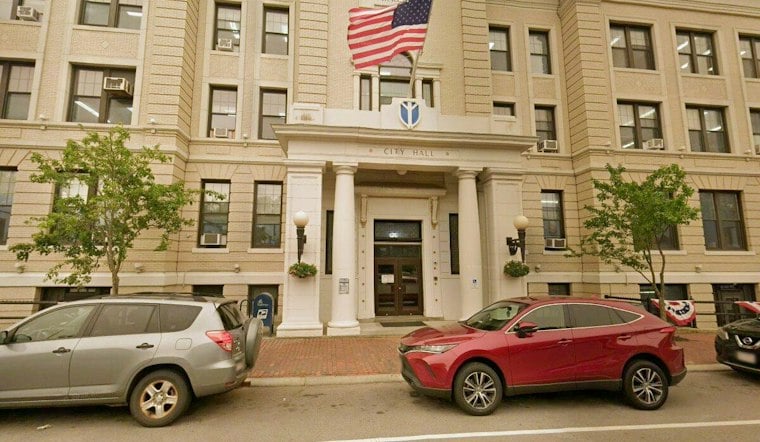
DePeña's handling of the encampment comes against the backdrop of separate turmoil at City Hall. He was indicted by a federal grand jury on 11 charges alleging more than $1.5 million in COVID-era small-business loans were obtained for personal use, and has pleaded not guilty to those federal charges. The Lawrence City Council passed a no-confidence vote against DePeña in October.




