

























































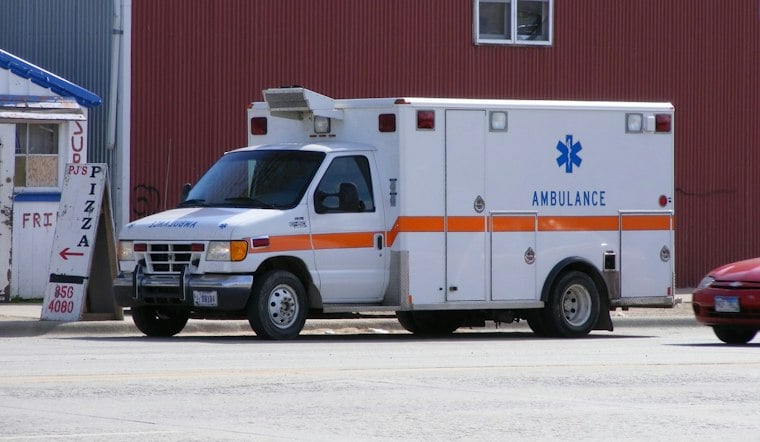
The Lennox City Council has approved a joint funding agreement meant to keep Lennox Area Ambulance running beyond city limits, roping in 13 other local governments to help foot the bill for a service that has covered nearly 200 square miles of western Lincoln County for more than five decades. The deal comes just weeks before Lennox had warned it would have to cut off service outside city limits starting Jan. 1, 2027, due to budget strain.
Lennox signed onto the arrangement this week, according to Sioux Falls Live; governing boards in all 14 participating locales still must authorize signing on before the agreement becomes binding. For years, the ambulance service — which responds to more than 500 calls annually — had been funded solely by Lennox taxpayers, a setup that strained the city's resources and pushed officials to spend more than a year negotiating with surrounding governments before landing on this week's agreement.
A Deal That Isn't Final Yet
Despite the council's approval, the agreement isn't locked in. It won't become binding until governing boards in all 14 participating locales also sign off, and once they do, each party is bound to the service for a full year before it can reconsider whether to re-sign or walk away, per the same report.
A joint advisory committee made up of representatives from each participating locale will offer input and guidance to the City of Lennox, including a say in hiring candidates for the ambulance service. Even so, Lennox retains ultimate responsibility for daily operations and the service's long-term success — it's a shared financial burden, not a shared chain of command.
Who's Paying What
The funding formula splits costs through a flat readiness fee per jurisdiction plus a per-call fee, with 2027 budget forecasts calling for just under $453,000 total. The City of Lennox is slated to contribute $111,411.62, while the City of Tea — the largest outside contributor — would pay $182,569.53. Worthing is set to kick in $14,877.64 and Chancellor $3,856.61.
Turner County's share comes to $14,029.85, while Lincoln County's commission opted to set aside a flat $60,000 rather than run its contribution through the formula directly. Among the eight townships, Delapre Township carries the largest share at $30,441.76, followed by Perry Township at $16,069.60, Grant Township at $8,902.07 and LaValley Township at $8,811.56. Lynn, Home, Germantown, Middleton and Delaware townships round out the list with smaller contributions ranging from $803.35 to $3,434.58.
Officials Call It a Bridge, Not a Fix
Officials described the agreement as a stopgap rather than a permanent solution. The joint operating agreement is intended to be temporary, and Nate Vander Plaats said the agreement is not the end of the process, adding that he expects future discussions about creating a dedicated ambulance district — an option he said is likely more sustainable than a joint operating agreement because it comes with its own taxing authority. Vander Plaats noted that establishing such a district would require multiple elections and would delay when tax-funded revenue could start flowing.
Danny Fergen said the end of the process was in sight, while Bill Daughtery said the agreement would provide better, more reliable service and benefit the area. Notably, under state law, a joint entity formed this way cannot levy property taxes on its own, according to South Dakota Codified Law 1-24, which also requires the agreement to spell out each government's share of support — a structural reason officials see a future ambulance district, which could levy up to 60 cents per $1,000 of taxable valuation under Codified Law 34-11A, as the more durable long-term fix.
Lennox's Patch Fits a Statewide Pattern
Lennox's scramble to shore up rural ambulance coverage mirrors a broader reckoning playing out across South Dakota. A state task force has been studying whether regionalizing ambulance services could preserve coverage for rural areas and guarantee a basic level of service, according to South Dakota Searchlight, though the group concluded that fixing the system statewide would be a multi-year commitment requiring a permanent advisory board.
That task force is recommending two proposals for state lawmakers to weigh when the 2027 legislative session convenes in January, including a draft that would create a nine-member Emergency Medical Services Advisory Council appointed by the governor and establish formal EMS regions, KELO reports. For Lennox and its 13 new partners, that session carries extra weight: the local agreement allows for state funding to reduce local contributions if lawmakers pass a funding bill next year.





