

























































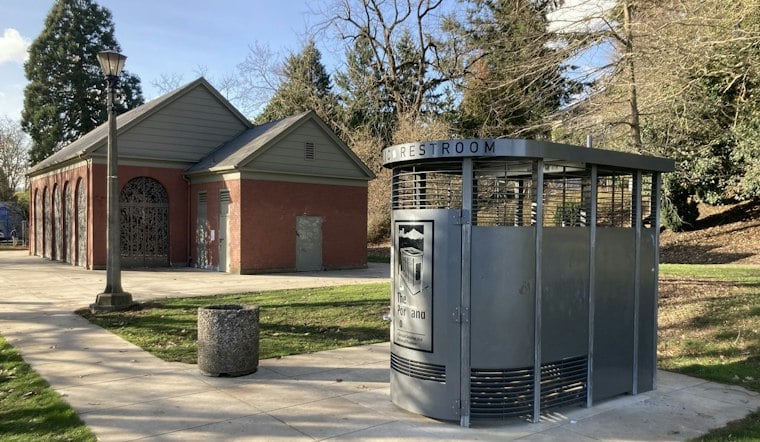
A single public restroom in Manteca now carries a price tag that can climb as high as $500,000, and the city is rolling them out across neighborhood parks anyway. The units, known as Portland Loos, cost $275,000 apiece before a dime is spent on the foundation, sidewalk connections, plumbing hookups and utility stubs that can push the total cost to half a million dollars.
That breakdown comes from Michael Rosales, Manteca's park planning and development manager, who laid out the math for the Manteca Bulletin. “The loo per se is $275,000,” Rosales said. “The actual installation including the foundation, associated sidewalk, hook ups as well as the stubbing of services can push the overall cost to $500,000.” The city isn't tapping its general fund to pay for any of it — the Bulletin's reporting notes the costs are being covered by growth fees charged per new home built for neighborhood parks.
Who Actually Pays Once the Loo Is Installed
The restrooms currently going in are landing in neighborhood parks that sit inside community facilities districts, where park maintenance is already funded through annual fees charged to every home in the surrounding neighborhood, according to the same report. But the Portland Loos themselves come with an extra wrinkle: water, electricity and any future replacement needs will be shouldered by the nearby homeowners, not the city at large.
Once installed, the units will run on the same schedule as any other park restroom. City park crews will open the loos first thing in the morning and lock them when the park closes, the report states. They're expected to need daily cleaning, though the design and materials reportedly make that job easier — the stainless-steel surfaces can simply be power washed.
Two Sites Underway, a Third Still Under Debate
Manteca's first Portland Loo is going into Cedar Point, a neighborhood park off South Austin Road built around 797 homes that will also include the city's first sensory playground; the city plans to open it in spring 2027. A second unit is being installed in the Machado Ranch development, at the southwest corner of Atherton Drive and Woodward Avenue, per the Bulletin's reporting.
Cedar Point's restroom won't be usable anytime soon regardless of construction timelines. The park hasn't started the 90-day maintenance period required of its developer, meaning it won't be open to the public for at least three to four months, the outlet reports.
A third possible site, Morezone Park, sits outside any community facilities district, which makes it a tougher call for the city. The restrooms at that Center Street baseball field west of Union Road need replacement, and the article notes they've had issues over the years with homeless people breaking in to sleep in them overnight — a problem city officials believe the Portland Loo's design is meant to discourage.
What $275,000 Actually Buys
The units are built from heavy-gauge stainless steel, structural steel tubing and anti-graffiti powder coatings, with slanted louvers near the ground and roof that provide privacy while signaling when someone's inside, according to the Bulletin. Damaged sections and parts can reportedly be swapped out rather than requiring a full rebuild. Manteca's version includes wash stations but skips a diaper-changing station, and the city passed on a blue-light option designed to make it harder for users to locate veins for drug use.
Municipal staff is now working through where future units should go. Currently, restrooms are being added only to neighborhood parks of five acres or more, and staff is exploring how to refine that threshold — the report notes Portland Loos may not make sense in parks that lack outside-neighborhood attractions or enough open space for activities like soccer practice. Developers are required to extend infrastructure when building these parks, which is part of why the installation costs run so high.
A History of Restroom Sticker Shock
Manteca stopped building restrooms in its neighborhood parks back in the 1980s specifically because of ongoing maintenance costs, and the city has noted that homelessness sometimes became an issue at the ones that remained, according to a separate Manteca Bulletin report. But as walking park perimeters has grown more popular in recent years, the city has fielded more requests to add restrooms back in.
The price escalation isn't new to Manteca. Two-stall prefabricated restrooms installed at Library Park in 1993 cost $125,900, and the cost of that same exact unit doubled when it was installed at Morezone Park 15 years later, the outlet reports. More recently, the city's figures on its Woodward Park restroom project have varied: one Manteca Bulletin article states the city spent $800,000 on two new restroom buildings there with more than a dozen stalls, plus another $650,000 on site work and infrastructure extensions, while a separate Manteca Bulletin report on the same project put each four-pack restroom complex at more than $500,000 to purchase, with the two totaling more than $1.5 million after site prep and prevailing federal wages. The Woodward Park work was tied to the park's interactive water-play feature project, and the city ended up buying a second restroom unit after damage made relocating the original impractical.
Manteca isn't alone in watching restroom costs spiral. San Diego officials were stunned in 2014 when installing two Portland Loos downtown ran about $560,000 — more than double an initial $215,000 estimate — according to the San Diego Union-Tribune. City officials there blamed California electrical and seismic code requirements along with difficult sewer and water connections, even though the manufacturer said a unit should cost about $130,000 installed and connected; San Diego has separately spent more than $300,000 per Portland Loo just extending sewer, water and electricity infrastructure. Vancouver estimated $650,000 each to buy and install two new units, part of a system that includes 165 city-funded public washrooms, roughly 80 percent of them in parks, according to Business in Vancouver. Philadelphia, meanwhile, budgeted $1.8 million for six units — about $300,000 apiece including installation — per Reason.
For Manteca, the pitch is that the steel units will carry lower ongoing upkeep costs than the damaged restroom materials they're replacing, even with the steep upfront price. Whether that math holds up as the city expands the program to more parks — and whether Morezone Park ultimately gets one outside a community facilities district — remains something city staff is still sorting out.



