

























































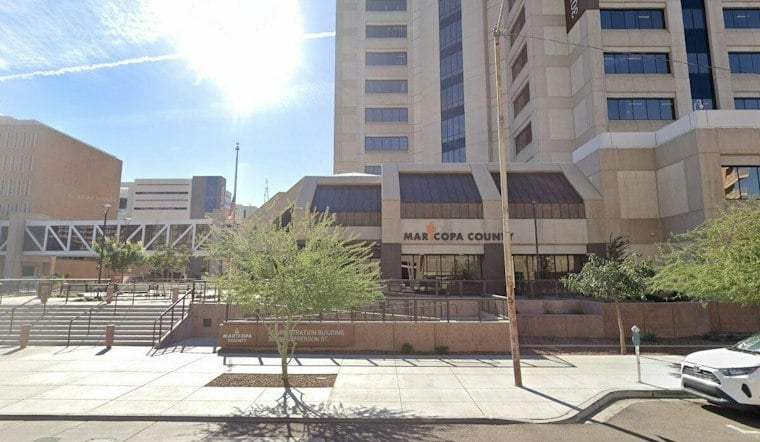
Maricopa County rejected and did not count 6,089 mail ballots over signature issues this year, more than three times the 1,800 ballots left uncounted in 2022. The jump came up Wednesday as the Board of Supervisors voted unanimously to certify the county's election results, sending them on to next week's statewide canvass. The signature numbers — and the fact that Recorder Justin Heap wasn't in the room to answer for them — dominated the meeting.
According to ABC15, the Recorder's Office flagged 18,151 ballots for signature curing this year, a number close to the 18,510 flagged in 2022. But far fewer made it across the finish line: just 11,047 of those flagged ballots were verified and tabulated this year, compared with 15,411 in 2022, per the Recorder's Office figures ABC15 cited. The county reported it had roughly the same number of early ballots this year as it did four years earlier, so the drop in verified ballots isn't explained by fewer people voting by mail.
Supervisors pressed for answers at the meeting, questioning the signature-verification process directly. Board member Kate Brophy McGee said she lacked clear answers about the rejections and argued the county needs to resolve the concerns before the next election, the station's report notes. She also said the rejected ballots didn't end up affecting this year's contests, because none of the races were close enough for the numbers to matter.
Heap's Absence Draws Criticism
Justin Heap, the recorder overseeing the signature-verification process, did not attend the Board of Supervisors' canvass meeting, according to AZFamily. Supervisor Steve Gallardo said the county recorder has a responsibility to attend the canvass. Heap did weigh in on the rejection numbers separately, saying the rate was close to a national average — a comparison McGee disputed on the record. “There is no national average,” she said. “There's no national standard. There's no state standard.”
Heap has defended the overhauled signature-review system he put in place, saying it offers faster, more secure and more rigorous verification than prior administrations and arguing that signatures which cannot be correlated should result in a rejected ballot. He has described the bipartisan system his team built as one intended to serve as a model for other counties. Under the revamped process, every signature that comes in goes to two reviewers from different political parties, and any disagreement is sent to a second bipartisan team for another look. The review software displays five or more signatures at once for comparison and hides voter personal information, including party registration, from reviewers.
New ID Option Changed How Many Signatures Got Checked
Arizona state law introduced a new option this cycle allowing early voters to present identification when dropping off a ballot at an early-voting site or an Election Day vote center, bypassing the signature-check process altogether. More than 150,000 voters took that route this year, according to the same ABC15 account. A legislative summary from the Arizona Legislature indicates that, beginning this year, an early voter may present a voted ballot along with prescribed forms of identification, with an election official checking whether the name and address on the ID appear to match the voter's registration record.
For everyone else, the process still runs through the Recorder's Office, where election workers compare the signature on a mail ballot's outer envelope against signatures on file to verify the voter's identity. Arizona voters whose signatures are flagged have five days to cure the ballot. Heap's office sends a mailed notice to affected voters, his team calls them multiple times, and texts go out to voters who signed up for ballot-related messages. The county also offered signature verification through BeBallotReady.vote this year. Heap had vowed in September 2026 that his team would finish signature verification on all early ballots by the day after the election, and his team reported finishing that work by 1 p.m. the day after this year's election.
How the Numbers Compare to Past Elections
The totals cited by ABC15 differ somewhat from figures reported elsewhere. Fox 10 Phoenix reported that out of 1.3 million early ballots, about 8,300 were rejected for bad signatures, missing signatures, or being returned too late — a broader category than the 6,089 signature-based rejections ABC15 cited. The 2022 comparison point also varies depending on the source: ABC15 cited 1,800 uncounted ballots that year, while Votebeat reported 3,099 total ballots rejected in 2022 for bad or missing signatures, including 1,800 attributed to bad signatures and 1,299 to missing signatures, according to the Tucson Sentinel. Votebeat separately reported that signature-related rejections rose from 587 ballots in 2020 to 1,800 in 2022, a near-tripling at the time, and that Maricopa County had made several changes ahead of the 2022 election, including more worker training, more signatures available for comparison, an added audit step, and more review staff.
Votebeat's reporting also raised a broader concern about the process itself, noting that signature verification may lead to disenfranchisement disproportionately affecting voters who are younger, newly registered, or unaffiliated with a political party. Nationally, mail-ballot rejection rates have fluctuated in recent cycles; Ballotpedia News reported a nationwide rejection rate of 1.2% in 2024, higher than in 2016 and 2020 but lower than in 2018 and 2022, while Arizona's own 2024 rejection rate of 0.9% was the lowest among closely decided presidential states and the 28th highest nationwide.
What exactly drove this year's higher rejection count in Maricopa County remains an open question. The reporting lays out the process changes and the new ID option for ballot drop-offs, but it does not establish that either change caused the increase in rejected signatures. The Board of Supervisors' certification sends the results forward to next week's statewide canvass regardless, with the signature-review questions apparently unresolved for now.





