

























































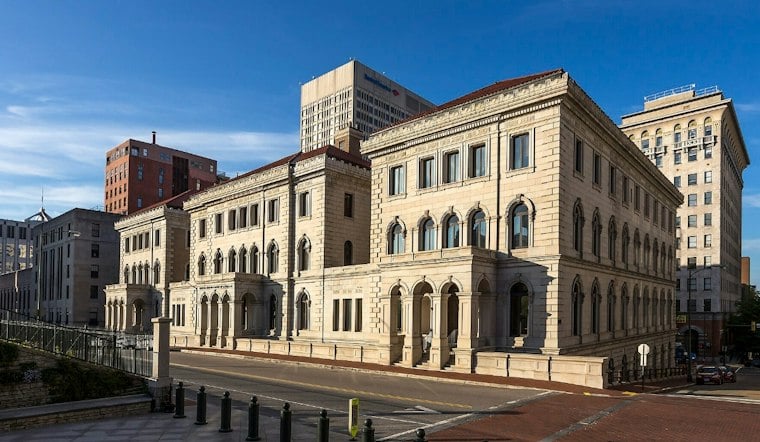
Kalshi cannot stop Maryland gaming regulators from pursuing enforcement action against it for offering unlicensed sports betting, a federal appeals court ruled Tuesday, dealing the prediction-market company another legal setback in its nationwide fight with state regulators. The 4th U.S. Circuit Court of Appeals, based in Richmond, Virginia, issued a 2-1 decision affirming a lower court's refusal to block Maryland from enforcing its sports-wagering laws against Kalshi's sports event contracts.
The ruling, reported by rg.org, upheld a Maryland judge's earlier refusal to block state regulators from enforcing the state's sports wagering laws against Kalshi's contracts. Judges Roger Gregory and Stephanie Thacker formed the majority but wrote separate concurrences on different legal grounds, while Judge DeAndrea Gist Benjamin dissented. The split opinions reflect just how unsettled this area of law remains, even among judges who agreed on the outcome.
Two Different Paths to the Same Result
Judge Gregory's reasoning didn't even require deciding whether Kalshi's contracts are swaps. He concluded that Maryland has concurrent authority over the contracts regardless, because Congress never clearly stripped states of their traditional police powers over gambling. Gregory wrote that Congress knows how to displace traditional state police powers when it chooses to do so, according to the Charlotte Observer, which credited the report to Reuters.
Thacker took a more direct route, rejecting the idea that Kalshi's sports contracts qualify as swaps at all. “What is happening here is sports betting. That is gambling, plain and simple,” she wrote, according to the same rg.org report. Her blunt characterization cuts against Kalshi's central legal argument — that the U.S. Commodity Futures Trading Commission has exclusive jurisdiction over its sports-related event contracts, a position the CFTC itself has shared under the Trump administration, per the Charlotte Observer's reporting.
A Dissent That Echoes Other Circuits
Judge Benjamin's dissent took the opposite view, arguing that Kalshi's sports-related event contracts qualify as swaps — a derivatives category under exclusive CFTC oversight — and therefore fall outside Maryland's reach. Her dissent cited Third and Sixth Circuit decisions reading the swap definition to cover Kalshi's contracts, the rg.org report notes. That disagreement is not an isolated one; it mirrors a deepening split playing out across the federal appellate system.
A third appeals court, the Charlotte Observer reported, had already ruled that New Jersey could not regulate Kalshi — specifically, the Third Circuit found in April that Kalshi's sports-related event contracts are swaps traded on a CFTC-licensed exchange, according to Ars Technica. But two other appeals courts have ruled against Kalshi. In September, a unanimous Sixth Circuit panel ruled that Ohio and Tennessee can enforce their gambling laws against the company, and the Ninth Circuit separately found that Nevada could block Kalshi's sports bets because they are not swaps and may be regulated under state gambling law, Ars Technica reported.
New York, Connecticut Losses Add to the Pile
The Second Circuit has also gone against Kalshi. It considered the company's losses to New York and Connecticut in a single case and upheld the lower-court decisions against it, per the same Ars Technica report. Earlier in November, the Second Circuit denied Kalshi and Coinbase injunctions pending appeal against New York and Connecticut, according to rg.org's account of the case history.
Maryland's fight with Kalshi dates back to 2025, when the state's gaming regulators sent the company a cease-and-desist letter demanding it stop unlicensed sports wagering. Kalshi filed suit after receiving that letter, and a lower-court judge rejected its request for an injunction before Tuesday's appellate ruling. Jeremy Baker, acting director of the Maryland Lottery and Gaming Control Commission, welcomed the ruling, according to the Charlotte Observer's reporting.
Why States Are Pushing Back
States contend that prediction-market firms like Kalshi are operating without the licenses that traditional sportsbooks must obtain, violating gaming laws designed in part to restrict wagering by people under 21. Kalshi and similar companies allow users to trade on event outcomes including sports and elections — contracts that function much like bets but have been marketed as financial derivatives. Sports bets are by far the most popular of these products, typically representing 80% or more of such platforms' weekly trading volume, according to NPR.
The stakes for traditional state-regulated sportsbooks are significant. Maryland's licensed sportsbooks alone took in $710.1 million in bets in October and generated $13.8 million for the state, according to the Maryland Lottery and Gaming Control Agency, as reported by rg.org. That revenue stream helps explain why states have moved so aggressively against unlicensed competitors.
Supreme Court Review Looms
The growing circuit split increases the odds that the U.S. Supreme Court will eventually take up the issue. New Jersey has already petitioned the high court to resolve the dispute, and 39 other states plus the District of Columbia filed a brief supporting that petition, Ars Technica reported. For now, the patchwork of conflicting rulings means Kalshi's legal footing varies state by state.
Kalshi, which was valued at $40 billion in a recent funding round, said the Fourth Circuit's divided decision showed there is no unified, coherent legal argument against prediction markets, according to the Charlotte Observer. The company's broader battle with state regulators appears far from over, with its fate increasingly likely to be settled not in any single circuit, but at the Supreme Court itself.





