

























































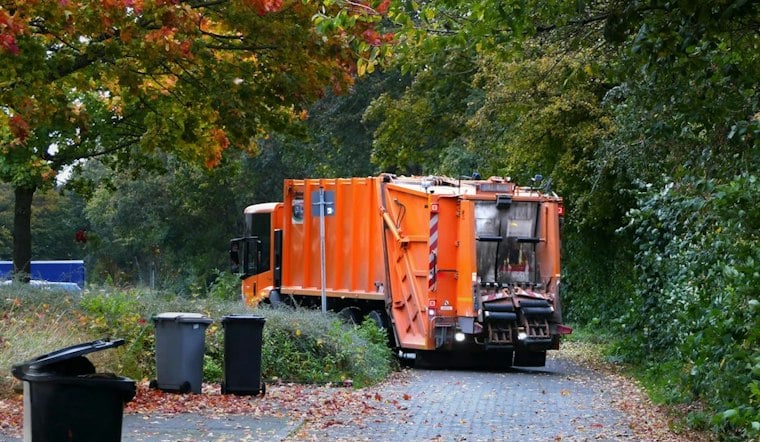
Medford officials are reconsidering how the city handles trash after a plan to cut curbside pickups in half drew national mockery, including a mention on Seth Meyers' NBC late-night show. Instead of moving to every-other-week collection, the city is now weighing a system that would keep weekly pickup but require residents to use official city trash bags.
The idea surfaced after months of pushback over Medford's original proposal, which called for collecting a 64-gallon trash cart and a 96-gallon recycling cart every other week starting July 1, 2027, while keeping weekly pickup of a 12-gallon food-waste cart, according to Patch. City officials had projected that biweekly collection could have saved Medford more than $1 million annually, per the seed reporting from the Boston Herald. Seth Meyers told viewers Medford had announced a waste program reducing pickups to once every two weeks while bottle recycling remained daily, and the city was subsequently called a national laughingstock over the proposal, the Herald reported.
Under the bag-based alternative described in the seed reporting, Medford would provide 52 free recycled-plastic trash bags to every household, along with 52 extra bags for recycling before rollout, and would reward residents with additional recycling bags at every collection. Households would reportedly receive a voucher for 52 bags by email or mail, with each voucher code working only once and expiring six months after issuance. The Herald's reporting notes Medford has no implementation date yet for the bag program, and city officials have promised advance notice, outreach, a help line and FAQs before any change takes effect.
Why Officials Say the Numbers Still Favor Action
City officials describe the revised approach as a proactive response to changing waste-disposal conditions, according to the Herald's reporting. Medford projects about $3.4 million in five-year savings from bag revenue and avoided disposal costs, and would otherwise face $8 million in disposal costs over five years without changes, per the same account. Public Works Commissioner Tim McGivern reportedly said avoided disposal costs contribute more to that $3.4 million projection than bag revenue itself, but cautioned that the plan remains theoretical and conceptual, with monitoring and enforcement questions still unresolved.
Those disposal pressures tie into broader capacity concerns across the region. Medford's trash is burned at the WIN Waste incinerator in Saugus, and that incinerator's ash is reportedly running out of places for disposal, per the Herald's reporting. Massachusetts has only one active unlined landfill, located in Rumney Marsh, which is slated to close in 2027, while the Shrewsbury landfill — which takes about half of the ash from the Saugus incinerator — is projected to close in 2031. Director of planning, sustainability and environment Alicia Hunt reportedly said less waste sent to incineration would reduce air pollution, and that the plan aims to encourage residents to reconsider what they throw away and consider alternatives.
Residents Push Back on Privacy and Fairness
Not everyone is sold on the bag approach. Resident Allison Dagostino reportedly said she welcomed retaining weekly collection but objected to mandatory bag purchasing, describing the proposal as a potential invasion of privacy. She also questioned how the city would prevent outsiders from dumping unknown bags in a resident's barrel and what penalties might apply, according to the Herald's account, which also notes Medford may introduce person-to-person outreach and potential fines under a new program.
Other residents raised cost concerns. Cheryl Rodriguez reportedly said paid trash bags shift costs to residents rather than actually save money, while Barry Ingber reportedly framed it more simply: residents either pay the city to handle trash or pay for it themselves. McGivern reportedly noted that under current weekly service, the city usually does not stop pickups for improperly discarded trash — a detail that underscores how much would change if enforcement were added.
Political Fallout and a Disputed Contract Vote
Mayor Breanna Lungo-Koehn reportedly said weekly collection remains a top priority for her administration, alongside concerns about overflowing trash, rodents, affordability, and preserving residents' existing large trash carts, per the Herald's reporting. Councilor Justin Tseng reportedly said he remained committed to community-based climate action rather than becoming a national-TV laughingstock.
Accounts differ on what the City Council actually approved back in July 2023. Tseng has said that vote merely allowed the mayor to negotiate a 10-year waste contract and was not approval of a specific plan, according to the Herald. The mayor's office, however, has said the council approved a 10-year waste contract that included an eventual move to biweekly trash pickup, per Gotta Know Medford.
Background on Medford's Waste Overhaul
The push to overhaul trash service traces back to 2022, when the city created its Solid Waste Task Force, according to the City of Medford. That task force recommended a transition to a Pay-As-You-Throw program in 2023, as reported by The Tufts Daily. Medford's official pages have described basic PAYT service as costing households nothing while including weekly food-waste collection, biweekly trash and recycling, and 20 weeks of leaf and yard collection per year — though those same pages note residents would not be able to get weekly trash collection under the municipal contract once PAYT begins, aside from leasing extra carts or buying overflow bags.
The city's composting program, launched separately, has seen strong uptake: more than 8,000 of Medford's 19,000 eligible households had enrolled in weekly curbside composting after 15 months, according to the City of Medford, which began that no-cost program on July 1, 2024. Massachusetts regulators are separately weighing a ban on commercial food-waste disposal as early as 2028, with a possible residential ban no sooner than November 2030, according to the Herald's earlier reporting — a statewide trend that adds pressure on cities like Medford to rethink disposal costs regardless of which local plan wins out.
Medford held a virtual public meeting at 6 p.m. on Nov. 18 to gather resident feedback on trash, recycling and composting services, according to Patch's reporting. With no firm rollout date set for the bag proposal, city officials say further outreach and public input will shape whatever comes next.



