

























































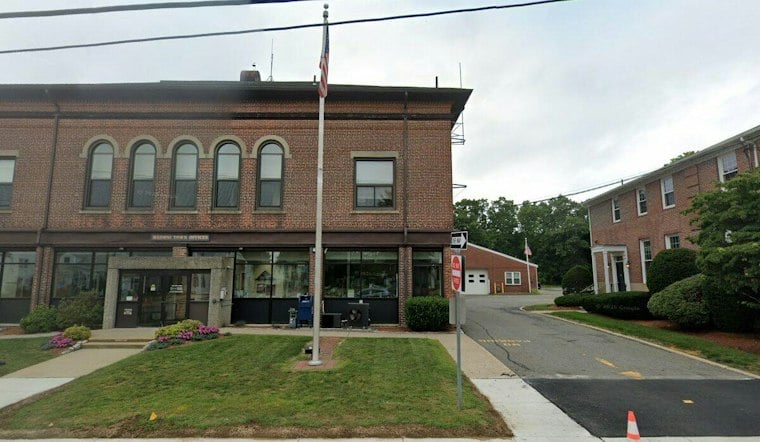
Medway Town Meeting voters delivered a lopsided verdict on Monday, voting 167-92 to eliminate automatic license plate readers from town, rejecting the Flock Safety camera system that police had defended as a tool for solving crimes and finding missing people.
The vote, reported by the MetroWest Daily News, caps weeks of public debate over whether the cameras, which photograph passing license plates and can be networked to reconstruct where a vehicle has traveled over days or weeks, belong on Medway's roads at all. The reconstruction capability is a defining feature of these systems broadly, according to the Pew Research Center, which has tracked the technology's spread nationwide.
Ahead of the meeting, Medway Police had reposted their department policy on automated license plate readers as residents prepared to weigh in on a ban that named Flock Safety systems specifically, according to MyFM Today. Police said they supported greater oversight and accountability for the technology but believed eliminating license plate readers altogether would take away an important investigative tool used to locate missing people and help solve crimes, the station reported.
A Citizen Petition Drives the Debate
The article that went before Town Meeting was citizen-sponsored, developed in part by Michael Fahey, who leads a grassroots organization called DeFlock Medway. Fahey said he was pleased with the outcome of the vote. It remains unknown when the Flock Safety cameras will actually come down in Medway, as no information on a removal timeline was available following the vote.
Medway's decision lands amid a broader reckoning playing out across Massachusetts communities over Flock's camera network. The ACLU of Massachusetts has reported that more than 80 police departments statewide had entered into contracts to deploy the technology, with Massachusetts police spending more than $2 million in taxpayer funds on it over a recent three-year span. Separately, Flock data obtained by the Boston Globe showed that 88 Massachusetts police departments had requested information from the system over a 12-month period, a related but distinct measure from the contract count.
Towns Across the State Pull Back
The New Bedford Light has reported that 25 Massachusetts municipalities canceled Flock contracts or ended pilot programs over an 18-month stretch, a wave that prompted Beacon Hill lawmakers to begin exploring statewide guardrails. A MassLive review of nine departments that moved away from Flock found sharply different answers about what comes next.
Other communities have taken their own distinct paths. Quincy approved an ordinance giving councilors greater oversight of surveillance technology and requiring a public hearing before the city signs a contract with a new vendor, according to Boston 25 News; that city's existing cameras remain in place but have been deactivated as it explores other options.
Mixed Outcomes in Neighboring Towns
Not every town has reached a clean resolution. In Charlton, a 245-56 vote at an October special Town Meeting favored a nonbinding citizens' petition calling for Flock cameras to be deactivated and the contract ended or allowed to expire, according to The Citizen Chronicle. But at a Select Board discussion this week, motions both to deactivate the cameras and to keep them running through the contract term failed to get a second, leaving the board without a formal decision on the cameras' operational status.
Across state lines, Manchester, Connecticut's Board of Directors voted 5-4 on Tuesday to terminate the town's relationship with Flock Safety, according to NBC Connecticut, with plans to remove all 18 of its ALPR cameras before the end of the year. The scale of the underlying technology remains a moving target nationally: OpenStreetMap volunteers had mapped roughly 110,000 Flock license plate readers as of September, per Pew, while Flock itself claimed in August to operate more than 120,000 cameras across 6,000 communities. Pew also found that the median agency with a public Flock transparency portal listed just 12 cameras and retained footage for 30 days, even after the company lowered its default retention period to seven days.
For Medway, the practical next steps — including when the cameras will be removed and how the vote will be carried out — remain unresolved for now. What is clear is that residents sided decisively with privacy advocates like Fahey's DeFlock Medway over the police department's warning that the cameras serve as a meaningful investigative resource.





