

























































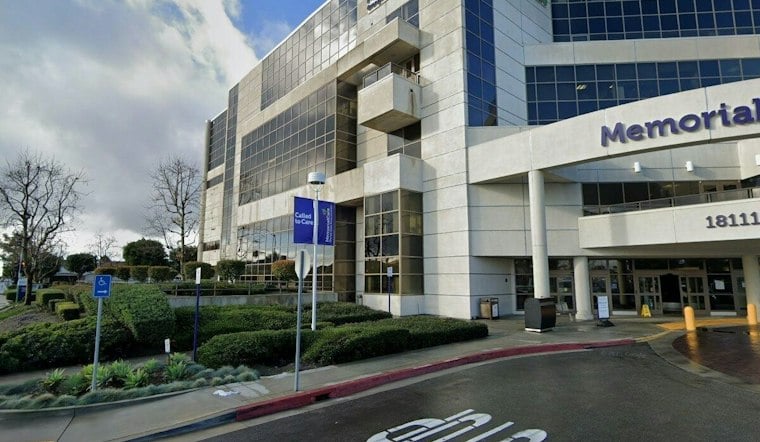
MemorialCare says it has caught its first brain aneurysm before it ruptured using an artificial-intelligence tool now screening brain scans across its Southern California hospitals. The health system says the technology, called Rapid Aneurysm, works quietly in the background of routine imaging, flagging a problem that might otherwise have gone unnoticed until it was too late.
According to a release from MemorialCare, the Rapid Aneurysm software, developed by RapidAI, is now embedded in all of the health system's qualifying inpatient and outpatient brain CT angiography and magnetic resonance angiography scans, automatically scanning for potential aneurysms as part of the imaging process. Patients do not need a separate scan or appointment for the AI analysis, the health system says, and the tool's findings are reviewed by radiologists and neuro stroke teams before any diagnosis is confirmed.
That detail matters because brain aneurysms are notoriously hard to catch early. Some are discovered unexpectedly while a patient is being imaged for an unrelated medical reason, while others remain completely undetected until they rupture, per the release. The Brain Aneurysm Foundation estimates that roughly 6.8 million people in the United States — about 1 in 50 — are living with an unruptured brain aneurysm, and the organization says around 30,000 people suffer a rupture every year.
Why Catching It Early Changes Everything
The stakes behind early detection are stark. The Brain Aneurysm Foundation reports that ruptured brain aneurysms are fatal in about half of cases, and that roughly 66% of survivors are left with some permanent neurological deficit. The foundation also notes that aneurysms are most common in people ages 35 to 60, though they can occur in children, and that women face a higher risk than men, at a 3-to-2 ratio.
Viktor Szeder, a neurointerventionalist in MemorialCare Neuroscience Institute's Division of Interventional Neuroradiology, said spotting an aneurysm before it bursts changes the entire treatment timeline. “Finding an aneurysm before it ruptures gives us time to lower a patient's risk, watch for changes and, if needed, treat it in a planned procedure rather than an emergency,” Szeder said, per the release. Liz Acord, MemorialCare's vice president of clinical institutes, said the tool is meant to shift care from reactive to proactive, allowing doctors to monitor rather than scramble.
From Flat Images To 3-D Models
Part of what sets the software apart, according to MemorialCare, is how it measures what it finds. Physicians have traditionally measured aneurysms by hand on flat, two-dimensional images, recording height and width. Rapid Aneurysm instead builds three-dimensional models that calculate full volume and surface area, and can compare those models across scans over time to flag growth or shape changes — information MemorialCare says helps inform whether a patient needs monitoring or treatment, since growing aneurysms are significantly more likely to rupture than stable ones.
When the software does flag a suspected aneurysm, it gets reviewed by radiologists, who confirm every diagnosis before it reaches a patient. Those with a confirmed aneurysm are then connected with specialists at the MemorialCare Neuroscience Institute for follow-up care, the health system says. MemorialCare's release describes its Neuroscience Institute as the first in Los Angeles and Orange counties to adopt the Rapid Aneurysm technology, making it available to patients from the South Bay to South Orange County.
Where The Technology Is Already In Place
The Neuroscience Institute provides neurovascular care at Long Beach Medical Center, Orange Coast Medical Center and Saddleback Medical Center, according to the release. Long Beach Medical Center houses a comprehensive stroke center along with the Division of Interventional Neuroradiology, which has provided minimally invasive treatment for brain aneurysms, vascular malformations and stroke for 15 years. Interventional neuroradiologists and stroke neurologists there are available 24 hours a day for consultation and emergency treatment, per MemorialCare.
MemorialCare is not alone in turning to AI to catch aneurysms that human eyes might miss. A 2022 study examining RAPID Aneurysm's performance on CT angiography scans from 51 patients found it identified 60 aneurysms with 95.0% sensitivity and 100.0% specificity, according to research published on ScienceDirect. A separate prospective study at Northwell Health, which analyzed 3,856 consecutive brain CTA exams conducted over about six weeks in late 2023, found the AI tool identified 55 additional true-positive aneurysms that radiologists had not detected — a 39% relative increase in detection, Medical Dialogues reported.
The broader field is moving quickly. Radiology Business reported this month that the FDA cleared a separate aneurysm-detection software called Uptunity, developed by contrast-agent manufacturer Bracco alongside Avicenna.AI, which is designed to identify suspected saccular aneurysms larger than 3 millimeters on head CTA images. Together, the developments point to a growing push across hospital systems to put AI screening directly into the imaging pipeline rather than relying solely on radiologists working through scans by hand.




