

























































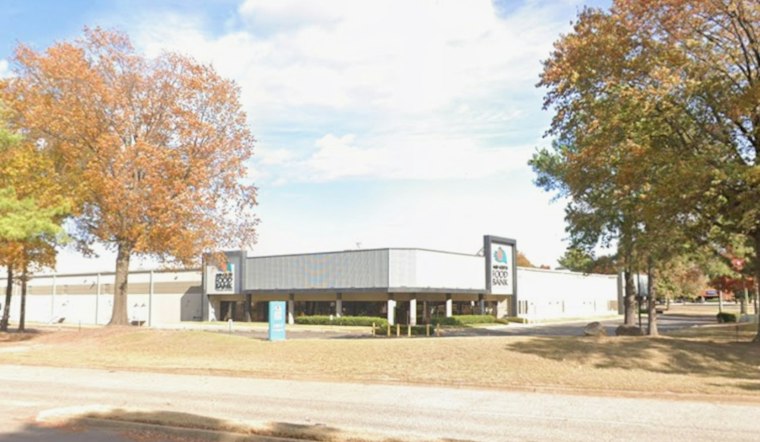
At the Mid-South Food Bank warehouse on S. Perkins Road in Memphis, staff are watching federal SNAP changes ripple through the community in real time. New rules tightening eligibility and work requirements have already cut nearly 18,000 people from local food stamp rolls over the past year, and the region's main food bank is trying to absorb the fallout.
As the Daily Memphian reports, Tennessee is growing more cautious under the new federal SNAP rules, and families across the state are feeling the pinch. The newspaper notes that under the changes, states with SNAP payment error rates over 6% will be liable for the costs of those mistakes — a shift that is pushing state agencies to tighten enforcement even as need grows.
That caution has a real cost locally. According to the Memphis Flyer, the SNAP changes have cut more than $4 million in spending in the Mid-South over the last 12 months, on top of the nearly 18,000 people removed from the rolls. Food Bank director Reginald Alexander told the outlet that rules taking effect in July 2025 require adults ages 55 to 64 to work or train 20 hours a week to keep their benefits past a three-month period.
Demand Climbing Across Nearly 300 Partner Agencies
The strain is showing up well beyond the Food Bank's own counters. The Memphis Flyer's report notes that a survey found 76% of the nearly 300 agencies served by the food bank saw increases in new visitors, a sign that households losing benefits are turning to pantries and other partner organizations to make up the gap.
The scale of what the Food Bank is already moving gives some sense of the stakes. For fiscal year 2026, which ended in June, the organization distributed about 27.5 million pounds of food, served roughly 735,533 households, and provided about 22.9 million meals, per the same report. Alexander also said the Food Bank had to purchase more food after $500 million in discretionary federal funding for the Emergency Food Assistance Program was canceled in 2025.
Staff are also trying to help residents navigate the system directly. The Food Bank's SNAP representative completed 404 applications between January and June, of which 65 were approved, the Memphis Flyer reported — a modest approval rate that underscores how much tighter eligibility has become.
A National Shift in Who Pays for Mistakes
The Memphis situation fits a pattern playing out nationwide. Federal law now requires states, for the first time in SNAP's history, to cover a share of food benefit costs, according to a backgrounder from the Food Research & Action Center. The same change raises the state share of SNAP administrative expenses from 50 percent to 75 percent. Those payment error rates, FRAC notes, combine the absolute value of errors involving ineligible households, overpayments, and underpayments — without netting them against each other — and can climb because of staffing shortages, early retirements, flawed system rollouts, or economic downturns.
Exactly where the cost-sharing threshold falls is itself disputed in the available record. The Daily Memphian describes states with error rates over 6% as liable for error costs, while a Congressional Research Service summary describes a required cost share for states with error rates at or above 5%, with the share tied to the rate. Both descriptions come from an incomplete excerpt of a complex law, and neither establishes Tennessee's own error rate or expected cost share.
Researchers at Brookings warn the new system could produce wildly uneven results. Economists Lauren Bauer and Diane Whitmore Schanzenbach found the average standard error on a state's annual payment error rate is about 1.1 percentage points, meaning a typical 95 percent confidence interval spans roughly 4.4 percentage points — enough statistical noise, they argue, that the cost shift to states will fluctuate unpredictably and considerably from year to year based on random chance alone. They caution the policy could push some states to exit SNAP altogether while others restrict eligibility or cut benefits.
Other States Offer a Preview
Nationally, SNAP enrollment fell 13% between July 2025 and June 2026, with every state except Alaska seeing some decline, according to the Christian Science Monitor. A July 2026 report by the American Public Human Services Association found that 15 states were reducing focus on benefit timeliness, 11 were considering narrowing eligibility policies, and four were weighing whether to pause or withdraw from SNAP altogether, the Monitor reported.
Arizona's experience shows how severe the swings can be: the Monitor reported that the state's enrollment plummeted 52% over the same period, which officials attributed to the trade-offs of meeting the new federal requirements, after its payment error rate hit 10.8% in 2025 with a goal of reaching 6% by 2026. In Nevada, Three Square Food Bank CEO Beth Martino told the Monitor her organization has been scrambling to meet rising demand but stressed that food banks are not a long-term replacement for SNAP, noting that for every meal a food bank provides, SNAP is estimated to provide nine.
Minnesota's numbers illustrate the financial exposure some states now face. Per KSTP, the state's payment error rate rose to 12.58% in federal fiscal year 2025, up from 8.98% the year before, and at a 15% cost share the state could face about $105 million in costs in state fiscal year 2028 and $145 million the following year, with counties covering half under state law. The station also reported that preliminary federal fiscal year 2026 data showed Minnesota's error rate improving compared with the prior year.
For Memphis families, those national figures translate into longer lines at local pantries and a food bank trying to stretch its own purchasing power further. As Tennessee navigates the same cost-sharing pressures playing out in Arizona and Minnesota, the Mid-South Food Bank's own numbers — nearly 18,000 fewer people on SNAP, more than $4 million in lost local spending, and a majority of partner agencies reporting new visitors — suggest the gap it is being asked to fill is not shrinking anytime soon.





