

























































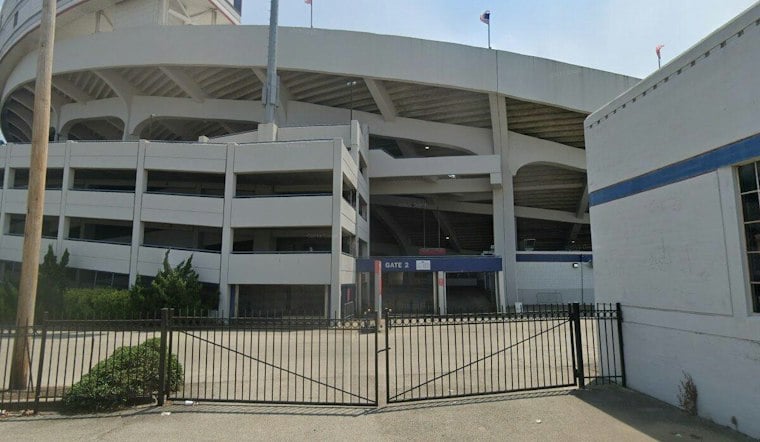
A stretch of Boston Street near Simmons Bank Liberty Stadium that has sat vacant and blighted for years is becoming the testing ground for an unusual approach to Memphis's housing crunch: a nonprofit called No More Blight wants to turn more than 100 empty lots there into affordable homes, built in large part by the very people who will train on the job site and, in some cases, go on to own homes of their own.
From Vacant Lots to a Construction Classroom
No More Blight is one of the nonprofits participating in the city's broader housing push, according to Action News 5. The group is building affordable homes on Boston Street in the Beltline neighborhood, with an initial build-out calling for 19 homes, four of which are already under construction. Founder Mark Lovell said the project is designed to tackle several problems at once, combining solutions for vacant lots, crime, the affordable-housing shortage and a lack of skilled construction workers, the station reported.
The homes themselves are modest by design: three or four bedrooms and roughly 1,400 square feet, built with an emphasis on quality materials and energy efficiency. No More Blight sells the homes rather than renting them, and buyers agree not to rent or flip their properties for at least five years. Lovell said he hopes homeownership will build stability and generational wealth for families who buy in, and that it can improve self-esteem, community pride and quality of life for as many as 150 families once the project scales up.
Construction Site Doubles as a Trade School
The Boston Street build site functions as an on-the-job training school, with experienced contractors serving as instructors for trainees who include people in recovery from drug and alcohol addiction, formerly incarcerated individuals, veterans and others simply looking to learn a trade. Those trainees can also receive credit-repair help and mortgage preparation assistance alongside their construction training, according to the Action News 5 report. No More Blight coordinates with TCAT and United Housing on the effort, and Maximus Building Supply serves as a key building-phase partner, providing discounted materials to help keep construction costs down.
No More Blight plans to start another dozen or more homes early in 2027, and the group says it is seeking additional skilled-trades instructors, community organizations and funders to expand the model beyond Boston Street. Memphis Mayor Paul Young said the city prioritizes eliminating blight and revitalizing neighborhoods affected by years of disinvestment, and he said reaching the city's goal of 10,000 new or rehabilitated homes by 2030 will require partners like No More Blight, per the station's report.
A Citywide Goal With Conflicting Progress Reports
Memphis officials have offered differing figures on how close the city is to that 10,000-home target. Mayor Young has said the city is about 40% of the way toward the goal, while separate municipal tracking cited by Hoodline showed 2,421 units completed between January 2024 and March 2026 toward the same commitment to develop new or renovated housing in the urban core. The scope or methodology behind each figure has not been clarified.
The scale of the challenge helps explain why projects like No More Blight's have drawn attention. The city maintains more than 15,000 vacant lots, mowing them four times a year, and has demolished nearly 160 homes since the start of the year, according to a separate Action News 5 report. Meanwhile, Memphis faces a shortage of more than 28,000 affordable housing units for its lowest-income residents, and nearly 23,000 residential properties across Shelby County are considered at risk of deterioration and neglect, according to a city of Memphis report.
Other Groups Chasing the Same Vacant-Lot Strategy
No More Blight is far from the only organization trying to convert empty parcels into ownership opportunities. The Memphis and Shelby County Community Redevelopment Agency committed more than $1 million to support 13 local developers building affordable homes, with projects planned particularly for underserved areas such as Uptown and Binghampton, This Is Memphis reported. The same agency separately made 82 scattered lots available for new construction through its Essential Housing Program starting in February 2025.
The Blight Authority of Memphis, formed by the Memphis City Council in 2015, has pursued a similar mission with a tiny-home project in which every home is priced under $100,000 and intended for ownership rather than renting, according to WREG. In North Memphis, Bee Development is building dozens of energy-efficient homes with $1 million in funding from the Tennessee Valley Authority and Memphis Light, Gas & Water, homes designed to MLGW's EcoBUILD standards and meant to be 30% more energy efficient than typical Shelby County construction, with utility costs that can run as much as 30% lower for homeowners. And in Orange Mound, the city broke ground this fall on the first demonstration home for the Orange Mound Community Land Trust after acquiring 12 vacant parcels, following an earlier push by My Cup of Tea, United Housing, Inc. and the city to build four rent-to-own homes priced between $85,000 and $120,000.
Funding for some of these efforts has not kept pace with the need. Memphis's Affordable Housing Trust Fund allocation fell from $5 million in fiscal year 2024 to $2.65 million in fiscal year 2026, according to Hoodline's reporting, even as the city continues to lean on nonprofits and private partners to chip away at its housing goals.





