

























































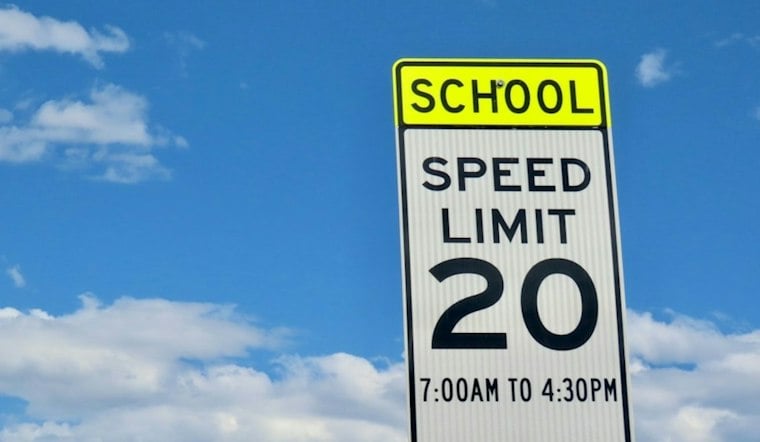
Trish Fancher hasn't set foot in Miami-Dade County in nearly 20 years, but that didn't stop a school zone speed camera there from putting her license on the line. The North Fort Myers resident only learned her license had been suspended when her husband tried to renew their license plates, discovering the holdup traced back to an unpaid speeding ticket she never knew existed.
A Citation From a County She Never Visits
The ticket accused Fancher of speeding through a school zone in Miami-Dade County in 2025, according to Gulf Coast News and Weather. The citation itself showed a Nebraska plate with a tag expiration year of 2003, details that didn't match Fancher's actual vehicle or location. She was cited for an offense in a county she says she has not visited in close to two decades.
A Miami-Dade Sheriff's Office spokesperson ultimately acknowledged that Fancher should not have received the ticket at all, the outlet reports. The spokesperson attributed the mistake to vendor user error, saying whoever processed the citation entered Florida plate information instead of the Nebraska plate information tied to the case. The Florida Department of Highway Safety and Motor Vehicles had supplied Fancher's information after receiving it, setting the suspension in motion.
Weeks Without a License, Then a Bill to Fix It
Fixing the error wasn't instant. Fancher filed a motion to dismiss the ticket and reinstate her license, then waited weeks for it to be resolved, unable to legally drive in the meantime. Even after the error was sorted out, she had to pay to get her license reinstated, according to the same report.
The Sheriff's Office spokesperson characterized the incident as isolated, but Fancher told the outlet she's skeptical of that framing. She said technology like this should be checked for accuracy before it's allowed to disrupt people's lives, adding that she used to support traffic cameras because she figured she'd simply never be somewhere she shouldn't be — until one flagged her for a place she hadn't visited in years.
A Pattern Showing Up Across Southwest Florida
Fancher's case lands amid a string of camera-enforcement stumbles closer to home. Cape Coral rolled out its own school zone cameras in 2025, and between August of that year and June 2026 they generated more than 37,000 violation notices — while the city ended up dismissing more than 3,500 of those camera violations in the same window, per Gulf Coast News and Weather.
Dave Miller, a Coast Guard veteran who lives near Cape Coral Elementary, told the outlet that the speed limits and active hours posted for school cameras can be genuinely confusing; he received a camera ticket at another school the previous year. Redspeed, which runs Cape Coral's school zone cameras, has said tickets can be issued inaccurately for reasons ranging from an officer mistakenly approving a citation to something as unpredictable as lightning striking a camera.
Sanibel, Philadelphia and Pueblo Have Faced Their Own Refund Waves
Just down the road, a Sanibel school zone camera on Sanibel Captiva Road was found by police testing to be reading speeds higher than drivers were actually going. Of the 1,701 citations issued there, 1,335 are being refunded, and the camera's operator, Altumint, is returning more than $130,000 in fines, according to gulfcoastnewsnow.com.
Camera enforcement troubles have surfaced well outside Florida, too. In Philadelphia, a signage issue near North Broad Street and 65th Avenue forced the Parking Authority to dismiss 23,000 speed camera violations issued between mid-January and March, refunding more than $1.2 million to over 12,000 drivers who had already paid, CBS News reported. The same cameras caught more than 213,000 drivers speeding in October 2025 alone, compared with roughly 70,000 violations recorded that March.
In Colorado, the state's Department of Transportation said it would dismiss or refund 15,870 photo-radar violations issued in a Pueblo construction zone after discovering an administrative error involving incorrect start and end dates on internal approval documents, according to Yahoo News. Of those, 7,691 had already been dismissed, with refunds still pending for the remaining 8,179. None of these incidents has been shown to share a common cause with what happened to Fancher, but together they underscore how often automated traffic enforcement systems have required after-the-fact corrections.





