

























































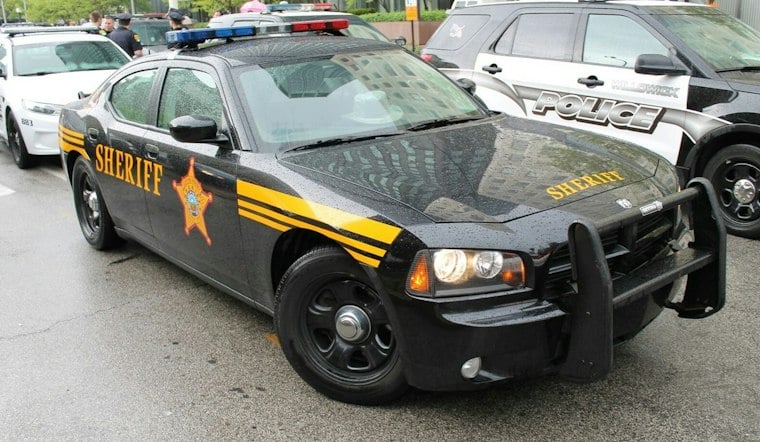
Polaris Career Center in Middleburg Heights is getting its first full-time school resource officer, and Cuyahoga County Deputy Eric Enk has already been spending his days in the building getting to know students and staff before his assignment formally begins. The arrangement, a three-year pilot between the county sheriff's office and the career center, marks a shift from the rotating group of Middleburg Heights police officers the school previously relied on for day-to-day safety and security.
According to cleveland.com, Enk will work at Polaris throughout the school year and return to regular deputy duties during the summer, with a second deputy trained to step in whenever Enk is unavailable. School resource officers typically come from local police departments rather than county sheriff's offices, making the placement a departure from how the sheriff's office has typically operated — it doesn't usually work inside schools at all.
Why Polaris Wanted a Familiar Face
Polaris Superintendent Diane Xander said she wanted more than rotating patrol coverage. The outlet reports she wanted a full-time officer who would build relationships with students, mentor them, and connect families with resources — someone, in her words, who could be a friendly and consistent face around the building rather than an occasional presence.
Jim Carbone, a special assistant to the sheriff who spent 22 years working as a school resource officer before joining the Cuyahoga County Sheriff's Office in 2024, framed Enk's role in similar terms. Per the same account, Carbone said Enk is there to support students, not enforce school discipline or punish students, describing the program as being about safety, security and opportunity for children.
Polaris serves six school districts across nine communities — Berea, Brook Park, Brooklyn, Fairview Park, Middleburg Heights, North Olmsted, Olmsted Falls, Olmsted Township and Strongsville — and enrolled 1,032 high school students at its Middleburg Heights campus during the 2025-26 school year.
Who's Paying for It
The financial arrangement splits costs between the school and the county. Polaris has agreed to pay the county between $305,000 and $315,000 over the three years to cover Enk's salary, benefits and training, covering roughly 80% of the program's expected cost. The county will pick up the remaining 20%, about $82,000, and any overtime costs will be billed back to Polaris.
That cost-sharing detail matters given the county's broader budget picture. The sheriff's office routinely exceeds its budget by millions of dollars, largely because of overtime, the report notes, and county officials asked general-fund departments in August to cut their 2027 budgets by 3.3%, with Health and Human Services levy-funded departments asked to cut 8%, as cleveland.com has separately reported. That same month, County Council President Dale Miller said the county could not afford to absorb overtime costs tied to extra sheriff's security at the Cuyahoga County Fair, telling the outlet the county may have to eat some overtime — and it can't afford it.
Council Wants Numbers, Not Just Good Feelings
Cuyahoga County Council members supported the Polaris program overall, though with mixed feelings, the outlet reports. Miller, who serves as council president, cautioned that the sheriff's office needs to stay focused on its core responsibilities, especially following years of overspending. He and other council members called for concrete ways to measure the program's impact over the three-year span, with Miller wanting set goals and regular progress reports rather than relying on positive anecdotes alone.
Councilman Robert Schleper Jr., who previously served on the Chagrin Falls school board, supported the program without hesitation. He pointed to Chagrin Falls' own decision to place officers in its schools as a hopeful precedent, saying the community there was initially wary of the idea but that attitudes changed as officers got to know students over time. Schleper said officer-student relationships can shift school culture and reduce students' fear of officers, and he said he hoped Polaris would see the same kind of success.
The U.S. Justice Department’s COPS Office recommends annual assessments of school-resource-officer programs, including data on arrests, citations, searches and referrals to juvenile justice, disaggregated where privacy laws allow. For a three-year pilot, tracking those actions could help test whether Enk’s day-to-day role stays consistent with the stated aim of support rather than punishment—and give council members concrete results to review before deciding whether the arrangement should continue. The federal guidance on officer-school agreements identifies those measures as part of program monitoring.
Research offers a reason to track both safety and student consequences. A 2021 study of middle schools in North Carolina found that school resource officers reduced serious violence, but also increased out-of-school suspensions, transfers, expulsions and police referrals. The results do not predict what will happen at a career center in Ohio, but they show why a measure of success limited to whether students and staff like the officer could miss important outcomes. The study’s findings make discipline and referral data relevant alongside safety goals.
Ohio law already gives the county and Polaris a framework for defining the deputy’s job: it requires a written agreement with clear program goals, training in age-appropriate de-escalation, and a protocol separating suspected criminal activity from school discipline. Officers must complete at least 40 hours of specialized training within a year, and school administrators retain final authority over discipline. That makes the pilot’s written goals and boundaries a key part of judging whether its relationship-building mission holds in practice. Ohio’s school-resource-officer requirements spell out those obligations.




