

























































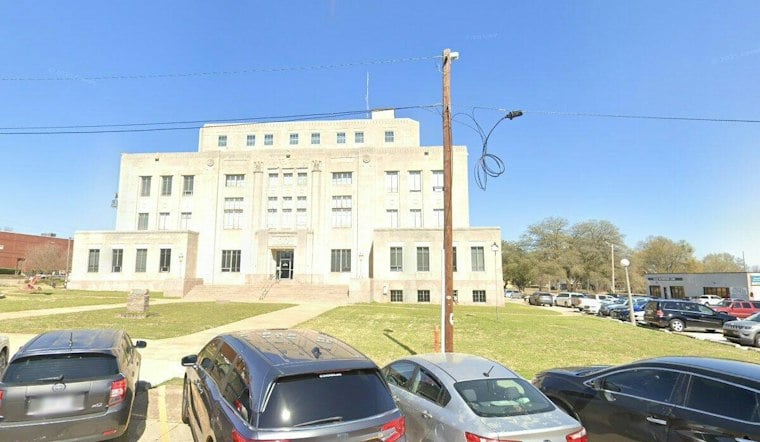
A Miller County jail inmate accused of running a drug operation from behind bars has pleaded guilty in the jail case and received a 25-year sentence in a methamphetamine case, in an investigation that began with a detention center major's tip about inmates getting high on contraband. Delmarqueon Martez Lockett, 34, entered guilty pleas in Miller County Circuit Court to continuing criminal enterprise, furnishing prohibited articles and unlawful use of a communication device, and he also pleaded guilty in three separate methamphetamine cases.
According to Texarkana Today, Lockett received 10 years in prison plus a 10-year suspended sentence on the enterprise count, and 10 years on each of the other two counts in the jail case. Those sentences are separate from his methamphetamine cases, in which he received 25 years for delivering between 10 and 200 grams of methamphetamine in a case dated December 10, 2024, along with 15 years each in two other meth cases. Court records show his sentences run concurrently, and he was assessed no fine and will receive credit for time already served, with the exact amount still to be determined. Lockett was represented by the public defender's office.
How the Scheme Allegedly Worked
The charging document accused Lockett of organizing or supervising five or more people and of bringing methamphetamine into the detention center. The case traces back to an investigation that, per an earlier Texarkana Today report on the Miller County Detention Center, began in January 2025 after a detention center major told a task force that Lockett, Joshua Rigsby and Roscoe Hamilton were selling narcotics to other inmates. That same affidavit said Treveon Cleveland was believed to be the outside connection moving drugs into the jail, and it described inmates being seen under the influence on 10 or more occasions.
Arkansas’ continuing-criminal-enterprise statute requires more than a single drug offense: prosecutors must prove a continuing series of at least two qualifying felonies, carried out with five or more other people whom the defendant organized, supervised or managed, and from which the defendant obtained substantial income or resources. The law classifies the offense as a Class Y felony for purposes other than sentencing, while authorizing a prison term of up to twice the term otherwise allowed for the underlying offense. Arkansas law sets out those elements and penalties.
Investigators said searches of the jail's pods turned up Cash App account identifiers, and recorded calls captured inmates asking relatives to send money to those accounts. Investigator Brandon Kennemore, who filed a probable-cause affidavit in a co-defendant's case, described the group as “a coordinated criminal organization that profited financially by selling and distributing narcotics and other contraband within the Miller County Detention Center.”
A March Day at a Motel and a Traffic Stop
The affidavit laid out a detailed sequence from March 26, 2025. Kennemore reportedly heard Lockett and Kayla Gale discussing ways to get narcotics and other contraband into the jail, and Lockett arranged payment for the drugs by Cash App while instructing Gale on how to weigh and package contraband before delivering it to Cleveland. Investigators conducted surveillance at the Motel 6 where Gale was staying and at the sheriff's office that day, and an investigator reportedly saw Gale hand a package to Cleveland at the motel in Texarkana, Texas.
Arkansas State Police stopped Cleveland on Realtor Avenue after he left the motel, and he was found with methamphetamine, marijuana and tobacco, according to the affidavit. Cleveland allegedly admitted to smuggling contraband into the detention center at least five or six times for inmates including Lockett, Hamilton and Rigsby, and said he was paid $250 by Gale and $150 by another person for the March 26 trip. Gale was arrested on March 31, 2025, with narcotics, digital scales and the phone used for jail calls and Cash App transactions. She allegedly admitted packaging contraband and giving it to Cleveland more than five but fewer than ten times, and said she did it to earn money for her motel room.
Cash App payments and contraband routes have surfaced in other prison-smuggling prosecutions, though those cases do not establish any connection to Miller County. In Georgia, a former federal corrections officer pleaded guilty to bribery and money-laundering charges tied to a 2022 scheme at Federal Correctional Institution Jesup; investigators identified inmate payments through Cash App, and the contraband included methamphetamine and other drugs. The case illustrates how investigators can follow payment records alongside evidence of drugs entering a facility. The Justice Department’s account of the Georgia case describes the financial trail and smuggling scheme.
Co-Defendants' Cases Still Pending
Rigsby, Hamilton, Gale and Cleveland are all charged with continuing criminal enterprise, furnishing prohibited articles and unlawful use of a communication device, and their cases remain pending. Continuing criminal enterprise is a Class Y felony in Arkansas punishable by 10 to 40 years or life in prison. Gale is set for a jury trial on January 25, 2027, while Cleveland's trial is scheduled for February 22, 2027. Hamilton's case was continued to December 1, 2026, and Rigsby did not appear for an October 13 court date.
Sheriff Wayne Easley announced the investigation into contraband smuggling at the jail in August 2025, and an earlier report noted the probe was ongoing, with additional arrests and charges considered possible. Lockett's guilty pleas close out his portion of the case, but with four co-defendants still awaiting trial, Miller County's reckoning with the alleged jailhouse drug ring is far from finished.



