

























































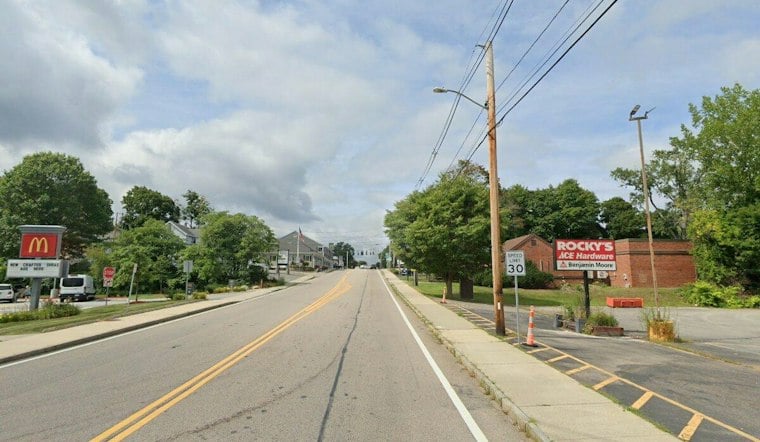
Gary Kaufman was driving his black pickup truck about half a mile from his Millis home in June 2017 when he turned left and was struck by a cruiser driven by Millis police officer Craig Thompson. Kaufman died in the crash. Thompson suffered injuries to his left arm. Nearly a decade later, Kaufman’s daughter is still asking why the officer was going so fast, and why key pieces of the investigation were never completed.
A Reconstruction Report Raises Hard Questions
A Massachusetts State Police reconstruction report found that Thompson was traveling 81 miles per hour at the moment of impact, according to WCVB. Kaufman, by contrast, was driving just 13 miles per hour when the two vehicles collided on Route 109. The same report found Thompson was at full throttle with his emergency lights on but no siren sounding, and that his brakes engaged only half a second before the crash.
Thompson told investigators, per records cited in the report, that he had made a U-turn and activated his lights after a motorcycle approached him in the opposite lane at 85 miles per hour, and that he then pursued it. But radio logs show Thompson never called in the pursuit and therefore never received approval to chase the motorcycle, the station reported. Millis police department pursuit policy prohibits an officer from engaging in any vehicular pursuit that would require exceeding the posted or applicable speed limit, and separately requires a supervisor to evaluate as quickly as possible whether a pursuit should continue. The motorcyclist Thompson said he was chasing was never found.
A Witness Who Was Never Interviewed
A police report identified one eyewitness who had been driving behind Kaufman and saw the crash happen, but records show no indication that he was ever interviewed. Kaufman’s daughter, Karli Nee, told the station that an eyewitness informed her the officer came flying out of nowhere and that no motorcycle or other vehicle was present at the scene. Nee said her father had been planning to visit her and her new baby the day he died.
Six months after the crash, an assistant district attorney named Adam Lally asked an investigator to search for surveillance video of the collision. Lally later wrote that he did not believe anyone had ever actually gone out and checked. The gap, paired with the uninterviewed witness, forms the core of the criticism now being leveled at how the case was handled.
Who Was In Charge?
Accounts of which agency led the investigation conflict. The station reported that Millis police said State Police handled the investigation, declining further comment on that basis. But the same report also stated that the Millis Police Department served as the primary investigative agency following the crash, with State Police saying its units provided specialized collision reconstruction and crime-scene assistance at Millis’s request and that its units completed reports and passed them to Millis. State Police also said that questions about the direction of the investigation and any potential criminal charges should be directed to the Norfolk County District Attorney’s Office. That office declined to comment, as did Thompson, who initially agreed to an interview about the crash before declining.
Retired Boston police lieutenant Tom Nolan reviewed hundreds of pages of documents related to the case and called it a sloppy investigation. He pointed to the delayed search for surveillance video, the absence of any recorded follow-up interviews, and the failure to locate the eyewitness as evidence that investigators accepted the officer’s account without serious questioning. Nolan said, in his opinion, that the case could have been brought before a grand jury, and that the pursuit should never have been initiated in the first place.
Discipline, A Separate Case, And A State Statute
Thompson was suspended for a few days for violating the pursuit policy. He is now separately on indefinite unpaid administrative leave tied to a different incident. According to The Boston Globe, Thompson was charged with domestic assault and battery and strangulation of a family member, pleaded not guilty, and was released on personal recognizance. The Globe reported he was placed on unpaid leave pending the outcome of that investigation.
The police report on the 2017 crash blamed Kaufman for failing to pull right and stop for an oncoming emergency vehicle, and noted that his blood alcohol level exceeded twice the legal limit, with THC and benzodiazepines also found in his system. Massachusetts General Laws Chapter 89, Section 7C requires drivers approaching a stationary emergency response, highway maintenance, or recovery vehicle with flashing lights to proceed with due caution and reduce speed to a reasonable and safe level for road conditions, according to the Massachusetts General Court. At the time of the crash, WHDH reported the collision happened around 3:40 p.m. on a Sunday and that its cause remained under investigation.
For Nee, the unresolved threads are the point. She has said she is seeking answers and accountability regarding both the crash and the investigation that followed it, nearly a decade after losing her father just half a mile from the home he never made it back to.



