

























































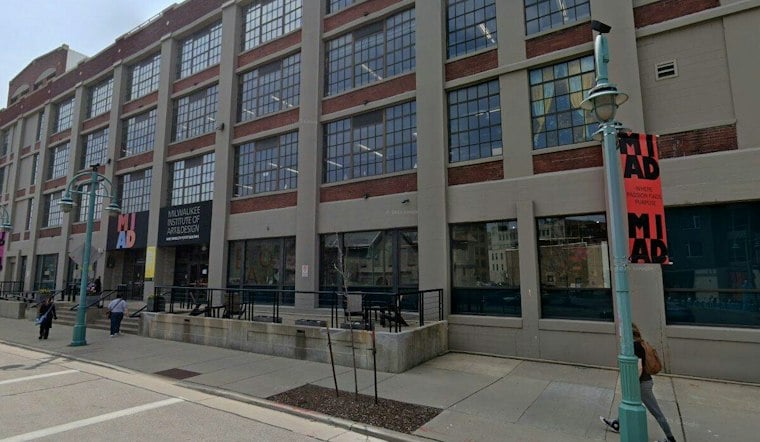
Twelve students at the Milwaukee Institute of Art and Design spent seven weeks learning that a pair of pants can be a whole lot more complicated than a zipper and two legs. Paired into six design teams with local models connected to Independence First, the students built custom clothing around each person's body, movement and daily routine — down to where a pocket needed to sit so someone could reach their phone with their mouth instead of their hands.
A Seven-Week Build Around Real Bodies
The project ran through a pattern-making and construction course at MIAD, according to Urban Milwaukee, which reported that the 12 enrolled students were split into six groups and matched with models tied to Independence First. The students developed custom clothing suited to each model's physical needs and style preferences, following a design process that ran seven weeks, per the Milwaukee Journal Sentinel. Before any fabric was cut, the Journal Sentinel reports the models shared their common frustrations with standard clothing design, giving the students a starting point beyond measurements alone.
Tyson Wenzel, one of the models, has arthrogryposis multiplex congenita, a congenital condition that causes permanent joint stiffness in certain parts of his body, according to the Journal Sentinel. He gets around using a wheelchair or his knees, and adapts to limited hand function by typing with his feet and using his mouth and chin for everyday tasks. Standard clothing often fits him poorly, the paper reports, because he works his muscles differently than most people's clothes are designed to accommodate. Wenzel told the Journal Sentinel that comfortable clothes at retailers like Old Navy are rarely fashionable — a gap his student designers set out to close.
Cargo Sets, Chin-Height Pockets and Satin-Lined Knee Pads
Designers Israel Villafuerte and Matthew Davis built Wenzel an all-black cargo set that blends streetwear and techwear into two utility-focused basics, per the Journal Sentinel. Davis designed a boxy jacket with a slit down the back to make it easier for Wenzel to put on and take off, and moved the jacket's chest pockets closer to his chin so he could reach his phone with his mouth. Urban Milwaukee reports the same design placed cargo pockets near the jacket neckline specifically because Wenzel uses his phone with his mouth. Villafuerte added satin-lined knee pads to the cargo pants, and the outfit also includes an elastic waistband and magnetic closures, Urban Milwaukee notes. Wenzel told the outlet it was the first time he'd had clothing made specifically for him, and said two people listened fully and gave him everything he needed, according to the Journal Sentinel.
Another model, Sam Troyer, asked for business-professional clothing designed with differently abled people in mind. Designer Persy Villanueva said Troyer wanted professional clothing that made her feel powerful, the Journal Sentinel reports. Villanueva and a co-designer paired stretch yoga pants with a professional vest, adding zippers and surplus fabric to the vest so sitting would be more comfortable. Separately, Urban Milwaukee reported that designers Ro Storrs and Z LaMere built model Andi Minster a burgundy collarless blazer asymmetrically tailored for her left-handedness, along with pants made from legging material.
Designing Around Prosthetics and a Love of Cartoons
Model Shawn Smith told the Journal Sentinel he had previously spent his own money on poorly fitting clothing and tried to redesign it himself. Through the MIAD project, he finally got a chance to request clothing made specifically for him, and said his designers asked about his preferences down to the smallest detail. His design team created a colorblocked sweatsuit and cartoon T-shirt inspired by his love of old-school animated television, added an upward-facing pocket for easier access, and designed pants he can wear with or without his prosthetics, according to the paper.
Designer Jackson Brito said clothing is often designed to look good only while a person is standing, the Journal Sentinel reports, and said he plans to consider fashion design more holistically going forward, aiming to create clothes that look good in every way they might be worn. Audience members and designers alike agreed, per the paper, that the fashion industry still has substantial progress to make on inclusivity — even as the project reinforced a broader idea reporters noted: clothing designed for people with disabilities can make fashion more accessible for everyone.
Part of a Growing Local and National Push
This isn't MIAD's first run at adaptive design with Independence First. In spring 2024, Product Design student Zachary Scharrer worked with the organization to design adaptive formalwear for his senior exhibition project, according to Milwaukee Institute of Art & Design. Scharrer built a dress for Emily Cadman with a dropped right shoulder to match how she tends to lean, sleeves designed not to interfere with her wheelchair's controls, and a cover for her seatbelt, TMJ4 reported. He also made Michael Wolfe a suit with a shorter shirt and jacket so nothing bunched near his waist, no back pants pockets, and an elastic back waistband, per the same report. MIAD has also described a separate year in which Fashion and Apparel Design students worked with Independence First on adaptive clothing for two wheelchair users, according to the school.
The push for adaptive fashion extends well beyond Milwaukee. Villafuerte told Urban Milwaukee that adaptive fashion is mistreated by the mainstream and needs to be brought to the forefront. Industry data backs up the scale of the gap: the Centers for Disease Control and Prevention estimates roughly one in four people worldwide have a disability, according to Fashion Dive. Major retailers have made moves in that direction — Tommy Hilfiger launched an adaptive clothing line in 2016 that included magnetic closures for people with dexterity issues, and Victoria's Secret debuted an adaptive collection of bras and underwear with magnetic closures and nonirritating fabric in 2023, Fashion Dive reports.
Still, Parsons School of Design dean Ben Barry told the outlet that recent changes in the industry aren't deep enough to count as systemic structural change. Open Style Lab takes a narrower approach, advocating for solving one individual's need really well before considering whether that solution can be extended to others, Fashion Dive reports. Wenzel said the MIAD collaboration helped him advocate for greater accessibility in fashion, and Urban Milwaukee reports that all six Independence First models have been invited to walk MIAD's 2027 Spring Fashion Showcase next May, with Wenzel saying he plans to take part.





