

























































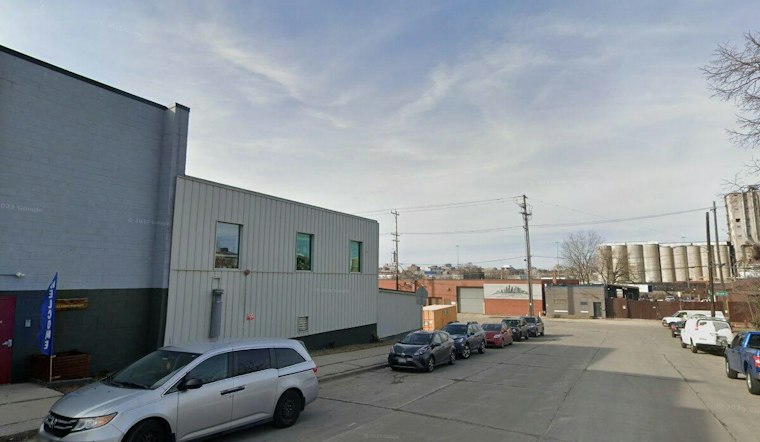
A stretch of the Menomonee Valley that spent more than a century as an industrial dumping ground is finally on its way to becoming wetland, and the Milwaukee Metropolitan Sewerage District wants residents to help decide what it looks like when it's done. MMSD plans to transform roughly 6.7 acres of the Burnham Canal into a wetland, creating habitat for fish and wildlife along with possible new recreational opportunities for the surrounding neighborhood.
The agency is hosting a community meeting next Tuesday, November 10th, from 5 to 7 p.m. at All Hands Boatworks, 621 S. 12th St., according to MMSD. Project presentations are scheduled for 5:15 p.m. and 6 p.m., and the gathering will include food, wetland-inspired art activities, and a chance for neighbors to connect and share ideas through a community survey. As Urban Milwaukee reports, attendees will be invited to weigh in on public access and recreation at the site, and Spanish interpretation will be available at the gathering.
For residents who can't attend, MMSD says feedback on what people would like to see — from wildlife viewing areas and places to sit by the water to kayaking and other recreational uses — is welcome before December 31st. Ideas can also be submitted through the Waterway Restoration Partnership website, per Urban Milwaukee's reporting.
From Brickyard Canal to Toxic Industrial Corridor
The Burnham Canal's story stretches back more than 150 years. The valley itself was once a 1,200-acre marsh — described by the Milwaukee Waterway Partners as a wild rice marsh — before it was filled during the 19th and 20th centuries to make way for factories, railroads and other industrial uses. The canal itself was carved out in the 1870s to serve J.L. Burnham & Sons, which manufactured Cream City bricks using Menomonee Valley clay, according to Urban Milwaukee. It functioned as a navigable shipping corridor until the 1980s, when the city built a fixed bridge across it and ended that chapter of its history.
The pollution that followed came later, from Miller Compressing Company, which operated a wire reclamation furnace on the site from the 1970s into the 1990s. Those operations contaminated the western end of the canal near S. 16th and W. Bruce streets, and federal environmental investigations identified elevated heavy metals — including copper, lead and cadmium — along with polycyclic aromatic hydrocarbons in the canal, per Urban Milwaukee's reporting. A 2017 report from the Milwaukee Journal Sentinel similarly found that tests of canal-bottom muck turned up high levels of copper and those same toxic hydrocarbons. The U.S. Environmental Protection Agency's site profile for Burnham Canal–Miller Compressing Company describes the contaminated area as covering Miller Compressing's former wire reclamation furnace site and part of the canal running from its western terminus to the 11th Street Bridge, and notes that site activities led to soil and sediment contamination.
A Cleanup Effort Years in the Making
Miller Compressing, now part of Alter Trading, agreed to study cleanup options back in 2008, Urban Milwaukee reports. MMSD eventually joined the effort and expanded it into a full ecological restoration project, one now folded into the broader push to clean up the Milwaukee Estuary Area of Concern — a federal designation identifying waterways impaired by historic pollution and habitat destruction. MMSD describes the Burnham Canal project as part of that larger initiative, aimed at restoring the Milwaukee Estuary Area of Concern, and the Wisconsin Department of Natural Resources says it remains committed to eventually removing that designation while continuing restoration work with community members and partners.
MMSD began preparing to fill the western canal with clean sand and gravel in 2021, work intended to cap contaminated sediment and create a stable foundation for the future wetland. The agency's project page describes the broader method as creating a wetland base with clean gravel and sand before later adding soil and wetland plants on top. Urban Milwaukee reports that the initial fill phase was completed in stages between 2021 and 2023, after which the material was left to settle and compress ahead of soil and vegetation installation. WUWM reported in May 2021 that Miller Compressing had started constructing its own end of the wetland project first.
Timeline Has Shifted Over Nearly a Decade
The push for a wetland here isn't new. The Journal Sentinel's 2017 report noted that MMSD officials had first proposed constructing a wetland back in 2012, with the agency's executive director at the time expecting construction to wrap up by 2018 once Miller Compressing's portion of the work was finished. That timeline has since moved repeatedly — Urban Milwaukee reports that officials had later envisioned final wetland design completion in 2024 and construction beginning in 2025 or 2026, while MMSD's current schedule now calls for final design work between 2025 and 2027, with wetland construction planned for 2027 and 2028. MMSD has attributed the project's delays to federal funding delays, per the agency's project webpage.
In March, the MMSD commission approved a $393,426 contract with Ramboll for engineering and ecological design services, funded through federal Great Lakes Restoration Initiative grants, according to Urban Milwaukee. Ramboll will provide those design services as the roughly 3,000-foot western portion of the canal moves from contaminated-sediment capping toward full wetland design. MMSD's project page lists post-construction monitoring running from 2027 through 2031, after construction is complete.
The canal sits between N. 16th Street and S. 8th Street along the Menomonee River, and MMSD's project status is currently listed as Phase I Monitoring and Phase II Planning, according to the Milwaukee Waterway Partners. Urban Milwaukee first reported on the wetland plan back in May 2021, and the project has continued to evolve in the years since as MMSD seeks resident input on the future design and public use of the site.





