

























































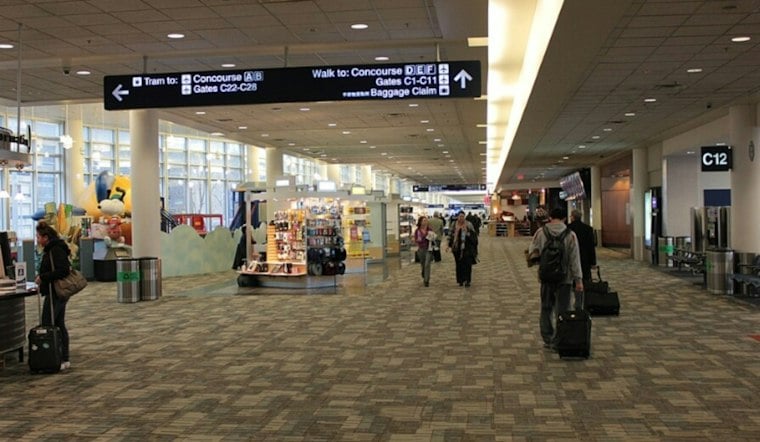
Taijul Islam was 63 years old and passing through Minneapolis-St. Paul International Airport when his heart stopped at 5:15 a.m. on September 23. Within minutes, a doctor who happened to be traveling through the airport began CPR, and airport paramedics shocked his heart five times trying to restore a pulse. What came next was something no U.S. airport had done before: a mobile heart-lung machine brought to the airport fire station, where doctors credit it with keeping him alive long enough to reach a hospital.
A Brand-New Partnership, Put to the Test Within a Week
The emergency unfolded just over a week after MSP and M Health Fairview launched what the two organizations describe as the first-in-the-world airport-based emergency ECMO partnership, according to the Minnesota Star Tribune. ECMO — extracorporeal membrane oxygenation — mechanically pumps blood and oxygen through a patient’s body, temporarily taking over the work of the heart and lungs while doctors address whatever caused the collapse. The Metropolitan Airports Commission says the unit is dispatched from the Edina Fire Department alongside MSP’s own airport fire department, police department and contract ambulance service, with first responders handing patients off at a predetermined spot near the terminals where the Fairview team can begin advanced care.
An Allina Health ambulance crew carried Islam from Concourse G to the airport fire station across the runway, according to the Star Tribune’s reporting, with CPR continuing for about half an hour before he arrived. Paramedics placed a breathing tube to prepare him for ECMO. Dr. Adam Gottula, a Fairview critical-care specialist on the mobile response team, had been alerted to the emergency at 5:23 a.m. and connected Islam’s blood vessels to the ECMO machine once the ambulance reached the fire station. The pump started just after 6 a.m. — a mobile ECMO response the Star Tribune reported took 46 minutes in total, against a target response time the Fairview team aims to keep under one hour.
Why Minutes Mattered So Much
University of Minnesota research cited in the Star Tribune suggested that every minute a patient goes without ECMO reduces the odds of surviving with intact thinking skills by about 2.5%. Gottula said the team pushes to save even small amounts of time. He said the airport-based response cut nearly 15 minutes off the time to treatment compared with transporting a patient to a hospital first, and called the response time in Islam’s case likely as good as any in the world. University of Minnesota research cited in the same report suggested that bringing ECMO directly to the airport, rather than waiting until a patient reaches a hospital, improves outcomes.
Fairview had trained MSP’s airport firefighters in advance to prepare cardiac-arrest patients for ECMO, according to the Star Tribune, the same kind of field-level prep that has been used elsewhere in the state. A separate account from EMS1 describes Ridgeview paramedics being trained to prep patients for ECMO in ambulances at emergency scenes rather than first transporting them to a hospital, reflecting a broader push across Minnesota to get the technology closer to where cardiac arrests actually happen.
From the Fire Station to a New Heart
Islam was transferred to Fairview Minneapolis University Hospital, where doctors diagnosed blockages in the blood vessels feeding his heart along with other damage that triggered the cardiac arrest, the Star Tribune reported. He received a heart transplant a few days later and recovered enough to speak after his breathing tube was removed. Gottula said Islam will leave in better shape than he arrived. Islam is now completing post-transplant care in Minneapolis, has rented a house in Richfield while staying with family, and plans to wait a few months before flying home, according to the same report.
MSP Assistant Fire Chief Dan Olson told the Star Tribune that medics respond to roughly one cardiac arrest a month at the airport, and noted that diverted flights carrying cardiac-arrest patients often have limited alternatives when crossing the central United States — a gap the mobile ECMO partnership is meant to help close. The Star Tribune’s report describes Islam’s case as the one reported survival story to come out of the program so far.
How the Program Took Shape
The partnership traces back to the Minnesota Mobile Resuscitation Consortium, launched in 2019 at the University of Minnesota Medical School with an $18.6 million grant from the Helmsley Charitable Trust, according to the Metropolitan Airports Commission. In 2023, the trust awarded Fairview more than $10 million to expand mobile ECMO access across the region. The commission’s own materials state that, for patients in prolonged cardiac arrest, survival is seven to eight times higher with ECMO than without it, and that MSP is the first airport in the country to deploy a mobile cardiac-care unit of this kind.
The approach has already spread beyond the airport. A report from Hometown Source notes the ECMO program has expanded to M Health Fairview Lakes Medical Center, Hutchinson Health and Ridgeview Medical Center, with Dr. Jason Bartos hoping to bring the resource statewide within five years. Fairview also uses helicopters to bring ECMO to rural hospitals around the Twin Cities; the outlet reports that M Health Fairview Northland Hospital in Princeton launched its own ECMO program on Aug. 4, 2025, flying in a cardiac critical-care physician from Minneapolis, with the Minneapolis-to-Princeton response time estimated at about 45 minutes until a pump can be placed. That Princeton program had been activated three times as of the report, with all three patients surviving.
Similar efforts are emerging outside Minnesota, too. In North Texas, Medical City Plano and Frisco launched a mobile ECPR program in April 2026 that Community Impact describes as the only mobile program of its kind in the region and the first nationwide to serve multiple cities, letting first responders bring advanced cardiac technology to patients suffering a heart attack, respiratory failure or cardiogenic shock. A separate analysis published in the journal Resuscitation found that a protocolized mobile ECMO truck program achieved neurologically favorable survival rates matching an established in-hospital program when matched for how long patients had gone without adequate blood flow — evidence, researchers concluded, that a purpose-built mobile unit can hold its own against hospital-based care.




