

























































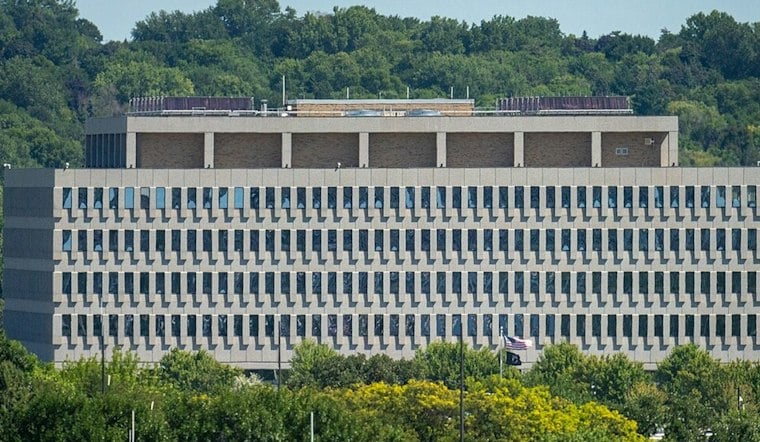
Minnesota's juvenile immigration docket, once heard by a local judge at Fort Snelling, has been reassigned to Immigration Judge Jason Stern, who appeared by video from Houston, Texas — and attorneys say the shift is already reshaping outcomes for children as young as 11. Stern heard another docket in St. Paul on Tuesday, November 24.
The switch marks unfamiliar territory, according to Madeline Lohman, advocacy director at the Advocates for Human Rights, who told MPR News she had not previously seen Minnesota's juvenile docket assigned to an out-of-state judge. The court's jurisdiction extends beyond the Twin Cities — North Dakota and South Dakota also fall under the St. Paul court's reach, meaning children from across the region now funnel into Stern's hearings.
In-Person Only, Even for Kids Who Live Hours Away
Unlike the local judge who typically handled unaccompanied children's cases and who, according to the same report, often allowed people to appear by video call, Stern requires everyone to appear in court in person. Lohman said some children as young as 11 drove 11 hours to reach the courtroom only to be denied a virtual hearing for their next appearance.
That policy is now being tested again. A teenage boy who lives 220 miles from the courthouse has an attorney who formally requested permission for him to appear by video at his next hearing, filing the request in writing at Stern's instruction. A Department of Homeland Security attorney opposed the request, and Stern said he would rule on it later rather than decide on the spot. Attorney Meg Kaiser, who attended Tuesday's hearing, said it would be unusual for every video-call request to be rejected outright.
Faster Deadlines and Pointed Questions From the Bench
Kaiser also said Stern is setting deadlines faster than some other judges have, and other immigration attorneys told the outlet he appears to be trying to move cases through the system more quickly. In several cases, Stern set December and January deadlines for attorneys to file asylum applications or other protection claims, and he directly asked some lawyers why those applications had not already been submitted. In other instances he asked attorneys to either file for asylum or submit evidence that a case was actively progressing.
One attorney representing two sisters, ages 9 and 12, said she was still working to determine whether her clients were eligible to apply for asylum, explaining that untangling the girls' traumatic memories was taking time. Several children who appeared in court Tuesday held Special Immigrant Juvenile Status, a classification that provides unaccompanied children a path toward a green card; many of them were still waiting for that status to convert into an actual card. Some judges pause proceedings for these children while that backlog clears, but Stern has continued setting hearings and deadlines for SIJS cases regardless — and in one case he ordered a child with that status removed, even though the case involved a child who had already been granted legal protections.
A Judge With a Steep Denial Record
Court data compiled by TRAC shows Stern denied 93.0 percent and granted just 7.0 percent of asylum cases, including other forms of relief, from fiscal year 2021 through the first nine months of fiscal year 2026. Of 583 asylum claims he decided on their merits in that span, he granted asylum in only 23, granted other relief in 18, and denied relief in 542. By comparison, judges nationwide denied 62.9 percent of asylum claims over the same period, while judges at Stern's home court in Houston denied asylum 89.4 percent of the time — among the steepest rates in the country, per TRAC's data. TRAC cautions that denial rates can reflect a judge's caseload, detained status of respondents, and other factors beyond an individual judge's control, not just a judge's own disposition. Stern was appointed to the bench and began hearing cases in November 2023.
A legal project tracking judges' records found that Stern grants relief at a lower rate than St. Paul-based Judge Kalin Ivany, according to the MPR report. Lohman said the reassignment effectively means Minnesota's cases are now being heard by judges with lower rates of granting protection to children and asylum seekers, adding that out-of-state judges sometimes carry stricter records than judges based in Minnesota. She called this the first instance she has seen of Minnesota's juvenile docket being switched to an out-of-state judge.
Part of a Broader Churn in Immigration Courts
The Trump administration has shaken up immigration courts broadly in 2026, firing numerous immigration judges as it has pushed to accelerate deportations. The Department of Justice said in a statement that out-of-state judges are sometimes assigned hearings specifically to reduce court backlogs, and a department spokesperson said cutting that backlog remains a top administration priority. Missing a hearing carries serious consequences in immigration court — a judge can order a person removed from the country immediately if they fail to appear, which raises the stakes for families juggling long drives and video-access denials alike.
Minnesota is far from alone in seeing this kind of disruption. The Guardian reported that 279 immigration judges, or 38 percent of the bench, resigned or were fired between October 2024 and the end of September 2026, and attorneys quoted in that report said hearings nationwide are being expedited and cases are routinely shifted to judges far from where immigrants actually live — in one case, a New Orleans family's hearing was moved up by roughly two years and reassigned to a judge in Cleveland without their consent. In California, Mission Local reported that denials of juvenile motions to terminate removal proceedings in Concord climbed sharply starting in late 2025, reaching nearly 90 percent of such motions denied by June and July, up from under a third for most of 2024 — a shift affecting roughly 353 children in that court system, where minors with Special Immigrant Juvenile Status already face a three-to-five-year wait for green card approval.
National figures compiled by the Acacia Center for Justice show the stakes for unaccompanied children broadly: removal orders were issued in 69 percent of these children's cases completed in the first eight months of 2026, up from 48 percent in 2025, and relief granted within immigration court amounted to just 0.7 percent of cases in that same window. Children who had representation at some point still saw their removal rate climb to 39 percent in 2026, up from 17 percent in 2025 and under 10 percent in 2024, according to the same data.
For now, Minnesota attorneys say they remain unsure whether Stern's assignment to the state's juvenile docket will be long-term, and they are awaiting further scheduling details while working to help children meet the new filing deadlines.





