

























































Minnesota utility regulators voted to grant a permit allowing the Magellan pipeline to reopen near Pipestone National Monument, a decision that drew objections from tribal members who packed a hearing room and an overflow room in St. Paul. Public Utilities Commission members voted 4-1 to grant the permit, with Commissioner Audrey Partridge casting the lone vote against it.
The vote, reported by MPR News, caps years of regulatory back-and-forth over a pipeline that cuts diagonally across land near the monument. The Magellan pipeline is a gas line owned by Oklahoma-based ONEOK that once pumped gas between Sioux Falls, South Dakota, and Marshall, Minnesota, as part of a larger network that ran between Texas and Minnesota. Partridge said the proposed routes are too close to the monument, according to the same report.
More than a dozen tribal leaders urged the commission to deny the permit, arguing it would endanger the surrounding ecosystem. Kelly Applegate said pipestone is a sacred resource to the world, per the MPR News account. Pipestone itself is a soft, reddish-brown stone also known as catlinite, long quarried by Indigenous people for ceremonial pipes and artworks.
A Monument With a Long and Contested History
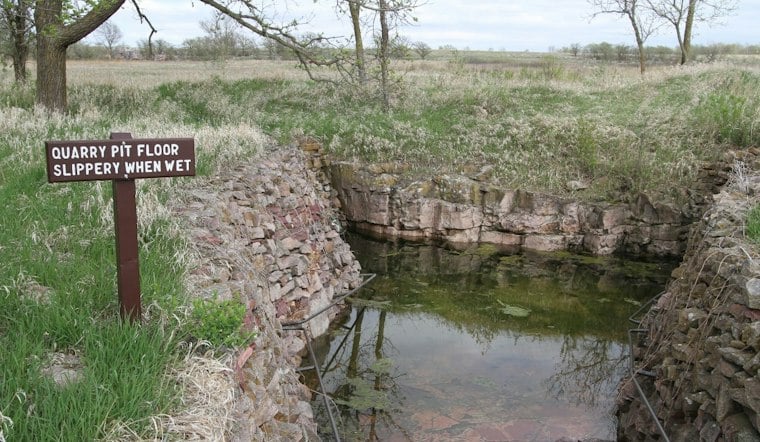
Pipestone National Monument, created by the United States Congress in 1937 and administered by the National Park Service, covers more than 300 acres consisting of pipestone pits surrounded by tall grass prairie. The pipeline operated through the monument for 75 years and should be moved outside the area, Kevin Pranis said, according to MPR News. Before the hearing, the Indigenous Protector Movement held a prayer circle outside the hearing room and posted online that pipestone is sacred and has been sacred for generations before Minnesota, pipelines, and corporations, per a Facebook post cited in the report.
Commissioner John Tuma said state law does not give the commission a no-build option, and he encouraged pipeline opponents to lobby their legislators to change the law if they want a different outcome, the outlet reported. That framing echoes Minnesota statute, which states that a person may not construct a pipeline without a routing permit issued by the commission unless the pipeline is exempt from its routing authority, according to the Minnesota Revisor of Statutes.
Years of Reversals Before Thursday's Decision
The path to this latest vote has been anything but straight. In September 2024, the commission approved a route permit by a 3-2 vote, but by January 2025 it reversed course, rescinding that decision and requiring further studies along possible routes before construction could proceed, according to MPR News' coverage of that reversal. The 2025 order required Magellan to coordinate with tribal nations on an archaeological study covering two possible separate routes meant to put distance between the pipeline and the pipestone quarries.
Attorney Christy Brusven, representing the company, said Magellan satisfied the requirements of the 2025 order and took steps to avoid natural resources along the way. The two route alternatives studied differ sharply in scope: Route Alternative 1 runs roughly 13.1 miles, while Route Alternative 3 spans about 18.7 miles, according to the Pipestone County Star. The 2024 permitted route, for comparison, was just over 13 miles and crossed approximately 200 acres, per MPR News. The Upper Sioux Community proposed a route almost 19 miles long.
Archaeological Surveys Turned Up Dozens of New Sites
Surveys conducted along the proposed routes recorded a striking number of previously unreported archaeological sites. Along Route Alternative 1, surveyors recorded 40 such sites, and along Route Alternative 3, they recorded 21, with three sites recommended as eligible for listing on the National Register of Historic Places, according to the Pipestone County Star report. Those findings underscore the archaeological sensitivity that has driven much of the regulatory delay since the original 2024 approval.
Accounts differ on why the pipeline stopped operating in 2022 in the first place. MPR News reported that the line closed after its permit expired that year, while the Star Tribune reported that the federal government shut it down in 2022 specifically to protect the monument. Both outlets agree the line has sat idle since then while the permitting fight played out before the commission.
With the newly granted permit now on the books, the yearslong dispute over the Magellan pipeline's route near one of the Upper Midwest's most significant Indigenous cultural sites moves into a new phase, though tribal opposition that filled Thursday's hearing room in St. Paul shows no sign of fading.



