

























































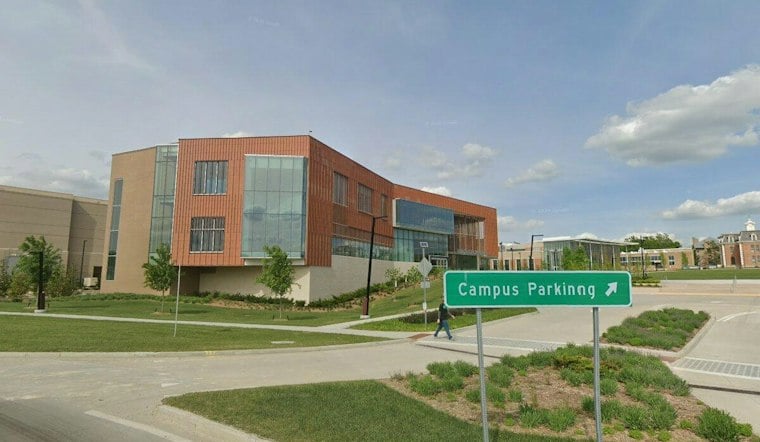
The University of Missouri Board of Curators voted unanimously Thursday to approve a new bachelor's degree program in artificial intelligence at Missouri University of Science and Technology, clearing the way for what the Rolla school calls the first standalone undergraduate AI degree in the state. Missouri S&T plans to admit its first cohort in fall 2027, pending one more sign-off from state regulators.
The vote took place Nov. 19, according to Missouri S&T, which says the program still needs approval from the Missouri Coordinating Board for Higher Education before students can enroll. The 120-credit-hour degree will live in the university's computer science department within the College of Engineering and Computing, and the proposal includes six brand-new courses built specifically for the program.
Coursework will blend computer science fundamentals with AI-specific training, according to the same university announcement. Students will study programming, algorithms, machine learning, data science, computer organization, databases and cybersecurity, alongside calculus, linear algebra, statistics and neuroscience. The curriculum also carries what the school describes as a focus on responsible AI practices and the societal effects of emerging technologies.
Why Rolla Says Demand Is Surging
David Borrok, vice provost and dean of the College of Engineering and Computing, said the push behind the new degree reflects a broader shift in how industries operate. “Demand for AI-focused education has grown significantly as AI technologies become increasingly integrated into industries,” Borrok said, per the university's announcement. He added that graduates will be prepared to understand and innovate within modern engineered systems that increasingly rely on AI.
Missouri S&T projects the program will enroll roughly 110 students within five years of launch, the school's report notes. The new degree builds on groundwork the university laid last year with MinerAI, an initiative focused on artificial intelligence research, collaboration and resources. Among MinerAI's stated goals, according to Missouri S&T's eConnection, are creating a campuswide hub connecting students, faculty, staff and alumni with AI-related resources, designing courses and programs for AI users, and developing a new master's degree in applied AI alongside expanded advanced coursework and research.
A Statewide Scramble to Catch Up With AI
Missouri S&T is not alone in racing to build out AI education. The University of Missouri System's Columbia campus is introducing both a master's degree and a doctorate in AI this fall, with students working alongside faculty on topics such as deep learning, generative AI, natural language processing and bioinformatics, according to Mizzou Engineering. Roger Fales, the college's associate dean for academic programs, said the new offerings align with critical workforce needs and emerging research areas, while Electrical Engineering and Computer Science chair Syed Kamrul Islam pointed to what he called an urgent demand for highly trained experts created by the rapid advancement of AI technologies.
That urgency shows up in state labor data, too. Missouri higher education institutions already run more than 300 programs related to AI, enrolling more than 15,000 students, according to a panel discussion reported by the Jefferson City News Tribune. The state's higher education commissioner told that panel that about half of Missouri job postings requiring AI skills fall outside traditional tech or data engineering fields, underscoring how far the technology has spread beyond computer science departments. The Missouri Department of Higher Education and Workforce Development has responded by offering introductory online AI learning capsules at all 21 of its job centers statewide, per the same report.
Other States Are Moving Too
Missouri S&T's push mirrors a similar effort in Kentucky, where Murray State University's Board of Regents approved a proposal for its own Bachelor of Science in artificial intelligence, according to the Murray Ledger & Times. That program, which would also run 120 credit hours, still needs review from a Kentucky Council on Postsecondary Education subcommittee and a full council vote, and university officials there pointed to similar pressures driving the proposal. “Students are interested in it, we have prospective students asking about it, current students interested in it, and there's lots of jobs for that,” one Murray State faculty member said, according to the paper.
Back in Rolla, the remaining hurdle is procedural but necessary: the Missouri Coordinating Board for Higher Education has to sign off before Missouri S&T can admit its first AI majors. If that approval comes through as planned, the university says it intends to welcome its first class of standalone AI undergraduates in fall 2027, giving Missouri students a pathway into a field that colleges across the region are scrambling to build out.



