

























































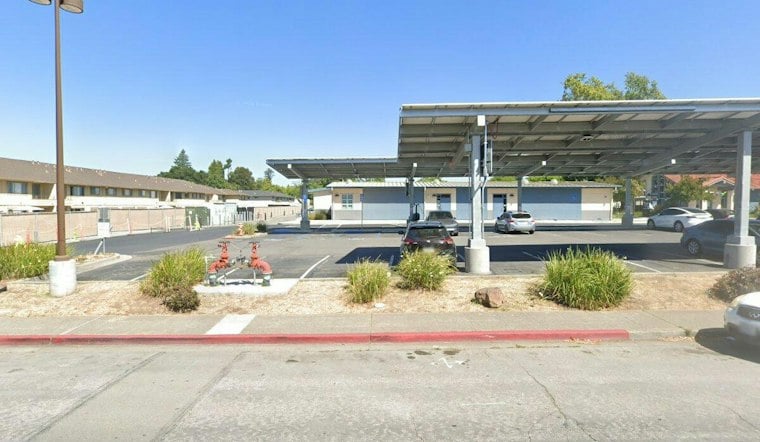
The Mountain View Whisman School District board approved the schematic design for a $3.4 million project to cover walkways between buildings at Castro Elementary, advancing a facilities plan that has been in district discussions for years. The proposed free-standing structures would use steel columns and beams topped by metal roofs to shelter the second-floor paths connecting classroom buildings.
A Years-Long Path to Approval
According to Mountain View Voice, the district listed the walkways as a non-urgent project in its 2019 master facilities plan update, leaving them behind higher-priority work. The district approved moving the project forward in May 2024, after more urgent work elsewhere was completed. On Oct. 22, trustees approved the schematic design for the $3.4 million plan.
The project’s funding and timing have shifted over the years. In a March 2025 report, the Voice said roughly $2.3 million had been set aside for the walkways, but construction was not expected to begin until after officials resolved a separate decision about purchasing land for teacher housing.
Castro's Student Population and a Trustee's Criticism
Castro enrolled 248 students. The Voice reported that about 85% came from socioeconomically disadvantaged families and roughly 70% were classified as English learners, citing the California School Dashboard. A Citizen Portal search-result snippet cited slightly different figures from the same dataset—about 87% and 71%, respectively. The district has described Castro as its school serving the most disadvantaged students. It is next to Gabriela Mistral Elementary, the district’s choice dual-immersion school.
The Voice’s account of the board discussion said Trustee Devon Conley argued that past campus decisions had effectively “segregated” the district’s lowest-income students at Castro, where he said amenities were inferior to those at the neighboring school. He said the facility problems should have been addressed long ago and criticized the district for allowing them to persist.
Principal and Teacher-Trustee Make the Case for Coverings
Castro Principal Vern Taylor told trustees that wet walkways pose a slipping and tripping risk for students. He also emphasized that Castro’s students are among the district’s most vulnerable and deserve a safe campus environment, according to the Voice’s meeting report.
Trustee Ana Reed, who is also a teacher, supported the project, saying that students who spend hours in class after getting soaked may have a harder time settling into instruction. The Voice reported that the board was largely supportive of the walkway coverings.
Budget Trimming and Bond Funds
The approval comes as the district works to cut $8 million from its budget, and trustees discussed the project’s cost in that context. Superintendent Jeff Baier told the board that about $40 million in Measure T funds would remain after the Castro project is completed. Voters approved the $259 million bond in 2020 to support district infrastructure needs.
The current project follows an earlier transformation of Castro’s campus, which included three two-story buildings on the east side of the site. The Voice reported that the 2015-era work was initially estimated at $42 million before revised plans brought the cost to $41.8 million. Those revisions included less expensive roofing and eliminated classroom skylights and exterior sliding glass walls—cost-saving decisions relevant to Conley’s comparison of Castro’s facilities with those at neighboring Mistral. According to the Voice’s account of the district’s history, Mistral was founded roughly a decade before this year’s reporting, cost almost $50 million and was funded by a school infrastructure bond.
What state rules say about covered walkways
The California Division of the State Architect oversees design and construction for K–12 schools to check compliance with structural, accessibility, fire and life safety codes. Its description does not establish whether state rules specifically require covered walkways. In Castro’s case, the account here documents a district facilities-plan project that trustees approved through a local board vote, but it does not resolve whether a particular code requirement applies.





