

























































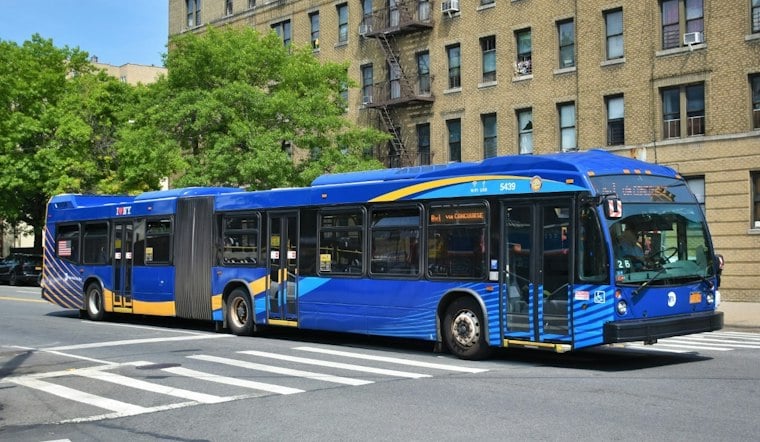
The MTA is about to try something unusual for a transit agency: buying a handful of buses from overseas manufacturers with no federal subsidy attached, then throwing them straight into real New York City service to see if they can hack it. The plan calls for several pilot fleets of just five to 10 buses each, running for a full 52 weeks on city streets and at depots, before the agency decides whether any of these builders belong in its long-term plans.
“Think of the fleet size as five to 10 buses. We’re going to run those buses for 52 weeks,” according to Streetsblog New York City, which first detailed the MTA’s strategy. The agency will purchase the small overseas-built batches without any federal subsidy and then stress-test them by running them on city streets, the outlet reports, with the pilot program designed to let manufacturers learn New York City’s operating conditions while MTA teams get familiar with unfamiliar bus designs.
A Fleet That Needs Thousands of New Buses
The stakes behind the experiment are large. MTA executives say the agency needs to order 4,500 buses over the next few years, and an outside engineering firm monitoring the agency’s capital plan says the MTA must purchase 500 new buses annually just to keep pace, per the same Streetsblog report. The agency currently operates hundreds of buses more than 12 years old, the point at which breakdowns become more frequent, the outlet notes.
Last month the MTA published a request-for-proposals for 650 new buses running on compressed natural gas, the station’s report says, a sign the agency is diversifying its near-term orders even as it pursues the overseas pilot program. The MTA has also paused an order for almost 500 electric buses from New Flyer until the manufacturer could ensure its buses could consistently complete a day’s service, after some of the MTA’s existing New Flyer electric buses continued to suffer major problems with battery charging and equipment failure, per the same account.
New Flyer Order Already Scaled Back
The reliability concerns aren’t new. The MTA board advanced an amendment earlier this year lowering the number of 40-foot electric buses in New Flyer’s order from 380 to 295 and swapping in 85 diesel-electric hybrids instead, according to a separate Streetsblog New York City report from July. That retreat from full electrification underscores why the agency is now looking abroad for alternatives, even as it keeps its target of completing the transition to a fully zero-emissions bus fleet by 2040.
The overseas pilot emphasizes electric buses specifically, since European manufacturers use them widely while the United States has seen only limited adoption, the Streetsblog report states. But not every foreign design translates easily to New York: some overseas manufacturers are unaccustomed to placing the operator booth on the left side of the chassis, and some overseas buses may not suit dense urban environments, the outlet reports. The MTA says it remains receptive to bus designs that differ from agency and passenger expectations, so long as they stay suitable for American streets.
A Market Squeezed to Two Major Builders
The push for new suppliers reflects a manufacturing base that has narrowed sharply. American bus manufacturing has dwindled to only two main firms, Gillig and New Flyer, according to a study by the Eno Center for Transportation. Gillig does not even bid on requests for proposals from large transit agencies, the Streetsblog report adds, leaving New Flyer with outsized influence over big-city orders like the MTA’s.
Eno’s research found fewer than 5,000 heavy-duty transit buses are sold in the U.S. in a typical year, compared to nearly 16 million cars, SUVs, and light trucks — a market simply too small to attract the manufacturer competition seen in other vehicle categories. The problem is especially acute for 60-foot articulated buses and trolley buses, since only one U.S. company currently manufactures them, per Eno. The center also found that extensive non-standard customization on American bus orders drives up prices and delivery times, creates quality issues, and can make the market harder for new manufacturers to enter.
Electric Buses Cost Far More Than Diesel
Price data underscores the gap American agencies are trying to close. Eno reports that Italy’s national purchasing center pays about $900,000 for a battery-electric bus, while San Francisco’s Muni pays roughly $1.4 million for a comparable vehicle. Separately, research published by Findings, drawing on a dataset of 28,013 U.S. transit buses built from 2010 through 2023, estimates that battery-electric buses cost about 66% more than diesel buses once other attributes are controlled for, with CNG and diesel-hybrid models running about 11% and 44% higher respectively.
That same Findings research found real prices for non-electric U.S. transit buses have risen 0.7% per year faster than inflation since 2010, even as electric-bus prices have fallen roughly 3% annually. Between 2015 and 2025, U.S. transit agencies paid a median of $995,000 for battery-electric buses in 2023 dollars, according to Eno — figures that help explain why the MTA is eager to widen its pool of potential sellers.
MTA Betting Capital Dollars on New Vendors
The agency’s effort to recruit new manufacturers falls under its Rolling Stock Program, created to manage the $12 billion investment set aside for rolling stock in the Metropolitan Transportation Authority’s 2025-2029 Capital Plan. MTA Chair and CEO Janno Lieber appointed Jessie Lazarus to lead the program, and Lieber has said the agency needs to raise an additional $1 billion for rolling stock because of tariffs. Lazarus has said tariff volatility is a major deterrent to manufacturers setting up operations in North America.
Still, Lazarus told Streetsblog that overseas bus-component suppliers may follow manufacturers to the United States if demand from the MTA and other public transit agencies proves strong enough to draw them to North America. She said she hopes the pilot program will benefit other American transit agencies and help revive domestic bus manufacturing more broadly. Rachel Spector praised the MTA’s strategy of pursuing new vendors, and said electric buses remain critical to cleaner air and the region’s climate targets, per the Streetsblog report.
Oxford Economics estimated that U.S. heavy-duty transit bus manufacturing supported roughly 34,100 jobs and contributed about $5.15 billion to GDP in 2025, according to a study covered by Sustainable Bus. That same research found Gillig and New Flyer buses accounted for nearly 70% of U.S. transit vehicles in service in 2024, while battery-electric models made up about 20% of deliveries in 2023 and 2024 but only around 4% of the fleet actually in service — a gap the MTA’s overseas pilot is meant to help close.




