

























































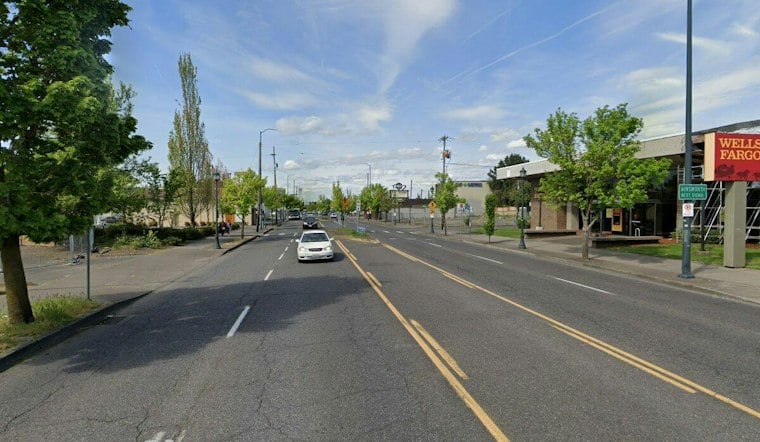
Drivers across Northeast Portland are dealing with shredded tires after mechanics discovered spikes scattered on roads near Martin Luther King Jr. Boulevard and Grand Avenue. A Lloyd District Les Schwab location says it repaired up to 35 vehicles over a single weekend because of the damage, and now the Portland Police Bureau is looking into how the spikes got there.
All of the reported damage occurred in areas near Martin Luther King Jr. Boulevard and Grand Avenue, according to mechanics cited by KOIN. Workers at the Lloyd District Les Schwab said the spike-related repairs piled up fast, and some of the tire center's other locations reported noticing the same issue while servicing customers.
Mechanics Suspect the Spikes Were No Accident
The sheer number of damaged tires concentrated in one stretch of Northeast Portland has mechanics questioning whether the spikes ended up there by chance. Mechanics told the station they believe the spikes could have been placed intentionally, though the exact cause remains unconfirmed.
Nicholas Nyguen, one driver whose vehicle was affected, said he didn't initially suspect anything deliberate. “Maybe it was like there was an accident and there was, you know, shrapnel came off,” he said, describing his first guess about what tore up his tire.
A First in Nine Years on the Job
For Les Schwab manager Stephon Layna, the pattern of damage stood out as unusual. He said this was the first time in his nine years on the job that he had seen these kinds of spikes puncturing customers' tires.
The Portland Police Bureau said it is investigating the cause of the spikes, though it's not yet known who may be responsible or whether the placement was intentional. Authorities are asking anyone whose vehicle has been damaged in the affected area to contact police.
If investigators establish that someone intentionally placed spikes to damage vehicles, Oregon’s criminal-mischief law may be relevant. The statute defines second-degree criminal mischief to include intentionally damaging another person’s property without a right to do so; it also covers reckless damage when the loss exceeds $500. The law separately addresses tampering intended to cause substantial inconvenience. Which provision, if any, applies would depend on evidence about intent, damage and the circumstances—not simply on the number of reported flats. Oregon’s criminal-mischief statute spells out those elements.
Portland police policy defines stop/spike strips as devices for controlled tire deflation and says officers may use them when reasonable under the circumstances. The policy describes them as a vehicle-intervention tactic. The bureau’s directive sets out those limits.
A later case in Paso Robles, California, shows how scattered tire spikes can affect more than individual drivers: police logged at least 40 reports over six weeks in 2025, and a spike-disabled ambulance had to be replaced by a second ambulance. A tow truck sent to help a stranded motorist was also disabled. The incidents were concentrated in several areas, but police said they had not determined whether the placement was targeted or accidental, underscoring how motive can remain unclear even as damage mounts. Paso Robles police documented the cases.





