

























































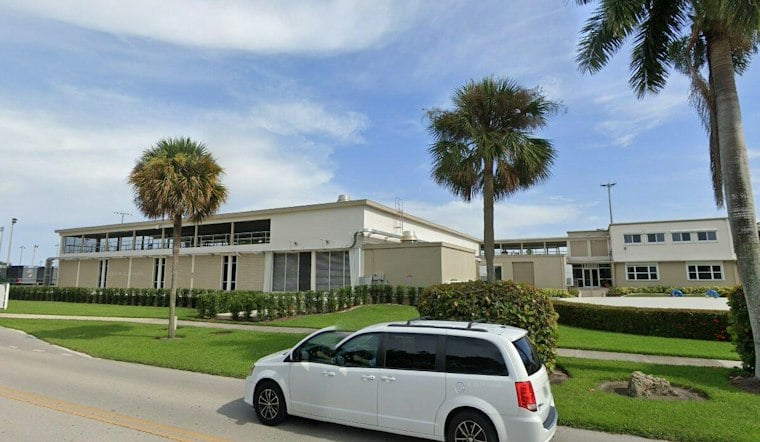
Naples City Council voted unanimously on Wednesday, November 18, to approve $4,447,868.46 in funding for a project that will strip toxic chlorine gas out of the city's water treatment system entirely, replacing it with liquid sodium hypochlorite at both the water treatment plant and the water reclamation facility. The project is expected to cost more than $4.4 million overall, covering construction, engineering oversight and a contingency allowance for the unexpected.
According to Gulfshore Business, which first reported the council's vote, Cape Coral-based Tru Spec Mechanical will handle the $3,706,502 construction contract after its bid was selected over three other bids. The city will also pay Bowman Gulf Coast, which does business as Hole Montes, $370,716.26 for engineering and construction contract administration, with an additional $370,650.20 set aside as an allowance for unforeseen circumstances during the roughly 26-month project. Funding will come from the unappropriated balance in the city's water-sewer fund.
The move caps years of planning that began with a feasibility study Hole Montes completed in January 2024, for which the city paid $49,688, evaluating industry-standard treatment alternatives, retrofitting constraints, safety factors and implementation costs. City officials later received a formal technical report outlining the conversion strategy, which anticipates substantial completion at the water treatment plant before work begins at the water reclamation facility.
Why Naples Is Walking Away From Chlorine Gas
Robert von Holle, the city's interim wastewater utility manager, wrote in a council memo that chlorine gas costs were rising dramatically, with the unit cost climbing from $1,158 per ton in fiscal year 2021-22 to $2,449 per ton in fiscal year 2022-23. George Yilmaz, Naples' assistant city manager for critical infrastructure and public works, said the conversion will eliminate the city's existing vacuum chlorination system and reduce risks tied to chlorine gas and potential leaks.
Yilmaz also said the switch will eliminate vacuum-system failures linked to pressurized or depressurized systems and that the city's latest disinfection system upgrade came about 17 years earlier. Rather than upgrading that aging system, Naples opted to move fully to liquid sodium hypochlorite disinfection, which Yilmaz said will improve safety and simplify chemical handling at the water plant.
The change also has a regulatory dimension: EPA identifies elemental chlorine as a substance covered by the federal Risk Management Program, but says sodium hypochlorite itself is not on that list and its chlorine ions do not count toward the program’s chlorine threshold. That changes which chemical inventory is relevant to those rules; it does not make bleach risk-free. EPA describes sodium hypochlorite as corrosive and warns that it must be kept away from incompatible materials. EPA’s explanation of how the program treats sodium hypochlorite spells out the distinction.
What Changes, and What Doesn't, for Naples Residents
The conversion will eliminate toxic chlorine gas plumes, scrubber requirements and residential hazard zones around the plants, and it will reduce risk management plan and hazard assessment requirements tied to handling the gas. The water treatment plant, located at 1000 Fleischmann Blvd., has a capacity of 30 million gallons per day and currently treats about 15 million gallons daily for roughly 62,000 residents across 18,000 city accounts. The water reclamation facility, at 1400 Third Ave. N., has a capacity of 10 million gallons per day and serves about 9,000 accounts and 45,000 people, producing reclaimed water used for irrigation and environmental reuse.
Yilmaz said residents will notice no difference in taste or smell from the conversion itself. Separately, Naples will conduct its routine annual drinking-water disinfection and flushing from December 1 through December 31, using free chlorine instead of chloramines during that period, and residents may notice a difference during that routine flushing window specifically.
A Broader Industry Shift Toward Liquid Bleach
Naples isn't alone in moving away from gaseous chlorine. American Water Works Association research found that bulk liquid sodium hypochlorite is now the most prevalent chlorine form among responding drinking water systems, even though chlorine gas is still used by 48 percent of those systems and on-site sodium hypochlorite generation accounts for about 12 percent. A city study found the new disinfection method will be more sustainable, and the conversion is also expected to simplify equipment maintenance by making systems and parts available nearby, including in Tampa.
Liquid bleach brings a different operational concern: its disinfecting solution can degrade during storage. EPA says that degradation can produce chlorate and perchlorate, with formation affected by storage conditions. The agency’s recommended practices for drinking-water products include minimizing storage time, keeping solutions cool and out of sunlight, and maintaining an appropriate pH. Those safeguards do not change the project’s stated goal of reducing chlorine-gas risks, but they underscore that the replacement chemical still requires careful management. EPA’s guidance on hypochlorite storage outlines those precautions.
Naples’ choice fits a broader shift among water utilities. In a survey of drinking-water systems cited in a 2026 analysis, bulk liquid sodium hypochlorite was the most prevalent chlorine form among respondents; 48% still used chlorine gas, and about 12% used on-site hypochlorite generation. The analysis also says more than 35% of systems had switched from chlorine gas to sodium hypochlorite over the prior decade, largely for safety reasons. Those survey figures put the Naples project in the context of a wider utility trend.
Yilmaz said the new disinfection system will also be more compatible with future treatment enhancements, and the conversion is meant to prepare the city for potential advanced treatments including nanofiltration, reverse osmosis filtration and ion exchange. He said Naples may consider those enhanced treatments in the next two or three years. For now, Yilmaz said the conversion project as approved would modernize both plants and reduce disinfection risks to the facilities and the surrounding community.




