

























































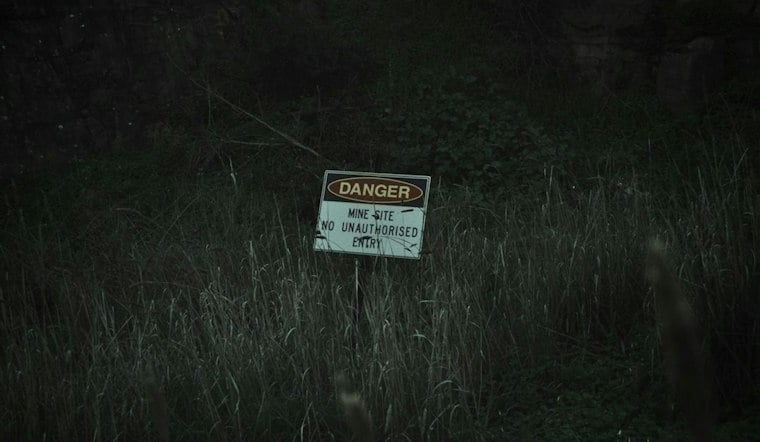
More than 10,000 Navajo men went to work in uranium mines across the Colorado Plateau during the mid-20th century, digging up the ore that would fuel America's nuclear weapons arsenal. They did it without protective equipment, and according to accounts gathered from the miners themselves, without being told what uranium could do to their bodies. Decades later, many of those men were dead of lung cancer, kidney disease, and a list of other illnesses that researchers have since tied directly to their work underground.
The scale of the undertaking was enormous. The Manhattan Project, racing in 1944 to build the first nuclear weapons, used about 10,000 tons of uranium ore, and about 15% of that total came from new mining ventures on or near Navajo lands, according to the Richmond Times-Dispatch. The Navajos’ lands on the Colorado Plateau spanned about 27,000 square miles across New Mexico, Arizona and Utah, and the federal government offered private mining companies and the Navajo government financial incentives to pull uranium from the ground for the war effort. The Manhattan Project had also relied on uranium from a mine in the Belgian Congo that was secretly shipped to New York, but the domestic supply on Navajo land became the backbone of Cold War production.
A Federal Purchase Offer Sparks a Boom
The pressure to mine only intensified after the war. In 1948, the federal government announced it would purchase all uranium ore mined in the United States for at least $3.50 per pound, and it offered $10,000 bonuses for anyone who found new high-grade ore deposits. That offer set off a mining boom on Navajo lands, and as Lee Enterprises reports, that boom was followed by one of the deadliest and most shameful public-health disasters in the country. For Navajo men, the mines meant something simpler on the surface: steady jobs close to home, at a time when few other options existed.
What those jobs did not come with was any real warning. According to the same report, Navajo miners said later that they were not educated about the hazards of uranium mining and were not given protective equipment. The Navajo language itself had no word for radiation, leaving miners without even the vocabulary to describe what they were being exposed to. Yet the danger was not some unknown risk discovered only in hindsight — by 1940, years before the boom even began, it was already accepted as medical fact that uranium miners frequently developed lung cancer.
Ventilation Delayed, Records Lost
Mining companies knew the fix, at least in part: proper ventilation of underground shafts. But the companies were not interested in spending the money to ventilate the mines until regulations eventually forced them to in the early 1960s, per the same report. By then, countless miners had already logged years underground breathing radioactive dust and radon gas.
Tracking exactly who was exposed, and by how much, became its own problem. Christopher Shuey, senior environmental health specialist at the Southwest Research and Information Center in Albuquerque, said many miners lacked paychecks and exposure documentation altogether. “They worked for cash, and the companies hired trading-post operators to manage the miners' payroll,” Shuey said, according to the report. That absence of formal records has made it harder to fully account for who worked in the mines and what they were exposed to.
The Toll: Cancer, Kidney Disease, and More
The medical consequences were severe and varied. Navajo uranium miners died from lung cancer and other diseases, including kidney disease — uranium attacks the kidneys — along with nonmalignant respiratory diseases like silicosis and emphysema, autoimmune diseases and vascular disease, the report states. A 1995 study published in the American Journal of Public Health that examined 757 Navajo miners found that more of them died of tuberculosis and other nonmalignant respiratory diseases than would have been statistically expected.
Peer-reviewed research has quantified just how dramatically the risk of lung cancer rose among these workers. A study tracking Navajo men found that 63 of 94 incident lung cancers between 1969 and 1993 — 67% — occurred in former uranium miners, according to findings published by ovid.com. That same research calculated a relative risk of 28.6 for lung cancer among Navajo men with a history of mining uranium, compared to those without that history.
A separate 1984 case-control study, published in the New England Journal of Medicine, examined all 32 lung cancer cases that occurred among Navajo men — a predominantly nonsmoking population — between 1969 and 1982. Of those 32 patients, 72% had been employed as uranium miners, underscoring just how closely the disease tracked with the work itself. Research has linked uranium mining among Navajo men with elevated lung-cancer risk.
Risks That Outlasted the Mines Themselves
The danger did not end when the mining stopped. Navajo uranium miners continued to face excess mortality risks from lung cancer and other respiratory diseases even 23 years after their last exposure to radon, according to the seed reporting from the Richmond Times-Dispatch. Families were exposed too — miners sometimes used leftover tailings to make cement, fireplaces and stucco for their own homes, not realizing the material carried contamination into the places where their children slept and ate.
Commercial demand for uranium eventually waned, ironically due in large part to the Three Mile Island nuclear scare of 1979, per the Lee Enterprises account. That same year, a tailings-pond failure at the Church Rock mine released nuclear materials onto the Navajo reservation, compounding the damage already done. Lee Enterprises reports that roughly 30 million tons of uranium ore were mined over four and a half decades before mining ended in 1987.
What is not in dispute is the waste left behind. Uranium tailings spread radioactive contamination across the Colorado Plateau, and that radioactive waste has gone on to contaminate groundwater, streams and pasturelands around Navajo lands. Abandoned uranium mines and the waste they left behind remain a threat to Navajo families and communities today, a legacy of an industry that, for decades, asked the most of Navajo workers while telling them the least about what it was costing them.





