

























































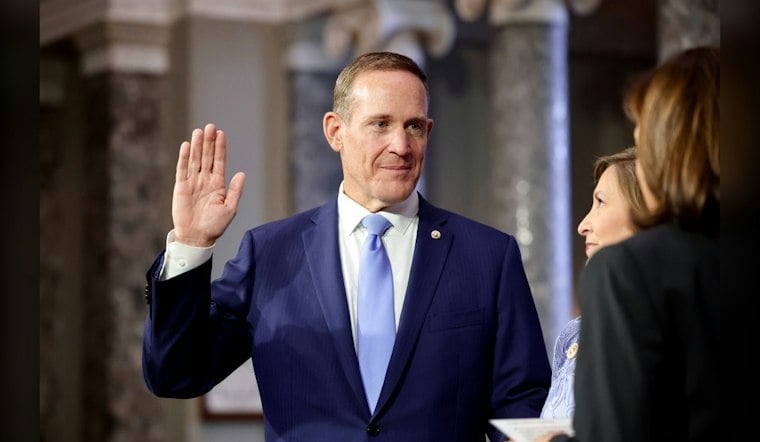
North Carolina Senator Ted Budd has introduced legislation that would permanently elevate the Pentagon's top special operations official to the same rank as a military service secretary, renaming the job Under Secretary of War for Strategic Services and adding 200 new positions to the office. The push comes as the United States Army Special Operations Command, headquartered at Fort Bragg, finds itself at the center of a broader Pentagon reshuffle over who controls and oversees the nation's elite military units.
Budd introduced the Office of Strategic Services Act of 2026 to expand the role of special operations leadership inside the Department of War, according to cbs17.com. The station reports the bill would elevate the Pentagon's top special operations official to the same level as a military service, renaming the job Under Secretary of War for Strategic Services, while also requiring increased funding and adding 200 positions. The bill would codify the Secretary of War's intent, as laid out in a memorandum to senior Pentagon leadership.
In a statement from his Senate office, Budd said the bill would codify the Secretary of War's intent — as laid out in a memorandum sent to senior Pentagon leadership earlier this month — to elevate the authority of the Assistant Secretary of Defense for Special Operations and Low-Intensity Conflict and strengthen departmental support for what his office calls the Special Operations enterprise, per Budd's Senate office.
What the Pentagon Memo Already Changed
The legislation follows directly on the heels of administrative moves already made by Defense Secretary Pete Hegseth. A memo dated Nov. 2 and released Nov. 12 gave the Assistant Secretary of War for Special Operations and Low-Intensity Conflict a new title — Assistant Secretary of War for the Office of Strategic Services — according to The Cipher Brief. That outlet reports the memo reallocates at least $45 million a year to the office and adds 100 billets, split between 75 civilian and 25 military positions.
The memo itself directed the Secretariat for Special Operations to adopt Office of Strategic Services as a secondary name rather than stand up an entirely new organization, military.com reports. The outlet also notes that the official's existing statutory rank remains unchanged for now, since Hegseth directed Pentagon officials to seek congressional approval before any undersecretary-level position could be formally created — which is where Budd's bill comes in.
A Fight Over Civilian Oversight Decades in the Making
Budd's proposal references earlier orders from 1987 and 2017 that dealt with civilian oversight of Special Operations Forces, according to cbs17.com's reporting. Those references point to a long-running tension in Washington over how much independent authority the Pentagon's civilian special-operations office should hold relative to the uniformed chain of command.
That tension isn't new. Congress created the Assistant Secretary of Defense for Special Operations and Low-Intensity Conflict back in 1986 to provide civilian oversight for the nation's special operations forces, according to a Government Accountability Office report. The 2017 National Defense Authorization Act placed the assistant secretary over U.S. Special Operations Command in its administrative chain.
Local Stakes at Fort Bragg
The United States Army Special Operations Command is based at Fort Bragg, according to cbs17.com, putting North Carolina's Cumberland County squarely in the path of whatever authority shifts emerge from Washington. For a community built around special operations forces, the bill would put the proposed changes into law.
The bill is intended to codify changes the Pentagon has already begun making. Whether the Office of Strategic Services Act of 2026 advances through Congress — and whether it secures the funding and 200 new positions Budd's office says it requires — remains to be seen as the bill makes its way through the legislative process.




