

























































Roughly 24% of Americans with a credit record are behind on medical bills, student debt, or auto and retail loans, according to a new analysis from the Urban Institute. The median balance owed by those falling behind sits at $2,913, a figure researchers say captures just how stretched household budgets have become as prices and interest rates climb together.
The findings, based on an analysis of more than 10 million credit records and U.S. Census data, were reported by CBS News and separately detailed in the Urban Institute's own interactive debt dashboard, which draws on a 4 percent nationally representative panel of more than 10 million deidentified consumer records from a major credit bureau, according to Urban Institute. That dashboard, last updated Tuesday, pulls its credit data from August 2026. The same analysis was also picked up by WINK News, which ran the CBS News report nationally Tuesday.
The burden is not spread evenly. In communities of color, 30% of people are behind on payments, with a median debt in collection of $3,009, per the CBS News report. Nationwide, the share of Americans with debt in collection has risen about one percentage point this year, from less than 23% in 2025, the analysis found.
Student Loans and Medical Bills Driving the Numbers
Student debt is a significant piece of the picture. Almost 16% of student loan borrowers are behind on payments, the analysis found. That tracks with a separate Urban Institute finding that the share of student loan holders at least 60 days delinquent or in default climbed to 15.9% by August 2025, up sharply from just 2.3% in August 2022, according to the same organization's research.
Medical debt remains a persistent drag even for the insured. Three percent of Americans have medical debt in collections, with a median balance of $1,492, the CBS News report states — a figure that notably excludes credit card debt racked up to cover health care costs. Urban Institute senior fellow Breno Braga told the outlet that having coverage does not protect you at all from having medical debt, adding that even insured people can face heavy bills because of coverage gaps and the high cost of care, particularly under high-deductible plans.
Braga also said that medical debt not reported to credit agencies does not simply disappear. Fifteen states have passed legislation barring health care providers from reporting medical debt to credit rating agencies, though that shift affects how debt shows up on a credit file rather than whether it exists. The Urban Institute's dashboard similarly notes that changes by the three nationwide credit-reporting companies beginning in 2022 reduced the share of people with medical debt in collections reported on credit records, but not necessarily the share who actually carry that debt.
Rising Prices, Record Credit Card Balances
Behind the numbers is a broader squeeze on household finances. Consumer prices have risen by an average of 30% since 2019, Bankrate's Ted Rossman told CBS News, and he said Americans have depleted savings and financed daily expenses with debt as a result, describing household budgets as being at a breaking point.
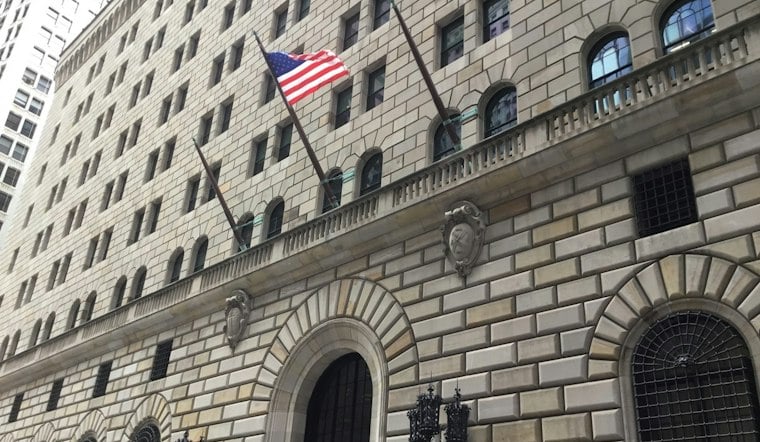
Credit card balances reflect that strain. U.S. consumers' credit card balances have surged to a record $1.29 trillion, up nearly 70% over five years, according to the Federal Reserve Bank of New York. The bank's latest quarterly report found total household debt expanded by $334 billion, a 1.8% increase, in the third quarter of 2026, reaching $19.1 trillion, with 5.0% of outstanding debt in some stage of delinquency — up 0.3 percentage points from the prior quarter, per the Federal Reserve Bank of New York. Credit card balances alone rose by $22 billion during the quarter. Transitions into early delinquency kept ticking up for auto loans and mortgages, though they improved slightly for credit cards, the bank reported.
Braga attributed part of the disparity to rising interest rates, which make it harder for people to catch up on debts as the Federal Reserve works to tame inflation, and he said the current financial conditions reflect Americans' broader financial lives amid an increasing cost of living that makes it harder to cover basic needs.
A Geographic Divide, With the South Hit Hardest
Where you live appears to matter a great deal. Louisiana has the highest share of residents with debt in collections of any state, and its student loan delinquency rate runs roughly 22%, according to the CBS News analysis. Debt in collections and past-due debt are broadly concentrated in the South, the Urban Institute has found in separate research.
Braga attributed these geographic disparities to lower incomes and higher poverty rates in some regions, noting that people in those areas also tend to have lower credit scores — which in turn means borrowers often pay higher interest rates on credit cards and auto loans, compounding the difficulty of catching up once behind.
The Urban Institute's dashboard defines debt in collections broadly, encompassing past-due credit lines that have been closed and charged off on a creditor's books as well as unpaid bills reported to a credit bureau for collection; credit card accounts, for instance, enter collections once they are 180 days past due. For now, the data paints a picture of a country where a quarter of credit-holders are falling behind, with the deepest cracks running through the South and through communities of color.