

























































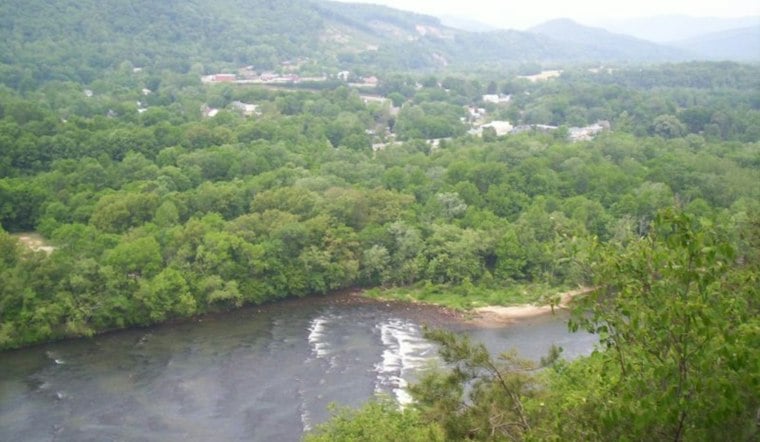
A fish species never before recorded in North Carolina turned up in the French Broad River near Hot Springs on Oct. 21, when state biologists netted a 29-inch male blue sucker during a routine survey. The find has conservation biologists describing the moment in personal terms, with one saying he was overwhelmed with joy when the fish came up in the net.
Luke Etchison, a conservation biologist with the N.C. Wildlife Resources Commission, helped capture the fish and said the discovery suggests the French Broad River's health is improving, according to cardinalpine.com. Blue suckers can live longer than 100 years and grow up to 40 inches long, making the Hot Springs specimen a comparatively young representative of a species built for the long haul. The fish prefers deep, swift water, a habitat niche that had kept it off North Carolina's books until now.
State biologist Dylan Owensby said the only previously reported record of a blue sucker in the French Broad was from 2007, though that record apparently never led to the species being formally documented in the state until this fall's catch. Owensby said finding a previously undocumented fish in surveys is significant and indicates healthy water quality, and he added that the blue sucker's presence shows the river's water quality is continuing on the trajectory it was on before the hurricane, per the same report.
A River With a Rough Industrial Past
The French Broad's recovery has been decades in the making. The river was heavily polluted by industrial manufacturing in the 1960s, and it has regained some health since the Clean Water Act was passed in 1972, cardinalpine.com reports. That slow rebound was tested again in 2024, when Tropical Storm Helene damaged the river and Western North Carolina as a whole — a setback Owensby's comments suggest the ecosystem is still working past, rather than starting over from.
As first reported by the Charlotte Observer, which republished reporting from Asheville Citizen Times public safety reporter Kara Fohner, the discovery adds a new chapter to that recovery story. Etchison also noted that because the blue sucker turned up in the fall rather than spring, there may be more of the fish in the river, and they could be present year-round. Blue suckers are spring-spawning migratory fish typically found in their highest numbers during that season, so netting one in October was itself notable.
Why One Fish Matters to an Endangered Mussel
The blue sucker's arrival carries weight beyond its own species. During their spawning migration, blue suckers carry nutrients upstream in the form of eggs and waste, feeding headwaters and tributaries that might otherwise go nutrient-poor. Sucker species more broadly also host the larvae of the federally endangered Appalachian elktoe, a mussel found only in Western North Carolina.
Those larvae attach to a sucker's gills to draw nutrients, hitch a ride to a new stretch of river, and drop off once they've matured enough to settle, according to the same cardinalpine.com account. Because the elktoe's presence and expansion are likely tied to healthy sucker biodiversity and populations, Etchison said maximizing sucker host species in the river may ultimately support the mussel's recovery.
What a Montana River Reveals About Blue Sucker Longevity
Blue suckers' extreme lifespans aren't just a North Carolina curiosity. A bomb-radiocarbon study of 42 blue suckers from Montana's Upper Missouri River found a maximum lifespan of 131 years, according to research published in nature.com. That same study found that 64 to 76% of sampled fish hatched before three nearby dams were completed between 1940 and 1956, suggesting weaker recruitment of young fish in the decades since the dams went up.
The Montana data also found that from 1996 to 2024, more than 95.8% of blue suckers captured in routine monitoring measured over 65 centimeters, pointing to a population skewed toward older, larger fish. The study reports that 22 of the 23 U.S. states where blue sucker is endemic list the species as threatened or under a similar conservation concern category, underscoring how rare a healthy, expanding population — like the one Etchison hopes exists in the French Broad — may actually be.




