

























































A proposed 18-acre historic district in Boston’s Financial District is moving toward federal review, but its effect on office-to-housing conversions would depend on more than whether a building falls within its boundaries. The Massachusetts Historical Commission voted to advance the proposed Exchange District to the National Park Service for final review and potential listing on the National Register of Historic Places. If listed, the district could make qualifying rehabilitation projects eligible to seek state and federal historic tax credits.
The district's boundaries would stretch across a dense historic core bounded by streets including City Hall Avenue, Congress Street, Devonshire Street, Federal Street, Franklin Street, Milk Street, State Street, Washington Street and Water Street, according to a notification of pending nominations published by the Federal Register. The proposal covers an 18-acre area in the heart of Downtown's historic Financial District, according to the Downtown Boston Alliance, which notes the designation could help convert underutilized office buildings into housing.
What District Listing Could Change
For the federal historic rehabilitation tax credit, a property must meet historic eligibility requirements; it may be listed individually or as part of a historic district. But district location alone is not sufficient: the National Park Service says a building in a district must also be designated a certified historic structure.
Still, the Downtown Boston Alliance's own framing is careful: if approved, qualifying rehabilitation projects within the district could become eligible for the credits — not that every project automatically receives one. District inclusion does not guarantee an award of historic tax credits, and the credits themselves remain capped and highly competitive, according to Bisnow's reporting on the proposal, which is credited to writer Taylor Driscoll. As Bisnow reported, developer Scott Oran, who spoke at the outlet's Boston Building Upgrades and Conversions summit at the Westin Boston Seaport District, said the district would make it much easier for developers seeking historic tax credits for buildings within its boundaries.
What Buildings and Projects Must Qualify
For the federal credit, the National Park Service says a building in a historic district must retain historic integrity and contribute to the district’s historic character, as well as be designated a certified historic structure. Being inside a listed district by itself does not meet that test. Massachusetts’s credit has a separate allocation process: the Massachusetts Historical Commission says the program has an annual cap, and that it certifies projects and allocates credits using criteria intended to direct funds to projects with the most public benefit. District inclusion therefore does not guarantee state credits either, according to the Massachusetts Historical Commission.
One Developer's Solo Path Through the Process
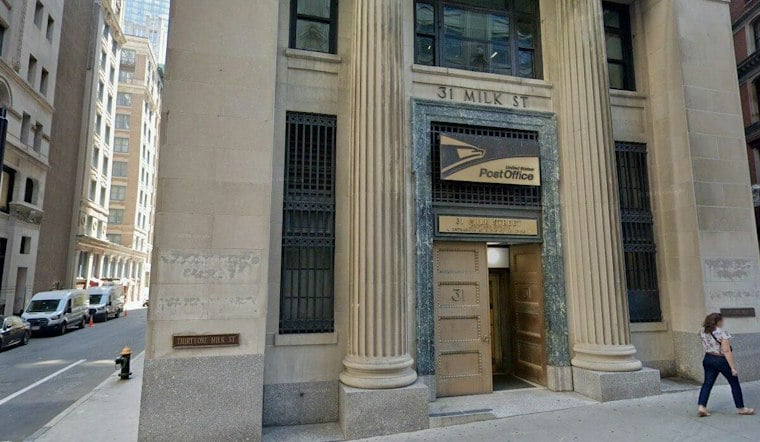
Oran's own project at 31 Milk Street offers a glimpse of what developers have had to do without a ready-made historic district. His team registered the 11-story building, known as the Beacon Trust Company Building, with the National Register of Historic Places and secured historic tax credits independently, according to the same Bisnow report — a process Oran said took additional cost, time and complexity. The Massachusetts Historical Commission's Round 65 awards list shows a $400,000 award tied to the Beacon Trust Company Building, with Oran listed as proponent and Dinosaur Milk LLC as the entity, per the Massachusetts Secretary of the Commonwealth.
The conversion at 31 Milk Street is turning the 1921 Beaux Arts office building into 110 residential units, with completion planned for 2027, according to JLL, which said the project's capital stack included federal and state historic tax credit financing along with subordinate financing from MassHousing. Financing figures for the deal vary by source: Bisnow reported that Dinosaur Capital closed a $40 million construction loan for the project, while JLL said it arranged $44 million in financing for the same conversion. Oran's team pulled together at least seven equity and financing components, including the historic tax credits, with Dorfman Capital working alongside the team to assemble the capital stack, per Bisnow's reporting.
Not Every Building Will Qualify
The district would not make historic credits a fit for every conversion. In Bisnow’s reporting, Elizabeth Sherva said developers should assess credit viability early because not every adaptive-reuse project is a candidate. Josh Kasten described the process as requiring coordination among architects, developers, consultants and government agencies.
Other developers are pursuing historic credits for their own downtown conversions without waiting on the new district. Kendall Capital manager Mai Luo is planning to tap historic tax credits to help finance a conversion of 133 Federal Street into 155 apartments, according to Banker & Tradesman. Not every project is leaning on the credits, though: Vanbarton Group has proposed converting 31 St. James Avenue into 476 apartments with a 9,000-square-foot penthouse amenity addition, and Nicolas Giannone said the firm presents that project to capital sources as a simplified interior fit-out rather than a historic rehabilitation play, per the same outlet.
A Housing Pipeline Still Mostly Stuck in Planning
The Exchange District proposal lands amid a broader, uneven accounting of Boston's office-to-residential push. A June report from NBC Boston / Boston Business Journal counted 26 conversion projects covering a combined 1.5 million square feet, mostly downtown, with the program nearing 1,800 apartments since its 2023 inception. Two months later, Bisnow's own tally put the number at 29 proposed projects representing 2,331 units, with developers having proposed converting a total of 2 million square feet of office space since the program began in 2023 — though only 431 of those units had started or completed construction by that point.
That same Bisnow report found just one project, Boston Pinnacle Properties' 15-unit building at 281 Franklin Street, fully completed, with seven others under construction totaling 416 units and 21 more still working through planning. Synergy Investments, meanwhile, received $4 million in commercial conversion tax credits for a 294 Washington Street project expected to create 255 rental units and roughly 12,000 square feet of retail space, according to CommonWealth Beacon. With financing remaining the chief obstacle for most of these projects, developers and city officials alike are watching to see whether the Exchange District's path through federal review can ultimately make Boston's stalled conversion pipeline a little easier to move.





