

























































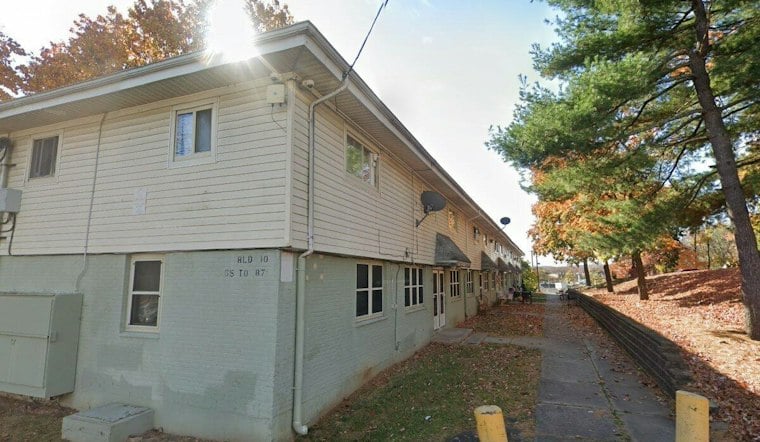
For more than 80 years, barracks-style buildings at Mount Pleasant have housed generations of New Britain families, but the first wrecking crews are now expected to move in on the complex’s most worn-out apartments. The World War II-era housing project on Richard Street is giving way to a new mixed-income development, and for families like Kaylie Lee’s, the timing has collided painfully with loss: her great-grandmother, who had lived in Mount Pleasant’s 75 Richard St. building since 1991 before her family moved her to 83 Richard St. because 75 was slated for demolition, died at 83 Richard St. Wednesday, just as the city prepares to tear that very building down.
“They have to be replaced, but when they knock down those walls they’re also knocking down the homes we grew up in. This is where our family built its foundation,” Lee said, according to the Hartford Courant. Lee was raised at the Mount Pleasant complex and had returned temporarily to help care for her great-grandmother in her final days, per the same report. The Housing Authority plans to raze the 75 Richard St. building along with other structures at that end of the property, the Courant reports.
Built during World War II as barracks-style housing, Mount Pleasant's apartments have been worn down by drafts, leaky pipes, and outdated electrical and plumbing systems, according to the Courant. The complex sits on 20 acres in New Britain, and another Courant report describes it as roughly a 250-unit property, though a 2022 account from ctpost.com put the complex at 188 units. Accounts also differ on exactly when it was built: the Courant’s November report ties it to the war years, while the New Britain Herald dates its construction to 1941 and an architect's project description places it around 1942.
A Five-Phase Overhaul for an 85-Year-Old Complex
The redevelopment is structured as a five-part plan to replace the aging low-income project with what the June Courant report called “a modern campus of mixed-income housing and public amenities.” Over the life of the project, New Britain plans to build a total of 343 new homes, including traditional apartment buildings, garden apartments, townhouses and senior housing, per that same report. The architecture firm KBA, in its own project description on kbarch.com, says the redevelopment covers a 22-acre site and that New Britain's Common Council has approved a master plan creating a Special Residential District to accommodate it.
Exactly how many units phase one will produce remains unsettled across the available reporting. The Courant's June account said the first phase is expected to create 72 modern apartments, while the Herald reported that phase one will replace 64 units with 79 new ones. Of the apartments expected in the first phase, 70% would carry rents restricted for 30 years to levels affordable to households earning 60% of the area median income, according to the Courant.
Federal and State Dollars Lining Up Behind the Project
Funding for the first phase has arrived from multiple directions. New Britain secured a $2.7 million state grant — identified by the Bristol Press as $2,673,038 — to abate, remediate and demolish the Mount Pleasant facility at 100 Richard St. That grant was part of a larger $15.2 million round of brownfield funding Governor Ned Lamont announced to clean up 12 blighted properties statewide, the outlet reported, with the latest round expected to support cleanup on 267 acres and spur more than $81 million in private investment statewide.
Separately, New Britain was awarded $7.5 million in Community Investment Fund support for phase one, as part of a statewide package in which the fund's board approved 32 projects totaling $60.7 million, according to the Courant. Construction on the first phase is expected to take 18 to 24 months once underway, the Herald reported, and the outlet noted that all current residents are expected to have the right to return once new units are completed.
Local and Federal Officials Weigh In
Plans for Mount Pleasant's reconstruction began several years ago under former Mayor Erin Stewart, who in a 2022 letter described the complex as “the eyesore of the neighborhood,” according to ctpost.com. Current Mayor Bobby Sanchez has continued the push, securing $2.4 million in grants from the Lamont administration in June and saying that renovating or replacing Connecticut's existing affordable housing stock is vital, per the Courant's reporting cited in the seed coverage. Sanchez has said the project will replace aging buildings, address environmental conditions and update infrastructure, while preserving affordability and keeping residents central to the work.
U.S. Senator Richard Blumenthal secured $4.3 million in federal aid for the effort and said the project will increase the unit supply and enhance residents' quality of life, with new buildings built from the ground up to be energy-efficient. Taken together, the redevelopment is expected to result in more than a dozen additional apartments compared to Mount Pleasant's original count, part of a broader effort to create hundreds of modern apartments affordable to low-income residents.
A Family History Pressed Into a Thesis
For Lee, the redevelopment isn't just policy — it's personal history. She wrote her senior thesis on Mount Pleasant's history, pairing it with a photo essay and titling the project “75,” a nod to the Richard Street building where her great-grandmother lived for more than three decades. Lee graduated from the University of Hartford before the demolition plans reached this point.
Her great-grandmother, who had lived in the 75 Richard St. building since 1991 before her family moved her to 83 Richard St. because 75 was slated for demolition, died at 83 Richard St. Wednesday as workers prepare to tear down the very building that housed her since 1991. As New Britain moves forward with replacing the World War II-era complex, families like Lee's are left holding onto memories of a place the city has long called overdue for change.



