

























































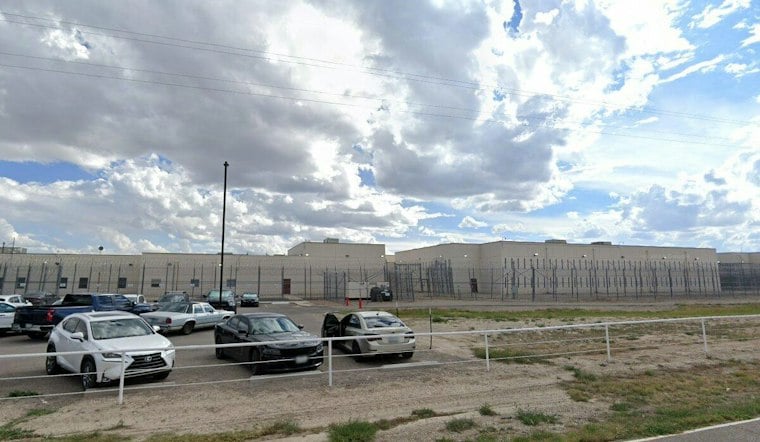
A federal judge in New Mexico has stayed the deportation of an Afghan national who was quietly moved to a Texas detention facility without his attorneys' knowledge, just days before immigration officials planned to put him on a charter flight bound for Pakistan. Chief District Judge Kenneth J. Gonzales ordered the stay on Monday, pausing the removal of Sardar Akbari for 14 days and until he is satisfied that adequate safeguards are in place to protect against the risk of suicide.
The order also directs the government to transfer Akbari back to the District of New Mexico, according to El Paso Matters. The case, Akbari v. Mullin, is pending in the District of New Mexico under case number 1:26-cv-03573-KG-DLM, according to the ACLU of New Mexico. Akbari has been held in ICE custody since late 2024, and the government kept him detained for more than six months after he was ordered deported to Afghanistan, per the ACLU of New Mexico's release.
A Secretive Transfer to El Paso
ICE moved Akbari from the Torrance County Detention Facility to Camp East Montana in El Paso, Texas early on October 27, without notifying his attorneys, the same report from El Paso Matters states. Court documents described that transfer as staging for execution of his final removal order. During the move, Akbari experienced severe mental health deterioration, according to the ACLU of New Mexico, which represents him alongside the Clinical Law Program of the University of New Mexico School of Law in habeas proceedings.
An ICE officer's declaration identified Pakistan as the flight's final destination, with further transport on to Afghanistan, per El Paso Matters' reporting. The United States lacks the ability to deport people directly to Afghanistan by flight because it has no diplomatic relationship with the Taliban government, the ACLU of New Mexico says, so the government intended to transport Akbari by plane to Pakistan, where he would likely be turned over to Pakistani authorities for potential onward transport to Afghanistan. ICE had planned to put him on that charter flight on November 3, according to the organization.
A Judge's Shifting Rulings
This was not the first time Akbari's case reached Gonzales's courtroom. On October 28, the judge denied Akbari's initial request to block removal to a country other than Afghanistan, ruling that the court lacked jurisdiction to block the final removal order, El Paso Matters reports. Monday's stay followed after Akbari's legal team sought an emergency temporary restraining order protecting him from removal to Pakistan, with the court basing its new ruling on his acute mental health crisis after he learned of the planned deportation, according to the ACLU of New Mexico. The court has indicated it will issue a written order granting that temporary restraining order.
The Department of Homeland Security declined to confirm removal operations, citing operational and security reasons, El Paso Matters reported. Shaw Drake, assistant professor of law at the University of New Mexico School of Law and Akbari's co-counsel, said the case illustrates severe problems in the immigration system and third-country removals. “Deporting vulnerable immigrants to a country other than their own without notice or a chance to claim fear undermines due-process safeguards,” Drake said, per the ACLU of New Mexico.
Attorneys Point to a Broader Pattern
Becca Sheff, senior staff attorney at the ACLU of New Mexico, said the government obscures intermediary countries' role in deportations to places where ICE has no diplomatic relations. Sheff added that people at risk of being forcibly sent to an unconnected country are constitutionally entitled to safeguards against harm there, according to the organization's release.
Reports differ on how many Afghans are affected by the broader push. NBC News reported the administration was preparing to deport dozens of Afghan immigrants and asylum-seekers to Pakistan on what it described as the first flight of its kind, while CBS News reported plans involving nearly 200 Afghan nationals being sent first to Pakistan before being returned to Afghanistan. Human Rights First told El Paso Matters that a large-scale deportation flight of Afghans into the hands of the Taliban would be the first of its kind.
Part of a Wider Removal Strategy
NBC News reported that the administration has deported thousands of people to countries other than their own, with immigration lawyers saying the practice seeks to evade international laws against returning asylum-seekers to countries they fled. Since mid-October, Afghans held in ICE detention across at least 11 states have been told they are being moved for removal, according to AfghanEvac.
Similar third-country removal efforts have drawn scrutiny elsewhere. Human Rights Watch found that the United States expelled more than 500 people to African countries that were not their countries of origin between January 20, 2025, and August 5, 2026, and reported that those transferred were shackled at their wrists, waist, and ankles for the entirety of their journeys. The group contrasted those arrangements with the 2002 U.S.-Canada agreement, which it described as public, legally binding, and enforceable in both countries' courts. As of October 27, Third Country Deportation Watch said more than 170 individuals had been transferred to the Central African Republic, according to Newsweek, which also reported that a federal judge in Minnesota ordered the government to arrange one such detainee's return to the United States as soon as practicable.
Other Afghan detainees have faced similar legal battles in recent weeks. CBS News reported that Said Mansor Sadat was removed from a planned flight list and released from ICE custody after a judge ruled his continued detention violated his due-process rights, while a federal judge denied Basir Ahmad Ahmadi's emergency request to halt removal on October 29, ruling that the district court lacked jurisdiction. For now, Akbari's case returns to New Mexico, where the court has ordered his transfer back and will weigh what safeguards must be in place before any removal can proceed.




