

























































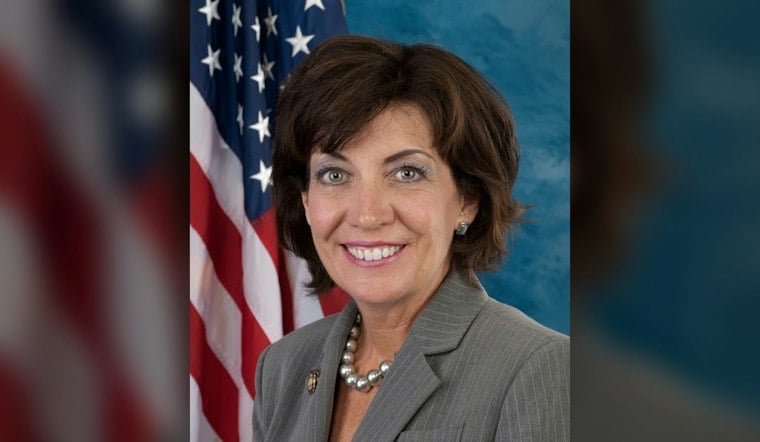
Parents whose children have already left English Language Learner programs can now serve on two of New York City's citywide education councils, under a law Governor Kathy Hochul signed last Friday. The measure rewrites eligibility rules for the Citywide Council on English Language Learners, known as CCELL, and the Citywide Council on High Schools, or CCHS, both of which have struggled for years to fill their ranks with qualified parent volunteers.
According to South Asian Herald, the old CCHS rule required a parent to currently have a child enrolled in an ELL program, while the old CCELL rule allowed a parent's child to have left an ELL program within the previous two years. The new law lets ELL parents serve on either council even if their child is no longer in an ELL program at all, aligning both citywide boards with the eligibility standards already used by community district education councils.
The legislation, known as S6355A, was sponsored by state Senator John Liu, who chairs the Senate Committee on NYC Education. Liu thanked Hochul for signing the measure and said, per the same outlet's reporting, that the bill addresses a long-standing challenge recruiting ELL parents to citywide councils.
Why the Councils Kept Hitting Quorum Trouble
CCELL meetings have repeatedly struggled to reach quorum because there weren't enough eligible members to fill the seats, the outlet's report notes. The council has had ongoing difficulty seating enough members simply to conduct business, a problem supporters of the bill say stemmed directly from the narrow eligibility window that cut parents loose once their children aged out of ELL services.
Eddie Gibbs, who worked on the legislation according to a statement from Liu's office, said eligibility problems had left vacancies on multiple boards where ELL parents were meant to have representation. Supporters of the new law expect a larger pool of eligible parents to translate into fewer empty seats and smoother quorum at future meetings.
Council Leaders Welcome the Change
Teresa Arboleda, president of CCELL, said ELL parents bring firsthand experience that uniquely qualifies them to help inform education policy affecting English Language Learners. She said the law will help ensure ELL students and families are heard regardless of the language they speak.
Mitch Wu, CCELL's first vice president, said parents understand the challenges their children face in the school system and that understanding doesn't disappear once a child leaves an ELL program. Wu said the change will allow parents to keep advocating for ELL students even after their own children have moved on from those programs.
What the Law Opens Up Going Forward
Taken together, the new eligibility standard opens school governance seats to parents of both current and former ELL students, giving CCELL and CCHS a wider bench to draw from as they try to seat full boards. A New York Senate bill page covering the measure describes it as expanding the eligibility criteria for CCELL and ELL members of the Citywide Council on High Schools so that members can continue serving under broader terms, according to nysenate.gov.
The eligibility language mirrors standards already in place for the city's other education councils. A vacancy application for the 2025–2027 term of New York City's education councils, posted by the city's Department of Education, listed CCELL eligibility as covering parents of students currently or within the past two years in a bilingual or ESL program, according to a document posted by the city's school system, underscoring how the rules governing these citywide boards have been in flux even as councils sought to fill their seats.





