

























































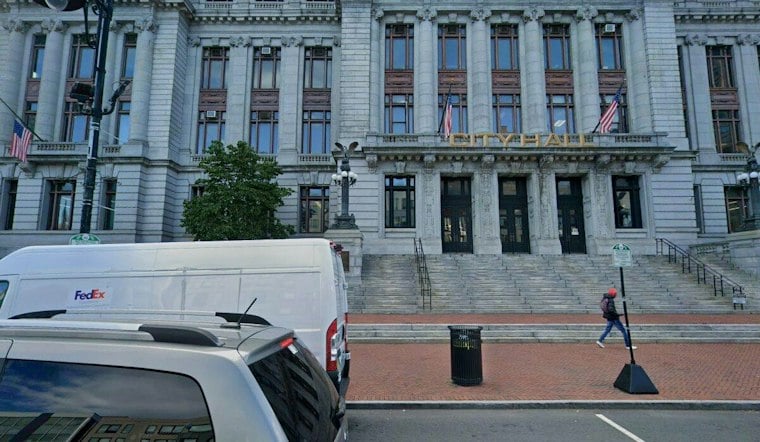
On Nov. 19, Newark had 42 calendar days remaining in its 2026 fiscal year and still had no finalized municipal budget, and city council members say they still do not have answers to basic questions about how $900.5 million in spending breaks down. Council members have pressed the administration for months about costs tied to police overtime, executive protection, per diem contracts and a large pool of unclassified appropriations, and some members say those answers have not come.
The budget was first introduced on June 3, when Business Administrator Eric Pennington presented the $900,500,264.94 spending plan, according to Citizen Portal. At that June meeting, council members demanded more detailed department budget packets before casting final votes, and public hearings were set for July 15. As TAPinto Newark reports, the council has since deferred the budget three times, and it remains in limbo with state approval still pending.
By late September, the city still had no finalized spending plan as it headed into October. Per Patch, a city administrator said at the time that Newark's 2026 plan remained caught in back-and-forth with the state and likely would not be resolved until the end of October — months after the state's April 30 adoption deadline. New Jersey municipal budget rules set a March 31 introduction deadline and an April 30 final adoption deadline, deadlines Newark has already blown past this year.
Council Members Say Key Questions Remain Open
According to the TAPinto Newark report, the administration has allegedly not answered council questions about several specific spending categories: police overtime, executive protection for the mayor, per diem contracts and unclassified appropriations, which total $75,334,704 in the proposed budget. Newark police had $40 million in overtime costs over the past year, per the same report, and executive protection consists of police officers assigned to accompany and protect the mayor.
Council President Anibal Ramos said there was only one month left in the budget year and that proposed changes at this point could not produce real savings, adding that only 30 days remained to achieve any savings in the current budget. Council member Donna Jackson said some salaries and positions remained unexplained to her and that she would not support passing the budget merely to satisfy a few people. Business Administrator Pennington, for his part, said information about the executive protection budget is available to anyone and is not secret.
Council member Louise Scott-Rountree acknowledged that the public does not have answers to its budget questions, though she said she can confer with city administration to try to get them. She also said the continued effort to pass the budget this late in the year was bad. Confusion has also surrounded the hearing schedule itself: the council had scheduled a hearing to amend the proposed budget for November 16, and a budget agenda indicated a public hearing was set for November 24, but council member Kecia Daniels said there would not be a public hearing on that November 24 date. No formal adoption date for the 2026 budget has been set.
Records Requests Hit a Wall
TAPinto Newark filed an OPRA request in August seeking salary, overtime, staffing, vacancy and provisional-position records from three city departments, and separately filed a request for 2025 police division salary, overtime, city-event assignment, executive protection staffing and executive pay records. The outlet says it followed up with Newark's custodian of records office for three months regarding the pending requests, but city hall did not provide a response. Newark ultimately denied the OPRA requests on November 16, citing the fact that applicable budget information had not been finalized and adopted.
Under New Jersey's Open Public Records Act, public agencies must respond to such requests within seven business days by granting access, denying it, requesting clarification, or requesting an extension, and must explain why access is denied.
A Deferred Land Sale and State Review Pressures
Part of the budget delay traces back to a deferred $13 million sale of city-owned land in the North Ward to a redeveloper, who would use the property for industrial outdoor storage operations. Pennington said the land sale was needed to keep the tax rate as low as possible. Newark also sent a response in September to several pages of comments the state had provided on the proposed budget, Pennington said, and the city's 2026 fiscal plan remains under state review pending receipt of documentation from the city, per a state email cited in the report. Nada Akmal is assistant director of financial regulations for the state's Division of Local Government Services, the agency overseeing that review.
Pennington has said the municipal levy actually fell about 1% even as overall spending rose roughly 5%, which he attributed mainly to an approximately $34 million county payment tied to revaluation timing. To keep operations running while the budget remains pending, Newark has approved nearly $472 million in emergency appropriations for 2026, which support city functions in the absence of an adopted spending plan. The budget covers the fiscal year running from January 1 through December 31, 2026, and the council was only able to read the fiscal plan by title in July rather than act on it.
The Division of Local Government Services within the Department of Community Affairs had warned last year that a $25 daily penalty would apply for each day a municipal budget remained unintroduced past June 30. Department spokesperson Lisa Ryan said Newark has not received any similar penalty in 2026. Still, the financial stakes for residents remain real: earlier reporting from Patch found that an average Newark homeowner could see municipal and school tax decreases yet still face an overall tax increase of roughly $458, underscoring why council members say they want firmer answers before signing off on the plan.




