

























































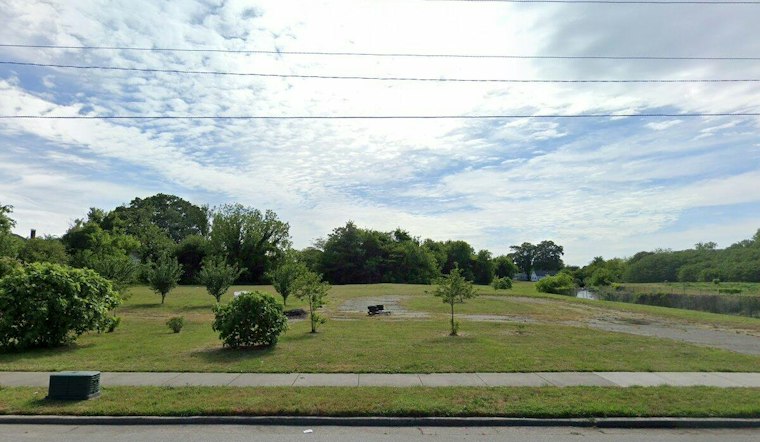
Construction crews are now digging into a five-acre lot across from Discovery STEM Academy in Newport News, breaking ground on a $1 million project that supporters say will finally put fresh, free produce within walking distance for a neighborhood long considered a food desert. The Newport News Green Foundation calls it the Sarfan Food Forest, named for the family that donated the land, and the group says it will provide free produce to neighborhood residents once it matures.
The land sits on what was formerly a synagogue site, according to WHRO, and the Newport News Green Foundation has been developing the food forest concept for years before this week's groundbreaking. Tami Farinholt, the foundation's executive director, said residents reported ongoing challenges accessing fresh, affordable food, and the foundation says it settled on the food forest model only after consulting with the neighborhood. The Sarfan family's donated parcel covers 5.02 acres, according to the Newport News Green Foundation, which acquired the land in 2020 for this purpose.
The Southeast Community has grappled with limited grocery access for years. A 2015 Daily Press report found nearly 19,000 residents in the area had gone without a grocery store for nearly a year, and the same report cited USDA data showing 1,091 people in two southern census tracts had no vehicle and lived more than half a mile from a supermarket. The Daily Press noted the Virginia Peninsula Foodbank's first mobile distribution there served 196 households and that the food bank planned to hold monthly pantry events afterward.
A Different Model Than a Traditional Garden
Unlike a community garden, where members are often charged with tending specific plots, the food forest is designed to need less ongoing labor and management once established, per the foundation. Farinholt said the landscape is expected to eventually form a self-sustaining ecosystem that produces food with minimal upkeep, and the project is designed to make produce available to whoever arrives first.
That open-access model has precedent on the site. Community members have already been able to forage from trees planted years earlier, including pears, plums, figs and persimmons; one woman reportedly made nine jars of fig jam from figs she picked there. A Christopher Newport University study cited by VPM found nearly a third of Southeast-area households reported not having enough money to buy food, with more than half saying they lacked enough food at least once a week.
Stormwater Work and a Nod to Sediment Control
GC Commercial is serving as the contractor for the project, with Craig Larson as project manager, per WHRO's reporting. Crews will excavate four inches of soil before officials bring in and till amended soil for the plant bed, and a stormwater management area is being built at the back of the property, as Newport News requires. Larson said that area includes a fence barrier meant to prevent sediment erosion into Salters Creek.
Foundation leaders say the broader site will help reduce pollution and support local wildlife once it is planted with shrubs and trees, including blueberries, hazelnuts, magnolias, loblolly pines and crabapples. The Newport News Green Foundation plans to complete the project in phases over the next few years as funding comes in, a timeline consistent with the group's yearslong development of the site.
What's Planned for the Finished Site
Site plans call for an orchard, a berry patch, a pollinator meadow, a pavilion, picnic tables and a farm stand, according to the foundation. The plans also include a Tsenacommacah Indigenous garden guided by the Nansemond Indian Nation. Virginia Tech's Community Design Assistance Center, which worked with a foundation stakeholders committee, Discovery STEM Academy teachers and community members on a conceptual master plan, has documented similar features in its planning materials for the site.
Earlier reporting shows how the project's scope and budget have evolved. A November 2022 report from The Virginian-Pilot described plans for fruit trees, berry patches, gardens, a pollinator meadow, a farm stand, an outdoor classroom and a gathering area, and quoted Farinholt estimating annual maintenance would run $40,000 to $50,000. That same report said the forest could include as many as 75 species of fruit-bearing trees and other native plants, while WAVY later described plans for more than 75 species — the two outlets differ slightly on the exact count. The project has also drawn outside funding, including a $125,000 grant from the American Beverage Foundation for a Healthy America and the African American Mayors Association, according to VHB.
By August 2023, young fig, persimmon, apple and pear trees on the property were already bearing fruit, and VPM reported the food forest was free and open anytime for people to pick their own produce. Whether that same open, anytime access applies to the site as construction continues has not been detailed in current reporting, but the foundation's broader goal remains unchanged: turning an underused five-acre lot into a lasting source of free food for a neighborhood that has waited years for better grocery access.



