

























































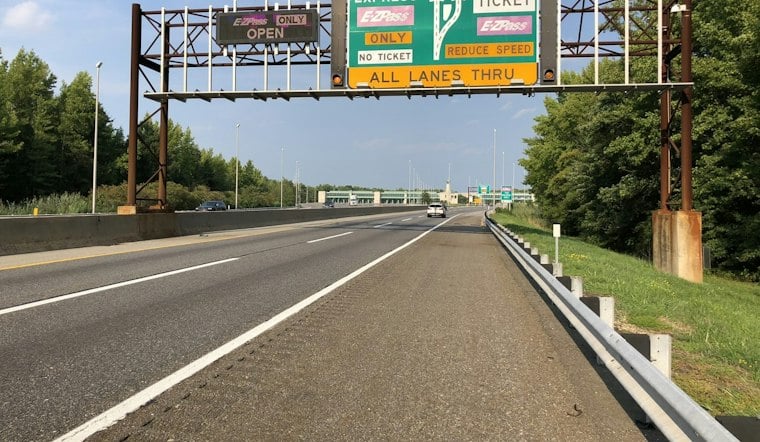
New Jersey drivers could no longer lose their license or vehicle registration simply because they racked up unpaid tolls, under a bill introduced in Trenton on October 5. State Sen. Angela V. McKnight, who represents Hudson County's District 31, is pushing the measure after warning that a handful of missed tolls can snowball into a suspended license for residents already stretched thin by household bills.
Senate Bill 4741 would strip the Department of Transportation, the New Jersey Turnpike Authority, the South Jersey Transportation Authority and the Motor Vehicle Commission of their authority to suspend or revoke a license or registration over unpaid tolls, according to the bill text filed with the New Jersey Legislature. As introduced, the legislation would carve out unpaid tolls and their associated fees as grounds for either penalty, and it would bar the state's toll collection system from including any registration-suspension provisions going forward. As reported by TAPinto, McKnight said toll roads and bridges are simply part of everyday life for many Jersey City and Hudson County residents, making the stakes of a suspension especially high at home.
How a Suspension Gets Triggered Today
Under current New Jersey law, the Department of Transportation can direct the Motor Vehicle Commission to suspend a vehicle registration once a referral meets statutory criteria — generally at least $500 in unpaid tolls and fees accumulated over three years, or six unpaid toll violations, subject to additional legal requirements, per the same TAPinto report. McKnight noted that six unpaid toll violations, each carrying a $50 administrative fee, can add up quickly for a family already behind on bills. That fee structure isn't new: a judge upheld the Turnpike Authority's $50 administrative charge in 2022, ruling it fairly represented the agency's cost of processing and collecting a toll violation, according to nj.com.
The registration-suspension pathway itself traces back to a 2024 law, A5799, which authorized the Department of Transportation to work with the Motor Vehicle Commission to suspend the registrations of chronic toll violators — before which only the Turnpike Authority could ask the commission to pull a driver's registration privilege, the outlet reported at the time. That law applied to drivers with $500 or more in unpaid tolls and fees and offered a one-time amnesty with a 25% reduction for balances paid in full within 180 days of the law taking effect.
Turnpike Authority Says It Hasn't Used the New Tool
Despite having that authority on the books, the Turnpike Authority told TAPinto it has not pursued vehicle registration suspensions for unpaid tolls in recent years. Thomas Feeney, the agency's manager of media relations and public information, said the newer referral process for suspending registrations over unpaid tolls has not actually been implemented, and the authority has made no referrals under it. Feeney said the registration suspensions that did occur happened during an earlier pilot program, and he clarified that the Turnpike Authority does not have authority to suspend driver's licenses outright. Feeney also told the outlet that detailed figures on unpaid toll violations were not readily available and would require a state public-records request — and the lawmakers' office said it does not have statewide figures on how many drivers have been suspended for unpaid tolls.
The scale of the underlying debt, however, is well documented elsewhere. The five largest toll agencies serving New Jersey reported $117.66 million in losses from unpaid tolls in 2022, according to an earlier nj.com report, with Feeney saying at the time that the numbers had climbed over the preceding five years. Separately, WHYY found unpaid tolls totaled $47.2 million on the New Jersey Turnpike and $9 million on the Garden State Parkway in 2022, with the Delaware River Joint Toll Bridge Commission reporting a separate $20 million loss and the Atlantic City Expressway logging a steady three-year rise that cost that agency $1.88 million the same year.
What the Bill Would and Wouldn't Do
S4741 would not erase anyone's unpaid toll balance or stop agencies from pursuing it. The bill explicitly preserves tolling entities' ability to recoup unpaid tolls, fees and costs through civil or criminal judicial process or debt collection activities, according to the bill text. It would also apply only to future suspensions and would not reverse suspensions already imposed, per the TAPinto report.
Assemblyman Kenyatta Stewart, who introduced a companion bill, A5672, in the Assembly on October 19, said suspensions can block residents from getting to jobs, school or medical appointments and push them further into debt. In a press release from Insider NJ, McKnight and Stewart described the bicameral push to prohibit suspensions solely over unpaid tolls and related fees. Stewart added that toll agencies can still collect what they're owed without creating additional obstacles for residents trying to get by.
Both bills are now sitting in committee — S4741 in the Senate Transportation Committee and A5672 in the Assembly Transportation and Independent Authorities Committee. McKnight said the next steps involve building support and moving the legislation through committee, and she said constituents and social media users have shown significant enthusiasm for the bill so far.
A Broader Debate Over Toll Enforcement
The bill arrives amid wider scrutiny of how New Jersey penalizes toll scofflaws. Lawmakers have said that between July 2020 and July 2025, 7 million toll violations were issued statewide, with 80% attributed to occasional violators and 20% to habitual offenders, nj.com reported. A separate proposal from Assemblyman Paul Kanitra and New York state Sen. Monica Martinez would waive administrative fees unless a driver racks up three or more violations within 90 days, while still requiring payment of the toll itself. Turnpike Authority Executive Director Kris Kolluri has defended the existing fee structure, noting E-ZPass customers already receive up to 12 administrative-fee waivers a year if they pay the missed toll, with business accounts getting 24. A 2023 state law also now requires toll agencies to check whether an alleged violator has an E-ZPass account that should have been charged before issuing a violation notice in the first place.



