

























































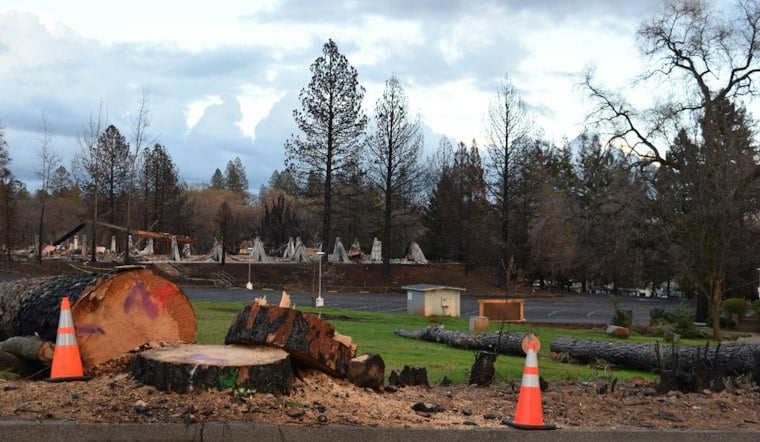
A bill backed by a North State congressman aims to make it cheaper for communities devastated by disaster, including Paradise, to rebuild under federal mitigation rules. The measure, called the Promoting Resilient Buildings Act, would give local governments more flexibility under FEMA's Pre-Disaster Hazard Mitigation Program.
According to Action News Now, North State Congressman James Gallagher introduced the legislation, which he says would help communities like Paradise rebuild more affordably in the aftermath of disaster. Under the proposal, FEMA's mitigation program would recognize the two most recent editions of building codes and standards, rather than restricting assistance to only the newest edition.
It isn't the only version of this idea moving through Washington. A separate measure, S.388, carries the same name — the Promoting Resilient Buildings Act — and a summary posted on Congress.gov says it would increase flexibility for predisaster mitigation assistance tied to building-code activities, bar the use of certain loan funds for those activities, and create a pilot program funding residential resilience retrofits. The available evidence does not establish whether that bill, a related House bill, or the proposal described by Gallagher are the same legislation with identical provisions, so Hoodline is not treating them as interchangeable.
A Retrofit Pilot Aimed at Homeowners With Limited Resources
Trade publication DWM Magazine reported in August that a Senate committee had advanced the Promoting Resilient Buildings Act, describing a residential retrofit pilot program intended to help homeowners with limited financial resources make resilient home improvements, according to DWM Magazine. The outlet also reported that the bill would expand eligibility for FEMA's Pre-Disaster Mitigation Program to more states and local communities.
The publication's report cited National Association of Home Builders officials describing the bill as eliminating a sunset provision and permanently codifying the definition of the latest published building codes as the two most recent editions. That earlier definition had expired in October 2023, per the same account. DWM also noted that a related measure, H.R. 501, had already advanced through the House Transportation and Infrastructure Committee and was placed on the House Union Calendar.
What FEMA's Research Says About Modern Building Codes
Supporters of code-modernization efforts often point to a FEMA study on the value of up-to-date building codes. FEMA says its analysis shows that, over a 20-year period, cities and counties with modern building codes would avoid at least $32 billion in losses from natural disasters compared with other jurisdictions studied, though the publicly available excerpt of that analysis is incomplete.
A summary of the same FEMA research posted by the National Association of Home Builders offers more specific figures: an estimated $27 billion in earthquake, flood, and hurricane losses have been avoided since 2000 in states that adopted various editions of the International Building Code and International Residential Code, with annual savings estimated at $1.6 billion. The same FEMA study estimated that continued use of those codes in high-risk states could avoid $132 billion to $172 billion in losses through 2040, and that requiring all new U.S. construction to comply with the 2015 and 2018 editions of the codes could avoid $600 billion in losses by 2060.
Builders Warn of Cost Tradeoffs
Not every industry voice sees the push toward newer codes as a clear win. NAHB has said that editions of the IRC and IBC published since 2015 include requirements that negatively affect housing affordability, and that newer model codes could drive up building costs in areas with little natural-disaster risk without delivering the resilience benefits FEMA's research highlights.
That tension — balancing resilience against affordability — sits at the center of the debate in Washington as lawmakers weigh how federal mitigation dollars should be spent. For communities still rebuilding years after catastrophic wildfire, the stakes of that balance are not abstract.





