

























































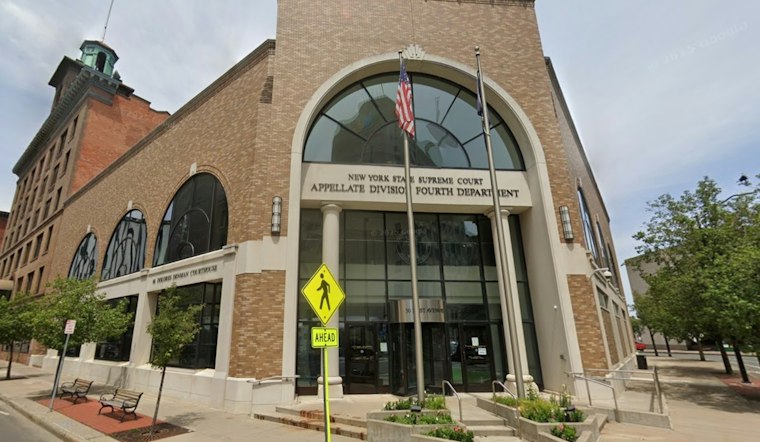
New York’s Appellate Division, Fourth Department, has ordered state health officials to approve a robotic arm for a man with cerebral palsy, ruling that the state relied on outdated evidence and misapplied its own medical-necessity rules when it rejected his request.
The decision, reported by the New York Law Journal, found that officials had deemed the assistive device experimental based on evidence that no longer reflected the current state of the technology. The court also concluded that the state misapplied New York’s medical-necessity standards in denying the request, according to the outlet.
The Fourth Department is a midlevel appellate court covering western New York, and its courthouse sits in Rochester, per the same report. Coverage of the case did not identify the man at the center of it or specify the exact device model, cost, or coverage terms involved, and those details remain unconfirmed.
How These Devices Work
Robotic arms like the one at issue in these disputes are typically mounted to a power wheelchair and can be maneuvered with the same controller a user already relies on to drive the chair. Disability Rights California describes the Jaco arm specifically as built from lightweight carbon fiber materials, a design meant to help users with severe physical disabilities handle everyday tasks without needing a caregiver for every motion.
That accessibility has not translated into uniform insurance coverage across the country. State Medicaid programs and private insurers have landed in very different places on whether the devices count as medically necessary equipment.
A Pattern of Fights Over Coverage
New York is not the first state where this kind of device has ended up in a dispute. In Connecticut, Disability Rights Connecticut said in an October 2021 announcement that the state’s Department of Social Services had repeatedly refused Medicaid payment for robotic arms sought by two applicants with severe disabilities, despite device demonstrations showing their use. The case involved a 30-year-old with spinal muscular atrophy and an 18-year-old with Duchenne muscular dystrophy, the group said.
Notably, the 18-year-old’s private insurer approved payment for the device on October 15, 2021, even as Medicaid denied it on the grounds that it was experimental, according to the announcement. A Connecticut Department hearing officer reportedly found that Medicaid programs in 14 other states, including Florida, Texas, and California, already covered the Jaco V2 Robotic Arm and Kinova Lift Arm, per the same release.
California Moved to Add Coverage, Florida Blue Did Not
California has since formalized coverage on its end. Disability Rights California says Medi-Cal added assistive robotic arms to its Durable Medical Equipment manual in 2024, making the devices an officially covered Medi-Cal benefit as of September 1 of that year.
Florida Blue’s current medical coverage guideline takes the opposite position. The insurer states that a wheelchair-mounted assistive robotic arm attachment, naming the Jaco and Kinova devices specifically, does not meet its definition of medical necessity, citing insufficient clinical literature on safety and improved health outcomes, according to Florida Blue’s published guideline. The split underscores how coverage for the same piece of equipment can hinge entirely on which state program or insurer is reviewing the request.




