

























































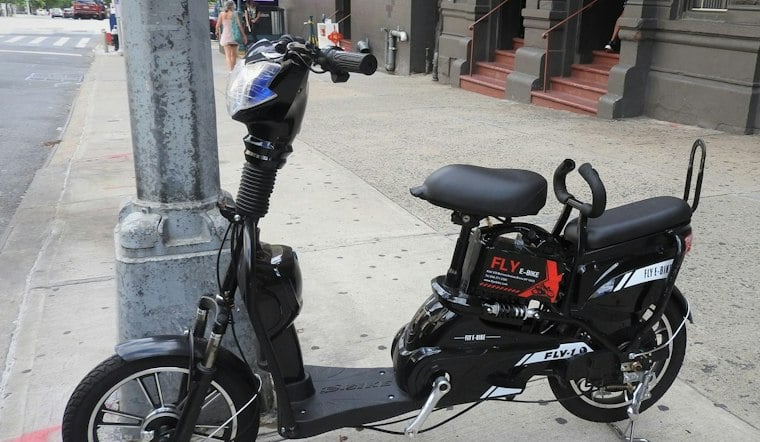
New York City inspectors fanned out across all five boroughs this summer and fall, checking 229 retail shops for illegal e-motos and scooters, and what they found was not pretty: 136 individual violations, more than 75 summonses worth $1,000 each, and three stores shut down entirely. Five more shops worked with the city to get back into compliance rather than face closure.
Two Months, Five Boroughs, Dozens of Summonses
The sweep ran from Aug. 1 through Sept. 20, according to Streetsblog New York City, and it marks the Mamdani administration's latest attempt to choke off the supply of overpowered electric bikes and scooters flooding city streets. Three stores were closed outright during the effort, and per the city's Department of Consumer and Worker Protection, those stores remain shuttered until all outstanding fines are paid. In addition to the closures, DCWP's report notes that the agency worked with five other shops to bring them into legal compliance rather than pull their licenses.
DCWP Commissioner Sam Levine framed the sweep as both enforcement and warning. “New Yorkers deserve to feel safe knowing that the devices they see in their communities meet the City’s safety requirements,” Levine said, according to the same report, adding that the citywide sweep sends a message to businesses against putting New Yorkers at risk for profit. The agency's mandate includes making sure stores sell only UL-certified e-bikes and batteries and that storefronts display e-bike fire safety materials, while prohibiting the sale of illegal e-motos and scooters with excessive power and speed capability.
Online Retailers Already in the Crosshairs
The brick-and-mortar sweep builds on an earlier push against online sellers. DCWP has issued more than 85 cease-and-desist orders and 41 summonses to online sellers over battery safety violations, the Streetsblog report states. Separately, in August, the city's Law Department sent cease-and-desist letters to 42 online retailers selling e-motos, according to amNewYork, which reported the letters went to retailers including Amazon, Best Buy, Target, Deepower, Segway and Wilson's. The city demanded those retailers stop selling devices that exceed New York City's legal e-bike and e-scooter speed and power limits to residents across the city's 175 ZIP codes, with noncompliant retailers after Aug. 18 risking fines of up to $2,000 per infraction.
Mamdani tied that online push to the death of 17-year-old Gabriel Nacato, who was killed when he collided with an SUV driver while riding an illegal e-moto device in Lower Manhattan, per amNewYork's reporting. Streetsblog's report similarly notes that two high-profile deaths involving New Yorkers riding non-street-legal e-motos and scooters sparked what it describes as long-overdue action from city and state politicians.
Big Platforms Comply, Small Sellers Keep Shipping
Amazon, Temu and Walmart now block orders by geography so customers cannot ship the devices to New York City addresses, Streetsblog's report states. But the same reporting notes that many small direct-to-consumer brands are still shipping flagrantly illegal e-motos and scooters into the city and marketing them for city use — among them Aniioki, which sells bikes online capable of hitting more than 50 miles per hour. A separate Streetsblog report from earlier this year described online sales of these devices as a Wild West where anyone can buy anything, even as brick-and-mortar enforcement tightened.
The scale of the risk has drawn attention from New York's top law enforcement officer. In July, Attorney General Letitia James issued a consumer alert warning prospective buyers about the shady e-moto market; her office had received three relevant complaints so far, per Streetsblog. City data cited by amNewYork shows the stakes: from 2017 through 2025, 45 rider deaths involved unlawful e-bikes capable of exceeding 25 mph, accounting for 54% of all e-bike deaths in that span, while 14 e-scooter deaths involved devices that could exceed the 20 mph legal top speed, representing 52% of e-scooter deaths over the same period.
What Counts as Legal in New York City
Under city rules described by the NYC Department of Transportation, vendors may not sell, lease or rent a moped without a VIN, an e-bike exceeding 25 mph, or a stand-up scooter exceeding 20 mph. An e-bike is legal in the city as long as its motor does not exceed 750 watts and its top speed stays at or below 25 mph, while an e-scooter becomes illegal once it tops 20 mph or weighs more than 100 pounds. City law defines a motorized scooter as a two-wheeled powered device that cannot be registered with the DMV and does not meet the city's street-legal definitions of an e-bike or stand-up scooter — a category that includes the so-called e-motos DCWP has targeted.
State lawmakers have also moved to close gaps in the law. State Sen. Kristen Gonzalez introduced a bill to define overpowered e-motos and prohibit both their sale and false advertising as street-legal, with the measure aiming to bar companies from selling the devices online and in stores while also banning deceptive marketing claiming they are legal. The bill, listed as New York State Senate Bill S10700, would require sellers to post notices and would prohibit deceptive marketing practices around the devices.
A Pattern Beyond New York City
New York isn't alone in grappling with the surge in popularity these devices saw during the pandemic. In California, Attorney General Rob Bonta issued his own consumer alert about non-street-legal electric two-wheelers in April, and Amazon subsequently took down listings for illegal e-bikes in that state, according to Streetsblog's earlier reporting. Upstate, a Streetsblog Empire State report found that Wireless Hope in Schenectady was selling Class 3 e-bikes illegal to ride on New York streets outside the five boroughs, and police there seized 18 electric dirt bikes and three e-bikes during an enforcement sting. Those scattered actions underscore how DCWP's five-borough sweep fits into a broader, still-unfinished effort to get illegal e-motos off both shelves and streets — one enforcement action, and one shuttered storefront, at a time.




