

























































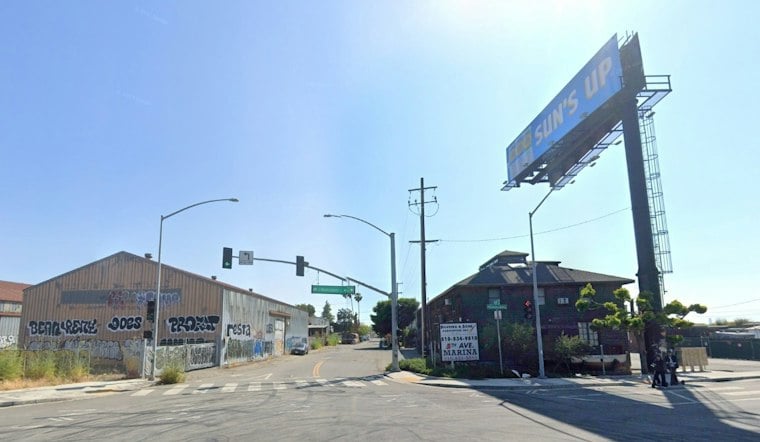
Inside a converted Oakland property that doubles as a workshop, rehearsal hall and recording studio, artists call Shadetree home. As the 10th anniversary of the Ghost Ship fire approaches, artists continue to call Shadetree home.
The Ghost Ship fire broke out on Dec. 2, 2016, inside a former warehouse in Oakland's Fruitvale neighborhood that had been converted into an artist collective, killing 36 people in what remains the deadliest fire in Oakland's history, according to Oakland North. The tragedy set off years of scrutiny over unpermitted live/work spaces across the city, leaving artists and tradespeople scrambling to find housing that was both affordable and safe.
Shadetree's own account of its path to stability, written by resident Benjamin Burke, describes a community of more than 30 tradespeople and artists who banded together to avoid displacement. In fall 2016, Burke writes, the property's owners were looking to sell but gave residents the first opportunity to buy it themselves rather than put it on the open market.
21 Lenders and One Institution
What followed was a scramble, according to Burke's account on his personal site. Residents ultimately raised $2.8 million in loans from 21 individual lenders and one institution, pooling that money to purchase the property outright and keep the community together.
Shadetree's website says the property now functions as a workshop, rehearsal space and recording studio for its residents, who the community says provide goods and services to local institutions including the Oakland Museum of California and the Crucible. That blend of trade work and fine art is part of what organizers point to when describing why spaces like Shadetree matter to the city's broader creative economy.
Citywide Push for Safer Artist Spaces
Shadetree's story fits into a wider pattern documented since the fire. Local arts organizations have pursued safer, affordable space for Oakland's creative workers through grassroots efforts, public-private partnerships, policymaking and business incubators in the years since 2016, per Oakland North's reporting. One such effort, the Liberation Park project, called for 120 affordable units citywide, 20 of which were designated as live-work spaces, the outlet reported.
The scale of displacement artists have faced isn't unique to Oakland. A 2015 San Francisco Arts Commission poll of 600 artists found that more than 70% of respondents faced displacement from their workplace, their home, or both, according to KQED. In response to pressures like these, the nonprofit Vital Arts planned a fellowship paying six artists $1,000 a month for 18 months, totaling $108,000, to survey creative workers' needs around housing, health care and fair wages. The station reported that the fellowship sought representatives from six Bay Area counties, including Alameda, San Francisco, Santa Clara, Contra Costa, San Mateo and Solano.
What the Law Says About Live-Work Spaces
For residents of converted spaces like Shadetree, questions about legal protections remain central to their security. According to a city document from the City of Oakland Office of the City Attorney, a live-work unit can be covered by the city's code enforcement relocation ordinance if the unit is considered residential.
Nearly 10 years on, the Ghost Ship fire's legacy is still visible in how Oakland's artist communities organize, finance and defend their spaces.




