

























































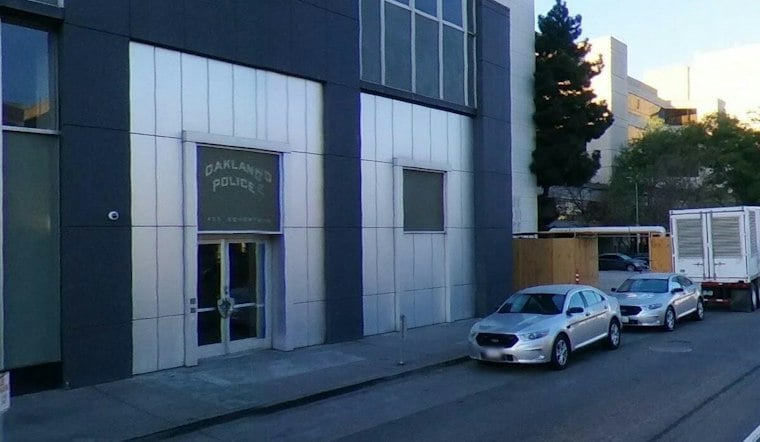
Oakland police want to put six drones on rooftops at three locations around the city, launching them straight into 911 calls before patrol officers ever leave the curb. The department says the drones would be the first to arrive at many emergencies, feeding live video back to officers while they're still en route. The Police Commission has already signed off, but the plan still needs a vote from the Oakland City Council before it can take flight.
Under the proposal, two drones would be stationed at each of three sites, providing coverage across all six of OPD's patrol areas, according to The Oaklandside. The pairing matters logistically as much as geographically: with two drones per site, one can swap in when the other's battery runs low, keeping coverage continuous. The Police Commission unanimously approved OPD's request and the accompanying program policies last month, and the Oakland Privacy Advisory Commission also signed off unanimously, though the measure cannot move forward without City Council approval.
The Price Tag and the Funding Fight
The Oaklandside reports the first-responder drone program would cost approximately $2.6 million over five years, with OPD planning to draw on Measure NN public safety parcel and parking tax funds. Separately, the department wants to purchase seven new field-based drones for around half a million dollars, this time using existing asset forfeiture funds rather than the parcel tax. OPD's ask has shifted elsewhere too — the department initially sought up to 30 smaller indoor drones, which officers would have donated at a cost of $1,000 to $1,200 each, before scaling that request down to 19.
Acting Captain Omar Daza-Quiroz, who oversees OPD's drone program, told commissioners he spent several years researching drone-as-first-responder efforts in other cities before bringing the proposal forward, citing programs in Chula Vista and Redondo Beach as models. The department currently has 19 certified drone operators on staff. Daza-Quiroz also said there haven't been any known violations of the department's existing drone-use policies, though he acknowledged that no direct correlation has been established between drone deployments and any reduction in police canine deployments.
An October Standoff That Made the Case
OPD points to an October 20th incident as evidence of the strain its current staffing puts on response times. Officers responded to reports of a person sleeping in a car with a rifle near 17th Avenue and East 15th Street in East Oakland's San Antonio neighborhood, a call that ultimately drew about 20 responding officers. At the time, OPD had 138 pending calls stacked up across the city, and per Daza-Quiroz, it took officers two hours to detain the person and recover the firearm. The department says it has roughly 600 officers on the books, but only about 530 are available for duty once absences are factored in.
A day later, on October 21st, two hikers called 911 after spotting two mountain lions in the Oakland hills and climbing a tree to wait them out; a California Highway Patrol helicopter took about two hours to arrive, per the same Oaklandside report. Those response gaps form the backbone of OPD's pitch that a rooftop drone fleet could reach some incidents faster than officers on the ground.
What the Drones Would — and Wouldn't — Do
Under the proposed policy, OPD's real-time operations center would review incoming 911 calls and decide whether to launch a drone, with trained operators remotely sending the aircraft to the scene. The drones would respond to fires, car crashes, shootings and robberies, transmitting live video to officers before patrol units arrive, and would be housed in waterproof rooftop docking stations that recharge them between flights. OPD says the drones would not record video while traveling to or from a call, generally beginning to record only once they reach the destination — though operators could start recording earlier if they encounter another incident requiring an emergency response.
The department says the drones will not be equipped with weapons or facial recognition technology, and are barred from general surveillance, immigration enforcement, or deployment solely to monitor people exercising First Amendment rights. Footage without criminal or internal significance would be deleted after five days, while recordings considered evidence in criminal cases or internal investigations could be retained longer. OPD would buy both the six first-responder drones and the seven field-based drones from Skydio, an autonomous drone manufacturer based in San Mateo, and would run the first-responder fleet on software from Axon Air.
Commissioners Raise Privacy and Oversight Questions
Not every commissioner embraced the plan without pushback. Jane Cramer said drones could prove useful but argued OPD needed to address surveillance concerns before moving ahead, while Madeline Stacy raised concerns about the vendors the department planned to use. Anne Janks asked why sworn officers, rather than civilian operators, would be the ones flying the drones. Rajni Mandal pushed back in the other direction, urging commissioners to approve the plan and arguing that public safety cannot wait, according to the Oaklandside's account of the commission's October 22nd meeting.
OPD's existing field-based drone program, launched in 2022, has already logged 609 flights, located 1,102 missing people and recovered 146 guns, the department reports — a program it says has supported high-risk incidents, missing-person searches and emergency rescues. Under that existing program, a lieutenant or higher-ranking officer must approve each deployment, and a trained operator must be on duty, available and able to travel to the scene. The proposed first-responder model would eliminate that last requirement entirely, letting operators send drones to incidents without leaving the rooftop. Figures on how often drones were deployed last year diverge depending on the source: Oaklandside's reporting puts the 2025 total at 131 deployments, while KALW has reported 170 deployments in 2025, up from 145 in 2024.
How Oakland's Plan Compares Regionally
Oakland wouldn't be breaking entirely new ground. Fremont's police and fire departments launched what city officials described as the nation's first joint drone-as-first-responder program in 2022, and San Francisco launched its own version in May 2024, with its fleet later growing from six drones to 63 and monthly deployments climbing from 35 to more than 600, according to SFPD figures reported by Government Technology Insider. Similar programs also operate in Los Angeles, Elk Grove and, closer to home, through the Alameda County Sheriff's Office.
The Sheriff's Office runs its own drone-first-responder program through a real-time information center tied directly into its 911 system, according to an Alameda County Sheriff's Office presentation, which reports its drones arrive first on scene an average of 74% of the time and clear roughly 24% of calls without needing patrol resources at all. Sheriff's spokesperson Roberto Morales told Oaklandside that nine times out of ten, a drone will get there first. The county has used its drones for tasks ranging from tracking a wrong-way driver on Interstate 580 without a direct pursuit to locating a woman near a burning vehicle who couldn't tell dispatchers her location, and smaller drones have also been used to enter buildings or broadcast commands during dangerous encounters. The Alameda County Board of Supervisors approved a 10-year contract with Flock Safety for two fixed drone docking stations on October 27th, with plans to install a station atop Alameda County Fire Station 23 in Cherryland — though the office says it cannot currently reach Tri-Valley emergencies with drones based in San Leandro and prioritizes calls within its own jurisdiction.
Back in Oakland, the proposal arrives against a rocky backdrop for the department's aviation unit: a federal grand jury indicted two OPD helicopter pilots for fraud on September 10th. Whether the drone-first-responder program ultimately wins City Council approval, and how it would be implemented if it does, remains to be determined.




