

























































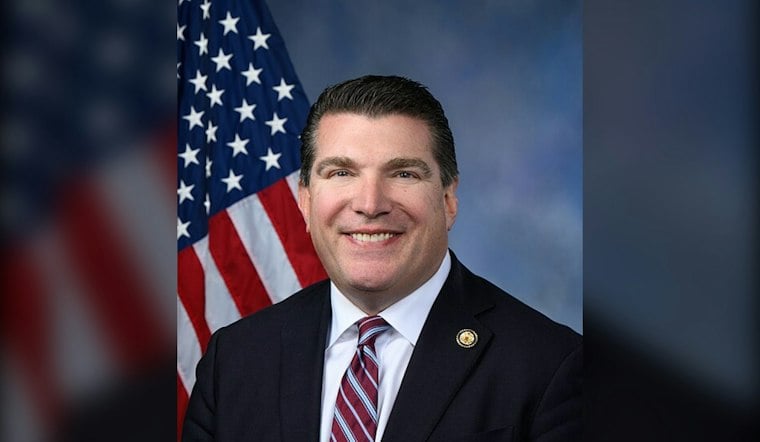
Republican Jay Obernolte was still ahead of Democrat Tessa Lynn Hodge in California's 23rd Congressional District on Monday, by a margin small enough that the remaining ballots are the story. A district results report put his lead at 3,527 votes, or 1.6 percentage points.
That figure is a Nov. 16 count, not a certified final tally. High Desert News Online said Obernolte had not trailed Hodge in any reported update and had outgained her in 17 of 24 counts. A separate Associated Press item carried by Yahoo News reported that he had won reelection. The local page was still describing a lead, with San Bernardino County ballots outside the total.
A Lead That Narrowed, Then Held
The early count did not look like a toss-up. On the morning of Nov. 5, the San Bernardino Sun had Obernolte at 51.4% and Hodge at 48.6%, or 67,672 votes to 64,101, a difference of 3,571.
The cushion then shrank. The California Voter Foundation, in a Nov. 10 update one week after Election Day, put Obernolte at 50.8% and Hodge at 49.2%, a lead of 3,404 votes. That was down from 6,447 votes on Nov. 6.
By Monday the reported lead was 3,527 again, still about the size of a small precinct, not a landslide. The same results page separated one slice of the count from the overall margin: of 83,837 votes added since election night, it gave each candidate 50.0%. An even late batch does not erase the votes already on the board. It does explain why a race that opened with a few thousand votes of breathing room never developed a comfortable one.
The Money Did Not Match the Margin
Hodge's campaign committee raised $126,771. Obernolte's campaign raised $1.8 million. The Sun put her total at less than a tenth of his.
University of La Verne professor Godwin, writing in that Sun report, said Hodge hugely outperformed expectations. "Candidates with less than a million dollars almost never mount competitive campaigns," Godwin wrote.
The 2024 comparison makes the squeeze sharper, with a caveat about the map. The Sun reported that Obernolte took 60.1% in that general election and treated this contest as unexpectedly close next to a seat that had looked safe. Proposition 50 has since rearranged congressional lines, so 60.1% and this year's count are not the same district measured twice. Even so, a challenger at roughly $127,000 was still inside two points of an incumbent with a seven-figure campaign more than a week after Election Day.
The Maps Behind a 'Safe' Seat
CalMatters reported that Proposition 50 packed conservative voters into a few reliably Republican districts. The point of that packing, in the same account, sat beside an expected collapse in the Republican congressional delegation, from nine members to four or possibly three.
The geography of the 23rd was part of the draft. The Desert Sun, writing in November 2025 about the proposed maps, said the district would push into areas then inside the 25th District, represented by Democratic Rep. Raul Ruiz. A seat built to hold Republican voters was being asked to absorb pieces of a Democrat's district.
Statewide, the targeting has already produced reported gains. The Texas Tribune said California Democrats had won three of the five congressional seats they targeted with the new maps and were leading in the other two. The 23rd is the other kind of district in that design: one of the places where Republican strength was supposed to be concentrated. A 1.6-point lead, with ballots still out, is a thin return on that concentration.
Redistricting Did Not Travel Well
California was not the only state that tried to draw its way to a better House. NPR reported that Democrats won four of the five Texas House seats Republicans had shifted toward their party, according to Associated Press race calls. The Tribune's Texas accounting was harsher still: GOP candidates lost four of the five seats their new map was designed to flip, and lost two seats they already held.
North Carolina supplied a smaller version of the same miss. NPR reported that Democratic Rep. Don Davis held the 1st District even after Republicans redrew it to be more competitive for the GOP.
Those calls belong to other states. They matter here because the 23rd was drawn into the same national argument: pack your voters, stretch the other side's, and collect the seats. In Texas the collection failed. In California, CalMatters still expected the Republican delegation to be cut roughly in half or worse. Obernolte's count is the local exception that has not yet hardened into a certified hold.
What Is Still Outside the Total
California has been moving ballots faster than in the last two mid-cycle Novembers. The Voter Foundation estimated that counties had counted 89% of ballots cast within seven days of Election Day, compared with 84% at the same point in November 2024 and 72% in November 2022. A faster count is why a 3,500-vote lead can be discussed in mid-November at all. It is not the same thing as a finished one.
As of Nov. 16, the district results page reported 5,600 ballots left to count in San Bernardino County and another 6,000 waiting on voters to fix a signature. Those signature ballots were not in the count that produced the 3,527-vote lead. The page did not say every one of those county ballots is a 23rd District ballot, and nothing in the reporting shows whether the outstanding or cure ballots have since moved the margin.
Until a county canvass closes that gap, the race sits between two different kinds of statement. One syndicated wire item has already reported a win. The dated local tally still has Obernolte in front by 3,527 votes, after a lead that fell from 6,447 on Nov. 6 and never flipped, with thousands of San Bernardino ballots still outside the arithmetic.



