

























































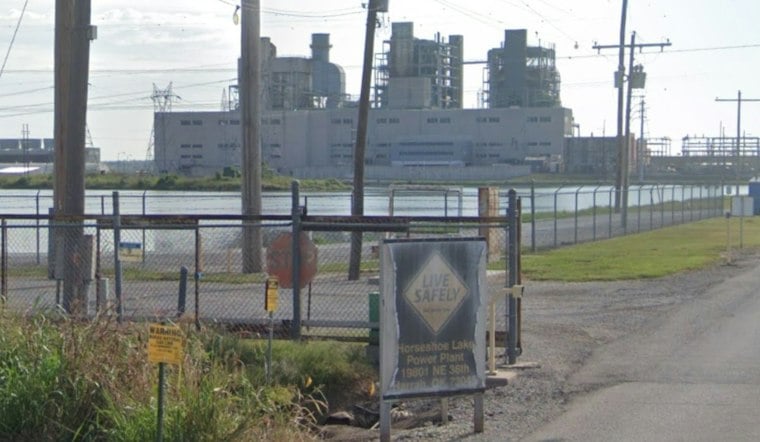
OG&E is asking Oklahoma regulators to sign off on a $1.75 billion natural gas expansion at its Horseshoe Lake Power Plant in eastern Oklahoma County, a project the utility says is needed to keep pace with growing electricity demand across the region. The company has requested preapproval for a new 755-megawatt combined-cycle unit, along with permission to bill customers for construction costs while the plant is still being built.
According to Oklahoma Energy Today, the filing asked for preapproval of the new unit, with an estimated project cost of approximately $1.75 billion excluding taxes and construction financing. That price tag grew during bidder negotiations, climbing from $1.699 billion to $1.748 billion, the outlet reported. OG&E has also requested authority to use Construction Work in Progress, or CWIP, financing, which lets a utility begin collecting money from ratepayers before a project is finished rather than waiting until it goes into service.
A $900 Million Savings Claim Tied to Financing Method
OG&E says the CWIP approach is estimated to save customers more than $900 million over the facility's projected 45-year life, per the same report. The company has argued the new unit will cost less over the long term than buying power from an outside generator and will help keep customer costs lower, though that savings figure is the utility's own estimate rather than an independently verified analysis. The unit, known as Horseshoe Lake 15, is expected to enter service in late 2031, and OG&E has said it is not part of the company's current rate review.
The Oklahoma Corporation Commission has 180 days to consider the application, the station notes. If the preapproval request is granted, it would mean OG&E can recover approved project costs from ratepayers. OG&E director of regulatory affairs Kimber Shoop and director of major projects Christopher B. Lelak were both named in connection with the filing, alongside senior communication specialist Dustin Gabus.
Competitive Bidding Produced 14 Winning Projects
The Horseshoe Lake 15 unit emerged from a crowded field: OG&E received 79 bids from 182 entities and ultimately selected 14 winning projects, the outlet reported. Company officials said this was the highest-ranking project in the competitive bidding process that followed the 2026 Integrated Resource Plan. OG&E is still negotiating with many of the other bidders, a process the utility says is complicated by evolving tariff risk, shifting federal policy, supply chain issues, tax credit uncertainty, and high demand for capacity.
Timing matters here. OG&E warned that any delay beyond June 30, 2027, could at minimum lead to a significant price increase for the turbines, with an additional, unquantified effect on the construction schedule, and the company has said it hopes regulators can act without causing delays.
Why OG&E Says More Capacity Is Needed
OG&E has framed the Horseshoe Lake addition as a response to growing customer demand for electricity. In its 2026 Integrated Resource Plan, filed with OG&E, the company forecasts a need for incremental generation capacity primarily due to continued expansion of the SPP Resource Adequacy framework and continued strength in regional demand trends. That plan states the company is currently seeking regulatory approval for an additional project that resulted from two requests for proposals it issued in early 2026 to address those capacity needs — a description that matches the Horseshoe Lake 15 filing.
Separately, the plan says OG&E intends to retire Horseshoe Lake units 9 and 10 in 2035, part of a broader reshuffling of the plant's generation mix. A March report from The Oklahoman tied the demand surge to data centers and other large-capacity projects moving into the region, part of the backdrop driving utilities toward new capacity decisions statewide.
Regulators Have Pushed Back on This Financing Tool Before
This isn't the first time OG&E has sought CWIP treatment at Horseshoe Lake, and the track record is mixed. In a 2025 case involving two natural-gas turbines at the same site, commissioners denied OG&E's request to use CWIP but still granted preapproval to build the units, according to KOSU. That order instead set the costs of those gas generators, $506.4 million, to be recovered through Gas Cost Recovery rather than CWIP, with that recovery mechanism expiring 18 months after the units enter commercial service, Oklahoma Energy Today reported separately at the time.
OG&E has pointed to results from earlier Horseshoe Lake builds as evidence the utility can deliver. Units 11 and 12, which added a combined 448 megawatts of capacity, were completed ahead of schedule and $12 million under budget, the company said on its third-quarter earnings call, as reported by Benzinga. Units 13 and 14, selected through an earlier all-source solicitation, are planned to go into service in 2029.
A Broader Regional Push for Construction-Phase Billing
OG&E isn't alone in pursuing this financing structure. Missouri and Arkansas passed similar CWIP legislation in 2025, and Kansas implemented comparable legislation in 2024, according to KGOU, part of a wider regional trend of utilities seeking to bill customers during construction rather than only after a plant opens. Whether Oklahoma regulators ultimately grant that authority for Horseshoe Lake 15 remains to be seen as the 180-day review clock runs.




